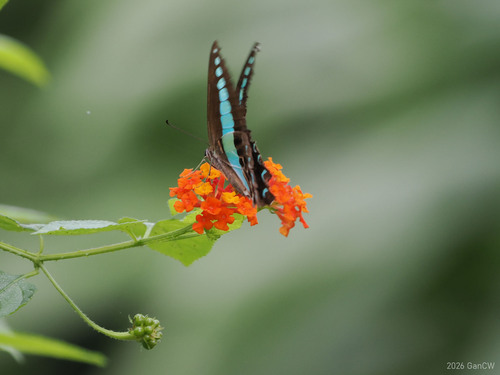
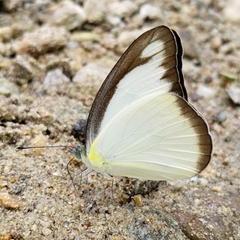
Chocolate Albatross
Daily sighting probability ~20% · Possible
at Gunung Leuser National Park

In 3 days ~50% in a week ~80%

21 Verified sightings at Gunung Leuser National Park From 2019 to 2026
109 In all 9 parks
November Best month
☀️ Diurnal When it's spotted

About the Chocolate Albatross

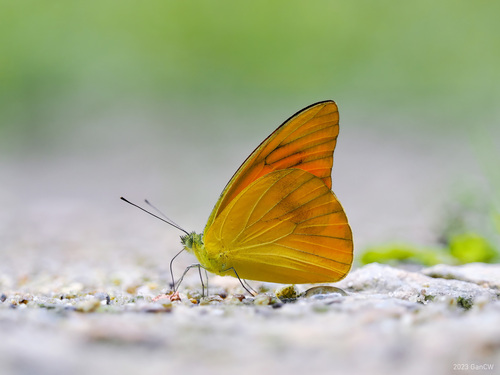
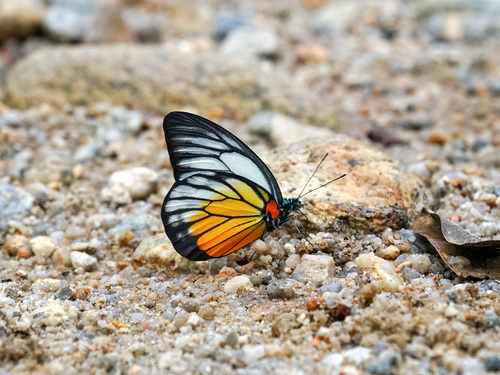
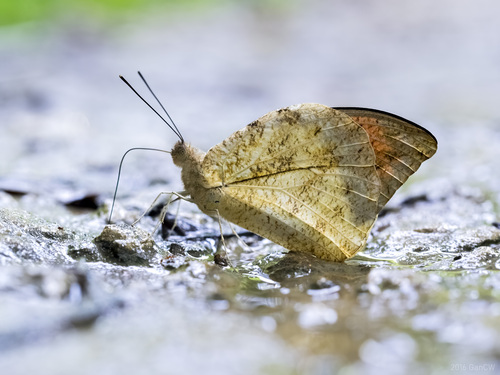
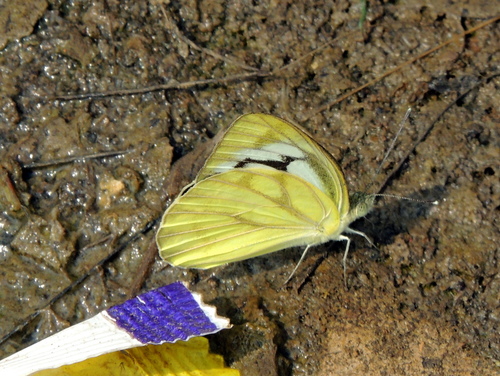
Appias lyncida, the chocolate albatross, is a butterfly of the family Pieridae, that is, the yellows and whites, which is found in south and southeast Asia. The chocolate albatross is found in India, China, Sri Lanka, Myanmar, Malaysia, Indonesia, Philippines, Thailand, Laos, Indochina, Taiwan, Hainan and possibly South China.

In India, the butterfly ranges across south India, Nicobar Islands, Sikkim to Assam, and onto Myanmar. In South India, the chocolate albatross is to be found along the foot of the Western Ghats. It is found throughout the year in the Nilgiris where it is locally common. In the northern parts of peninsular India it extends into Orissa and north up to Lucknow.

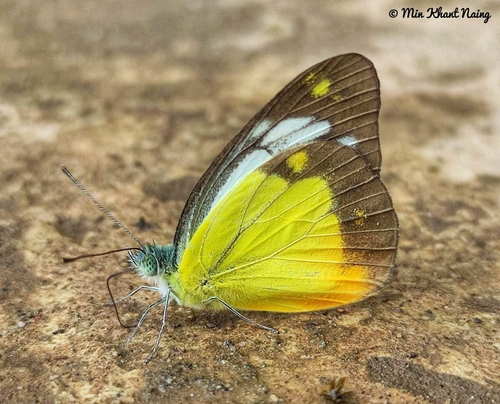
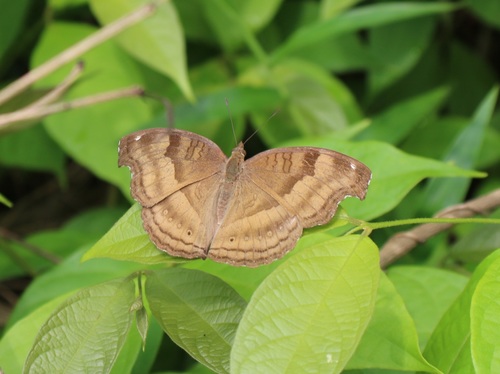
In India, the northern race of the butterfly is common, while it is local and scarce in other parts of its range. The chocolate albatross has a wingspan of 55 to 70 mm. The male is white above with chocolate-brown or black margins, and, bright lemon yellow below with chocolate-coloured markings. The female is white and densely clouded with dark brown.

The butterfly shows seasonal dimorphism and is very variable. The detailed descriptions are as follows: Wet-season... Wikipedia →

Global Distribution

Parks Where Found

# Park Country Daily sighting probability
1 Namdapha National Park 🇮🇳 India
~50%
2 Royal Manas National Park 🇧🇹 Bhutan
~40%
3 Cuc Phuong National Park 🇻🇳 Vietnam
~30%
4 Gunung Leuser National Park 🇮🇩 Indonesia
~20%
5 Bali Barat National Park 🇮🇩 Indonesia
~20%
6 Cat Tien National Park 🇻🇳 Vietnam
~10%
7 Taroko National Park 🇹🇼 Taiwan
~10%
8 Khao Sok National Park 🇹🇭 Thailand
~10%
9 Kaeng Krachan National Park 🇹🇭 Thailand
~10%

Cities Where Found

# City Country Daily sighting probability
1 Thiruvananthapuram 🇮🇳 India
~10%
2 Kuala Lumpur 🇲🇾 Malaysia
~10%
3 Kochi 🇮🇳 India
~10%
4 Kaohsiung 🇹🇼 Taiwan
~10%
5 Taipei 🇹🇼 Taiwan
~10%
6 Mumbai 🇮🇳 India
~10%
7 Singapore 🇸🇬 Singapore
<5%

Before you go

What are the chances of seeing a Chocolate Albatross in Gunung Leuser National Park?

Possible

About 20% of wildlife watchers report a Chocolate Albatross sighting in Gunung Leuser National Park on a given day, based on 21 verified sightings from GBIF citizen-science data from 2019 to 2026. It is the 22nd most-seen of the 103 insects we can rate there. Over three days the chance rises to about 50%, and over a week to about 80%, if each day is a fresh chance.

When is the best time to see a Chocolate Albatross in Gunung Leuser National Park?

November

In that month about 50% of wildlife watchers report a Chocolate Albatross in Gunung Leuser National Park on a given day, against under 5% in March, June and August–September, the lowest months.

What time of day is best to see a Chocolate Albatross?

Between 9 am and noon

Across all the parks we cover, that three-hour window holds the most Chocolate Albatross sightings with a recorded time, and about 9 in 10 of them come between 6 am and 6 pm: it is a daytime animal.

Which relatives of the Chocolate Albatross live in Gunung Leuser National Park?

Same genus: Appias

The closest relatives of the Chocolate Albatross that you can see in Gunung Leuser National Park (genus Appias, Puffin and Albatross Butterflies) are Orange Albatross (about 10%) and Western Striped Albatross (about 10%), with each one's daily chance of a sighting.

Where does the Chocolate Albatross sighting chance come from?

GBIF citizen-science records

It is estimated from how often the Chocolate Albatross is recorded against all the insects logged in Gunung Leuser National Park (21 verified sightings from 2019 to 2026), calibrated against known sighting rates. Figures are rounded to the nearest 10% because citizen-science data supports honest approximations, not decimals, and months with records from fewer than five people show "—". How it works.

← Back to Gunung Leuser National Park