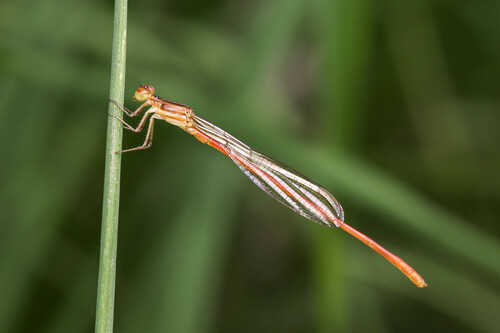
Red-Striped Black Bambootail

Red-Striped Black Bambootail

Prodasineura verticalis

Daily sighting probability ~10% · With luck
at Gunung Leuser National Park

In 3 days ~40% in a week ~70%

7 Verified sightings at Gunung Leuser National Park From 2019 to 2026
13 In all 2 parks
November Best month
☀️ Diurnal When it's spotted

About the Red-Striped Black Bambootail

Prodasineura verticalis is a damselfly in the family Platycnemididae. It is commonly known as the red-striped black bambootail or black bambootail. Prodasineura verticalis can be found in these Asian countries, which are China, Guangxi, India, Indonesia, Laos, Malaysia, Peninsular Malaysia Myanmar, Singapore, and Thailand.

This damselfly species has six subspecies. The following are the subspecies. Prodasineura verticalis andamanensis (Andaman and Nicobar Islands) Prodasineura verticalis annandalei (South India) Prodasineura verticalis burmanensis

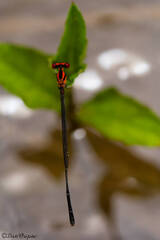
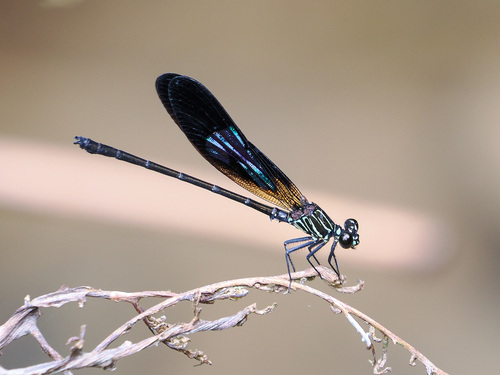
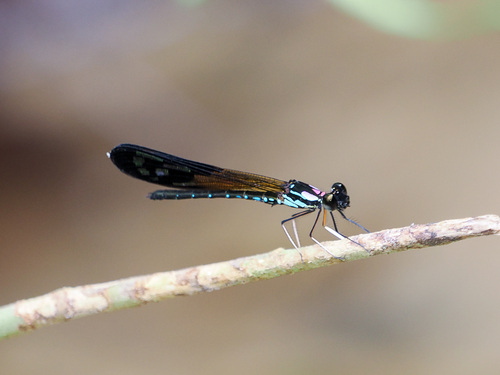
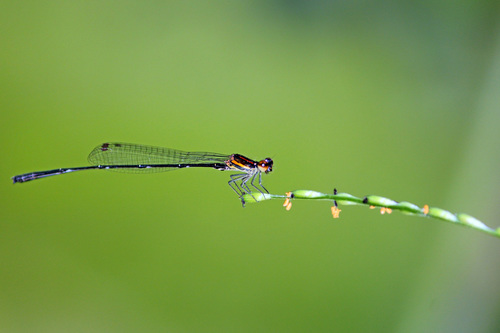
Prodasineura verticalis delia Prodasineura verticalis humeralis (often treated as a distinct species) Prodasineura verticalis verticalis It is medium size damselfly with black-capped brown eyes. Its hindwings are about 19–20 mm and the abdomen about 30 mm. The male of this damselfly is mostly black with red and yellow stripes on its thorax and small yellow spots on the abdomen. The pterostigma or the wing spot is diamond-shaped and is dark brown in colour. Abdomen is black with segments 3 to 6 have small base-dorsal yellow spots. Remaining segments are unmarked. The female... Wikipedia →
Global Distribution

Parks Where Found

# Park Country Daily sighting probability
1 Gunung Leuser National Park 🇮🇩 Indonesia
~10%
2 Kinabalu Park 🇲🇾 Malaysia
~10%

Cities Where Found

# City Country Daily sighting probability
1 Thiruvananthapuram 🇮🇳 India
~20%

Before you go

What are the chances of seeing a Red-Striped Black Bambootail in Gunung Leuser National Park?

With luck

About 10% of wildlife watchers report a Red-Striped Black Bambootail sighting in Gunung Leuser National Park on a given day, based on 7 verified sightings from GBIF citizen-science data from 2019 to 2026. It is the 56th most-seen of the 103 insects we can rate there. Over three days the chance rises to about 40%, and over a week to about 70%, if each day is a fresh chance.

When is the best time to see a Red-Striped Black Bambootail in Gunung Leuser National Park?

November

In that month about 30% of wildlife watchers report a Red-Striped Black Bambootail in Gunung Leuser National Park on a given day, against under 5% in March, May–June, August and December–January, the lowest months.

What time of day is best to see a Red-Striped Black Bambootail?

Between 8 and 11 am

Across all the parks we cover, that three-hour window holds the most Red-Striped Black Bambootail sightings with a recorded time, and about 9 in 10 of them come between 6 am and 6 pm: it is a daytime animal.

Is Gunung Leuser National Park the best place to see a Red-Striped Black Bambootail?

Yes

Of the 2 parks where we can rate Red-Striped Black Bambootail sightings, Gunung Leuser National Park has the highest daily chance: about 10%. Next come Kinabalu Park (Malaysia, about 10%).

Which relatives of the Red-Striped Black Bambootail live in Gunung Leuser National Park?

Same order: Odonata

The closest relatives of the Red-Striped Black Bambootail that you can see in Gunung Leuser National Park (order Odonata, Dragonflies and Damselflies) are Common Parasol (about 30%), Orange Skimmer (about 30%) and Blue Marsh Hawk (about 30%), with each one's daily chance of a sighting.

Where does the Red-Striped Black Bambootail sighting chance come from?

GBIF citizen-science records

It is estimated from how often the Red-Striped Black Bambootail is recorded against all the insects logged in Gunung Leuser National Park (7 verified sightings from 2019 to 2026), calibrated against known sighting rates. Figures are rounded to the nearest 10% because citizen-science data supports honest approximations, not decimals, and months with records from fewer than five people show "—". How it works.

← Back to Gunung Leuser National Park