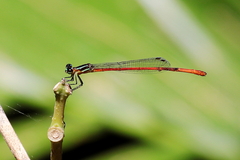
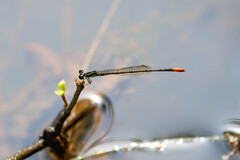
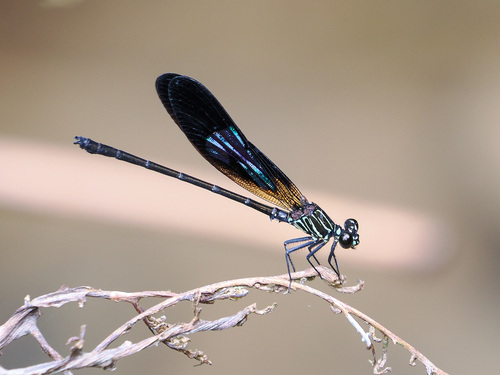
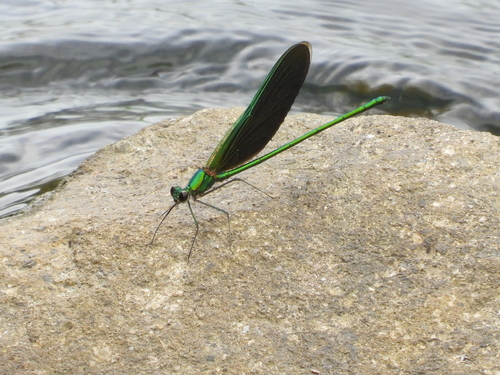
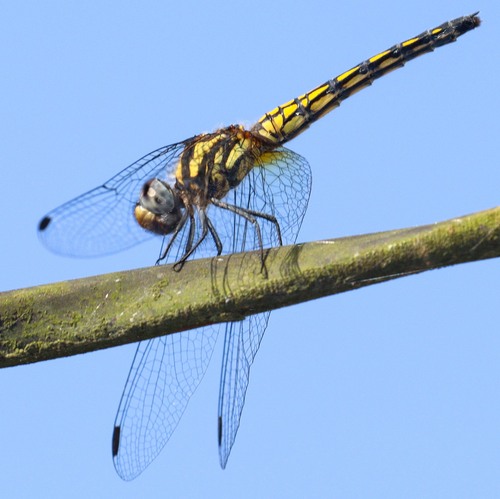
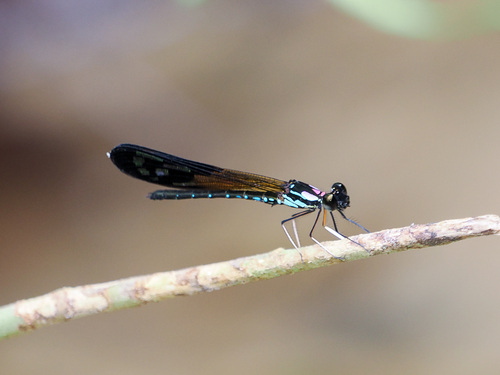
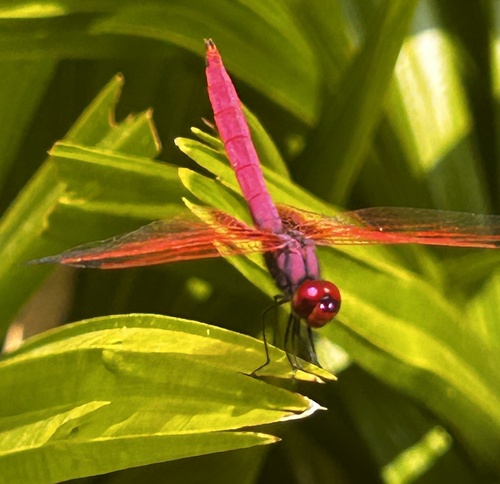
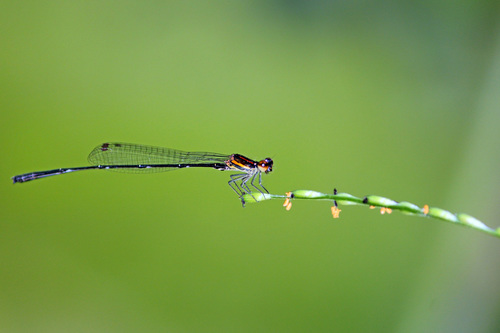
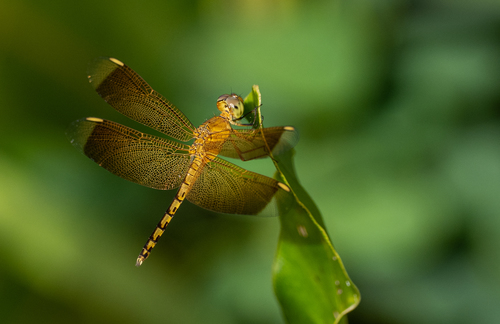
Red-Tipped Shadefly

Red-Tipped Shadefly

Argiocnemis rubescens

Daily sighting probability ~20% · Possible
at Gunung Leuser National Park

In 3 days ~40% in a week ~70%

10 Verified sightings at Gunung Leuser National Park From 2019 to 2026
77 In all 5 parks
March Best month
☀️ Diurnal When it's spotted

About the Red-Tipped Shadefly

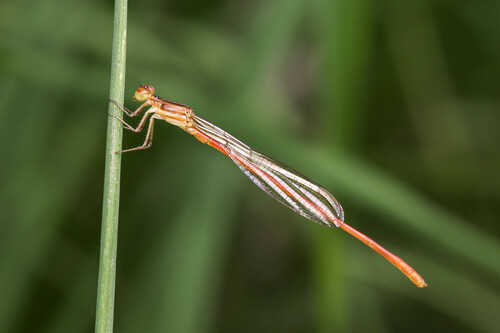
Argiocnemis rubescens is a species of damselfly in the family Coenagrionidae, commonly known as the red-tipped shadefly. It is a widespread species extending from India to southern China, south-east Asia, New Guinea and Australia.

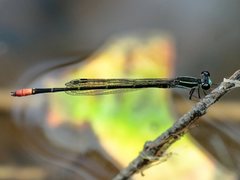
Argiocnemis rubescens prefers fresh still waters such as pools, marshes and swamps. The adult is a small to medium-sized damselfly with a length of 35 to 40mm, and the hindwing less than 22mm. When immature it is a pale reddish brown. The mature male is dark with pale green stripes on the thorax, and red on segments 8 and 9. In Australia, the distribution is in suitable habitat from Shark Bay in the west, across the north of the continent, to about Point Hicks in the south-east. The taxon has been assessed in the IUCN Red List as least concern.

The genus name Argiocnemis is derived from -cnemis, from the Greek κνημίς (knēmis, "greave" or "legging"), a suffix commonly used in damselfly names, and a prefix Argio- of uncertain origin, possibly from the Greek ἀργία (argia, "idleness" or "leisure") or formed as an anagram of Agrio-, based on the genus Agrion.

The species name rubescens is Latin for "becoming red" or "blushing". Edmond de Sélys Longchamps... Wikipedia →
Global Distribution

Parks Where Found

# Park Country Daily sighting probability
1 Khao Sok National Park 🇹🇭 Thailand
~20%
2 Doi Inthanon National Park 🇹🇭 Thailand
~20%
3 Gunung Leuser National Park 🇮🇩 Indonesia
~20%
4 Lamington National Park 🇦🇺 Australia
~10%
5 Daintree National Park 🇦🇺 Australia
~10%

Cities Where Found

# City Country Daily sighting probability
1 Brisbane 🇦🇺 Australia
~10%

Before you go

What are the chances of seeing a Red-Tipped Shadefly in Gunung Leuser National Park?

Possible

About 20% of wildlife watchers report a Red-Tipped Shadefly sighting in Gunung Leuser National Park on a given day, based on 10 verified sightings from GBIF citizen-science data from 2019 to 2026. It is the 48th most-seen of the 103 insects we can rate there. Over three days the chance rises to about 40%, and over a week to about 70%, if each day is a fresh chance.

When is the best time to see a Red-Tipped Shadefly in Gunung Leuser National Park?

March

In that month about 40% of wildlife watchers report a Red-Tipped Shadefly in Gunung Leuser National Park on a given day, against under 5% in May and August–February, the lowest months. That is one of Gunung Leuser National Park's driest months, with about 180 mm of rain against 700 mm in September.

What time of day is best to see a Red-Tipped Shadefly?

Between 9 am and noon

Across all the parks we cover, that three-hour window holds the most Red-Tipped Shadefly sightings with a recorded time, and about 9 in 10 of them come between 6 am and 6 pm: it is a daytime animal.

Is Gunung Leuser National Park the best place to see a Red-Tipped Shadefly?

Among the best

Of the 5 parks where we can rate Red-Tipped Shadefly sightings, Gunung Leuser National Park ranks 3rd at about 20%, level with the leaders once rounded. The best odds are in Khao Sok National Park (Thailand, about 20%) and Doi Inthanon National Park (Thailand, about 20%).

Which relatives of the Red-Tipped Shadefly live in Gunung Leuser National Park?

Same order: Odonata

The closest relatives of the Red-Tipped Shadefly that you can see in Gunung Leuser National Park (order Odonata, Dragonflies and Damselflies) are Common Parasol (about 30%), Orange Skimmer (about 30%) and Blue Marsh Hawk (about 30%), with each one's daily chance of a sighting.

Where does the Red-Tipped Shadefly sighting chance come from?

GBIF citizen-science records

It is estimated from how often the Red-Tipped Shadefly is recorded against all the insects logged in Gunung Leuser National Park (10 verified sightings from 2019 to 2026), calibrated against known sighting rates. Figures are rounded to the nearest 10% because citizen-science data supports honest approximations, not decimals, and months with records from fewer than five people show "—". How it works.

← Back to Gunung Leuser National Park