Maui Nui ʻAlauahio

Maui Nui ʻAlauahio

Paroreomyza montana

LCNTVUENEndangeredCR Endemic
Daily sighting probability ~70% · Very likely
at Haleakala National Park

In 3 days >90%

564 Verified sightings at Haleakala National Park From 2019 to 2026
564 In 1 park
June Best month
☀️ Diurnal When it's spotted

About the Maui Nui ʻAlauahio

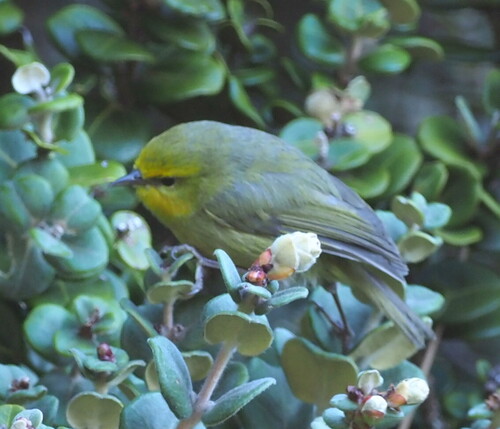
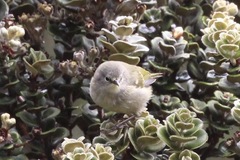
The Maui ʻalauahio (Paroreomyza montana), also known as the Maui Nui ʻalauahio or Maui creeper, is a species of Hawaiian honeycreeper. It is endemic to Maui Nui, Hawaii. The name Maui ʻalauahio is somewhat misleading because the species seems to have occurred on most, if not all, parts of the ancient Maui Nui, which includes the present day islands of Maui, Molokaʻi, Lānaʻi, and Kahoʻolawe. There are two subspecies: the Lānaʻi ʻalauahio, P. montana montana, which occurred on Lānaʻi (extinct); and P. montana newtoni which occurs on Maui. The common name refers to both groups.

The Maui ʻalauahio is similar to the Hawaiʻi ʻamakihi in appearance and behavior. However, Maui ʻalauahio are a brighter yellow color, have a less curved bill and do not have prominent black lores (area between the bill and the eye).

The Maui ʻalauahio call is a loud "cheep", and their song consists of a repeated whistled phrase "whichy-wheesee-whurdy-whew". Maui ʻalauahio are insectivorous and forage along trunks and branches flipping over lichen and bark in search of insects. They eat moths, beetles, spiders, leafhoppers, lacewings, and ichneumonid wasps. They forage on...
Wikipedia →

Global Distribution

Parks Where Found

# Park Country Daily sighting probability
1 Haleakala National Park 🇺🇸 United States
~70%

More parks will be added in future updates.

Before you go

What are the chances of seeing a Maui Nui ʻAlauahio in Haleakala National Park?

Very likely

About 70% of wildlife watchers report a Maui Nui ʻAlauahio sighting in Haleakala National Park on a given day, based on 564 verified sightings from GBIF citizen-science data from 2019 to 2026. It is the 7th most-seen of the 32 birds we can rate there. Over three days the chance rises to over 90%, if each day is a fresh chance.

When is the best time to see a Maui Nui ʻAlauahio in Haleakala National Park?

June and December

In those months about 80% of wildlife watchers report a Maui Nui ʻAlauahio in Haleakala National Park on a given day, against about 40% in August, the lowest month.

What time of day is best to see a Maui Nui ʻAlauahio?

Between 11 am and 2 pm

Across all the parks we cover, that three-hour window holds the most Maui Nui ʻAlauahio sightings with a recorded time, and about 9 in 10 of them come between 6 am and 6 pm: it is a daytime animal.

Where else can you see a Maui Nui ʻAlauahio?

Only Haleakala National Park, in our data

Haleakala National Park is the only park on Wallace's Line with enough records to rate Maui Nui ʻAlauahio sightings: about 70% of wildlife watchers there report one on a given day.

Which relatives of the Maui Nui ʻAlauahio live in Haleakala National Park?

Same family: Fringillidae

The closest relatives of the Maui Nui ʻAlauahio that you can see in Haleakala National Park (family Fringillidae, Finches, Euphonias, and Allies) are Iiwi (about 90%), Hawaii 'Amakihi (about 90%) and ʻApapane (about 90%), with each one's daily chance of a sighting.

Where does the Maui Nui ʻAlauahio sighting chance come from?

GBIF citizen-science records

It is estimated from how often the Maui Nui ʻAlauahio is recorded against all the birds logged in Haleakala National Park (564 verified sightings from 2019 to 2026), calibrated against known sighting rates. Figures are rounded to the nearest 10% because citizen-science data supports honest approximations, not decimals, and months with records from fewer than five people show "—". How it works.

← Back to Haleakala National Park

