Iiwi

Iiwi

Vestiaria coccinea

LCNTVUVulnerableENCR Endemic
Daily sighting probability ~90% · Very likely
at Haleakala National Park
1,411 Verified sightings at Haleakala National Park From 2019 to 2026
1,515 In all 2 parks
June Best month
☀️ Diurnal When it's spotted

About the Iiwi

The ʻiʻiwi (pronounced, ee-EE-wee or, ee-EE-vee) or scarlet honeycreeper (Drepanis coccinea) is a species of Hawaiian honeycreeper. The ʻiʻiwi is a highly recognizable symbol of Hawaii. Linguists derive the Hawaiian language word ʻiʻiwi from Proto-Nuclear-Polynesian *kiwi, which in central Polynesia refers to the bristle-thighed curlew (Numenius tahitiensis), a migratory bird. The long decurved bill of the curlew somewhat resembles that of the ʻiʻiwi.

The ʻiʻiwi was historically placed in its own genus Vestiaria, but many recent authorities regard it as a member of the genus Drepanis, also including the now extinct elongate billed Hawaii mamo and black mamo. However, this has been questioned based on genetic evidence, with genomic studies finding the ʻiʻiwi to be more closely related to the recently extinct Laysan honeycreeper and still living ʻAkohekohe and ʻApapane than to the two mamo species.

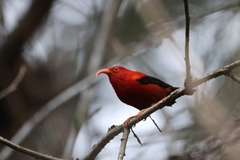
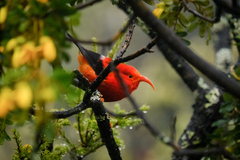
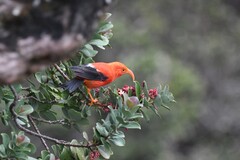
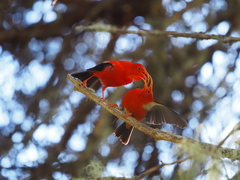
The adult ʻiʻiwi is mostly scarlet, with black wings and tail and a long, curved, salmon-colored bill used primarily for drinking nectar. The contrast of the red and black plumage with surrounding green foliage makes the ʻiʻiwi one of Hawaiʻi...

Wikipedia →

Global Distribution

Parks Where Found

# Park Country Daily sighting probability
1 Haleakala National Park 🇺🇸 United States
~90%
2 Hawaii Volcanoes National Park 🇺🇸 United States
~10%

Before you go

What are the chances of seeing an Iiwi in Haleakala National Park?

Very likely

About 90% of wildlife watchers report an Iiwi sighting in Haleakala National Park on a given day, based on 1,411 verified sightings from GBIF citizen-science data from 2019 to 2026. It is the most-seen of the 32 birds we can rate there.

When is the best time to see an Iiwi in Haleakala National Park?

April, June and December

In those months over 90% of wildlife watchers report an Iiwi in Haleakala National Park on a given day, against about 70% in August, the lowest month.

What time of day is best to see an Iiwi?

Between 11 am and 2 pm

Across all the parks we cover, that three-hour window holds the most Iiwi sightings with a recorded time, and about 8 in 10 of them come between 6 am and 6 pm: it is a daytime animal.

Is Haleakala National Park the best place to see an Iiwi?

Yes

Of the 2 parks where we can rate Iiwi sightings, Haleakala National Park has the highest daily chance: about 90%. Next come Hawaii Volcanoes National Park (United States, about 10%).

Which relatives of the Iiwi live in Haleakala National Park?

Same family: Fringillidae

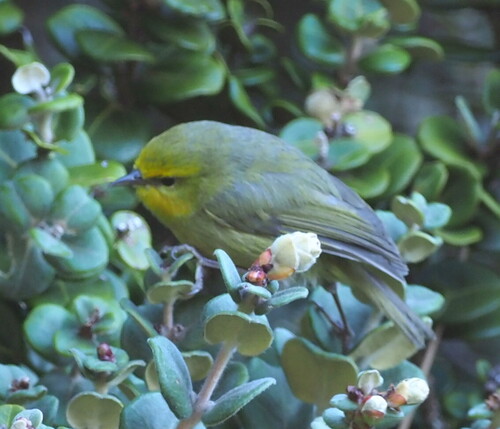
The closest relatives of the Iiwi that you can see in Haleakala National Park (family Fringillidae, Finches, Euphonias, and Allies) are Hawaii 'Amakihi (about 90%), ʻApapane (about 90%) and House Finch (about 80%), with each one's daily chance of a sighting.

Where does the Iiwi sighting chance come from?

GBIF citizen-science records

It is estimated from how often the Iiwi is recorded against all the birds logged in Haleakala National Park (1,411 verified sightings from 2019 to 2026), calibrated against known sighting rates. Figures are rounded to the nearest 10% because citizen-science data supports honest approximations, not decimals, and months with records from fewer than five people show "—". How it works.

← Back to Haleakala National Park