














intrepid-decrepit-travelers.blogspot.com Web excerpt · 2023
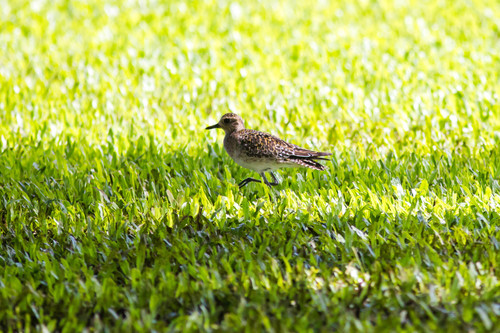
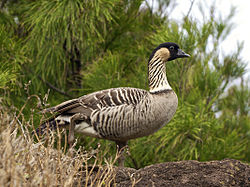
“We spotted a group of Hawaiian native geese (Nene) as we continued toward the Haleakala V/C at 9,740', but the only pic I got was this one from the car.”
🇺🇸 United States
Haleakalā National Park is a national park of the United States located on the island of Maui, Hawaii. Named after Haleakalā, a dormant volcano within its boundaries, the park covers an area of 33,265 acres, of which 24,719 acres is a wilderness area. The land was designated a national park in 1976 and its boundaries expanded in 2005.
Haleakalā was originally part of Hawaii National Park along with the volcanoes of Mauna Loa and Kilauea on the island of Hawaiʻi, created in 1916. Hawaiʻi Volcanoes National Park was made into a separate national park in 1961 by Bill S. 3623. The park area was designated an International Biosphere Reserve in 1980. The name Haleakalā is Hawaiian for "house of the sun". According to a local legend, the demigod Maui imprisoned the sun here in order to lengthen the day. The Hawaiian National Park Language Correction Act of 2000 was proposed to observe the Hawaiian spelling, but it did not become law.
The park features the dormant Haleakalā Volcano, which last erupted sometime between 1480 and 1600 AD.
20.727° N 156.217° W

Warmer areas are where all species together are recorded most often.
How rich is the wildlife?
How likely to see animals?
How easy and pleasant is the visit?
Your review
“We spotted a group of Hawaiian native geese (Nene) as we continued toward the Haleakala V/C at 9,740', but the only pic I got was this one from the car.”
207 species
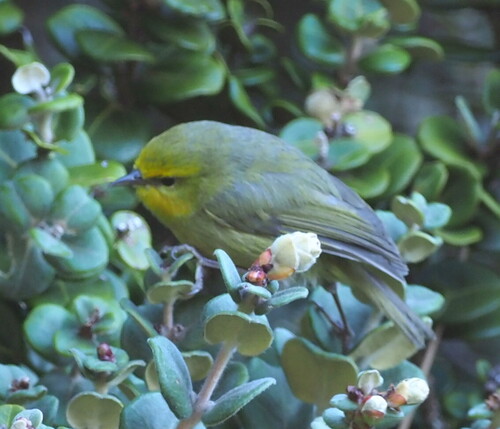
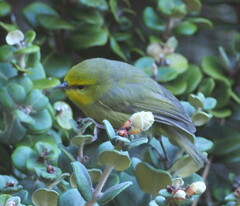
Haleakala National Park has 207 recorded vertebrate species. The ones wildlife watchers report most often on a given day are Iiwi (about 90%), Hawaii 'Amakihi (about 90%), ʻApapane (about 90%), Warbling White-eye (about 80%) and House Finch (about 80%). Among mammals, the most-seen is Mongoose (about 40%); among reptiles, Green Anole (about 30%).
April–June and November–February
In those months the park's 12 most-seen species average about 70% on a given day, against about 60% in March and July–October.
Yes
About 50% of wildlife watchers report a Hawaiian Goose sighting in Haleakala National Park on a given day, based on 805 verified sightings from GBIF citizen-science data from 2019 to 2026. The best time is January and February (about 80%).
Yes
About 90% of wildlife watchers report an Iiwi sighting in Haleakala National Park on a given day, based on 1,411 verified sightings from GBIF citizen-science data from 2019 to 2026. The best time is April, June and December (over 90%).
Yes
About 90% of wildlife watchers report a Hawaii 'Amakihi sighting in Haleakala National Park on a given day, based on 1,178 verified sightings from GBIF citizen-science data from 2019 to 2026. The best time is December (over 90%).
Yes
About 90% of wildlife watchers report a ʻApapane sighting in Haleakala National Park on a given day, based on 1,164 verified sightings from GBIF citizen-science data from 2019 to 2026. The best time is June (over 90%).
Around Haleakalā Visitor Center
The richest sighting zone is around Haleakalā Visitor Center, followed by Makahiku Overlook and Birds On The Edge, ranked by how many of the park's headline animals visitors can expect to see in each. See the zones on the map.
2.5 out of 5
On the Wallace's Line Score, Haleakala National Park rates 2.5/5: 338th of 340 parks worldwide and 59th in North America. 16 of its species are reported by about 40% or more of wildlife watchers on a given day.