Little Buttonquail

Little Buttonquail

Turnix velox

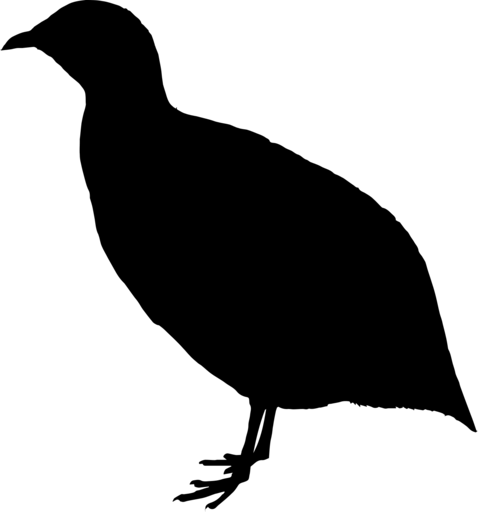
Silhouette: PhyloPic

LCLeast ConcernNTVUENCR Endemic
Daily sighting probability <5% · Rare
at Hattah-Kulkyne National Park

In 3 days ~10% in a week ~30%

61 Verified sightings at Hattah-Kulkyne National Park From 2019 to 2026
61 In 1 park
January Best month
☀️🌙 Day & Night When it's spotted

About the Little Buttonquail

The little buttonquail (Turnix velox) is a species of buttonquail, part of a small family of birds which resemble, but are unrelated to, the true quails. This species is resident in Australia, where it is one of the more common buttonquails.

The species is found in grassland habitats. The female is an unmarked pale colour below, and straw-brown above with white streaking; the male is similar but less neatly marked. The species has a large pale bill, and pale eye.

The little buttonquail is a small reddish brown bird with thin white stripes on its upper parts with a blue-grey beak, pink legs and feet, and pale eyes. The female is both larger and more brightly coloured than the male. The little buttonquail is easily distinguishable from other small quail. When flying, by its distinctly reddish or pinkish toned upperbody and the contrasting tones between parts of its wings.

While superficially resembling the true quails of the genus Coturnix, the little buttonquail differ by lacking a hind toe and a crop. The females also possess a unique vocal organ created by an enlarged trachea and inflatable bulb in the esophagus. This is used to produce a booming call.

The call patterns... Wikipedia →

Sounds

Call0:49

Australia · 2021

© Marc Anderson · XC689107 · CC BY-NC-ND 4.0

Call0:20

Australia · 2025

© Ian Starling · XC1031114 · CC BY-NC-SA 4.0

Recording0:11

Australia · 2026

© Calvin Arbon · iNaturalist · CC BY-NC 4.0

Global Distribution

Parks Where Found

# Park Country Daily sighting probability
1 Hattah-Kulkyne National Park 🇦🇺 Australia
<5%

More parks will be added in future updates.

Cities Where Found

# City Country Daily sighting probability
1 Melbourne 🇦🇺 Australia
<5%

Zoos & Centres Where Found

# Zoo / Centre Country
1 Mesker Park Zoo and Botanic Garden 🇺🇸 United States In captivity

Before you go

What are the chances of seeing a Little Buttonquail in Hattah-Kulkyne National Park?

Rare

Under 5% of wildlife watchers report a Little Buttonquail sighting in Hattah-Kulkyne National Park on a given day, based on 61 verified sightings from GBIF citizen-science data from 2019 to 2026. It is the 112th most-seen of the 170 birds we can rate there. Over three days the chance rises to about 10%, and over a week to about 30%, if each day is a fresh chance.

When is the best time to see a Little Buttonquail in Hattah-Kulkyne National Park?

January

In that month about 30% of wildlife watchers report a Little Buttonquail in Hattah-Kulkyne National Park on a given day, against under 5% in March and May–November, the lowest months.

What time of day is best to see a Little Buttonquail?

Between 9 pm and midnight

Across all the parks we cover, that three-hour window holds the most Little Buttonquail sightings with a recorded time, and about 6 in 10 of them come between 6 pm and 6 am: it is seen both by day and at night.

Where else can you see a Little Buttonquail?

Only Hattah-Kulkyne National Park, in our data

Hattah-Kulkyne National Park is the only park on Wallace's Line with enough records to rate Little Buttonquail sightings: under 5% of wildlife watchers there report one on a given day.

Where does the Little Buttonquail sighting chance come from?

GBIF citizen-science records

It is estimated from how often the Little Buttonquail is recorded against all the birds logged in Hattah-Kulkyne National Park (61 verified sightings from 2019 to 2026), calibrated against known sighting rates. Figures are rounded to the nearest 10% because citizen-science data supports honest approximations, not decimals, and months with records from fewer than five people show "—". How it works.

← Back to Hattah-Kulkyne National Park