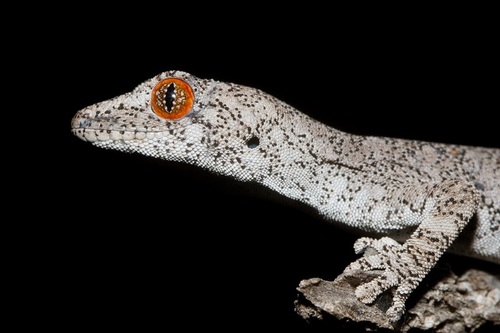
Pale-rumped Ctenotus

Pale-rumped Ctenotus

Ctenotus regius

LCLeast ConcernNTVUENCR Endemic
Daily sighting probability ~30% · Possible
at Hattah-Kulkyne National Park

In 3 days ~70% in a week ~90%

22 Verified sightings at Hattah-Kulkyne National Park From 2019 to 2026
22 In 1 park
December Best month
☀️ Diurnal When it's spotted

About the Pale-rumped Ctenotus

Ctenotus regius, the pale-rumped ctenotus or regal striped skink, is a medium-sized species of skink with an arid distribution restricted to the Australian Mainland, which belongs to the largest group of reptiles in Australia, Ctentotus (containing close to 100 species).

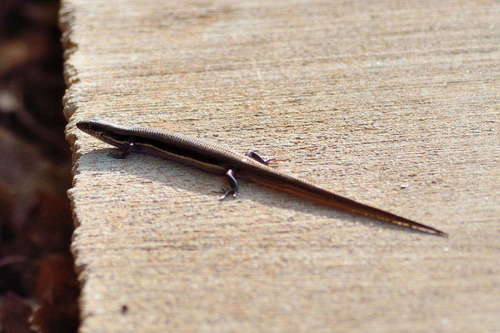
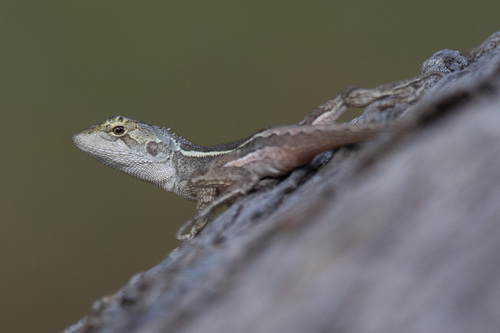
Ctentotus regius is a medium-sized skink, characterised by its longitudinally striped back and white spotted sides. The species has a reddish-brown tail and its body is patterned by a blackish brown colour with a white-cream lateral stripe that runs from over the ear to below the eye, and white side spots in between the longitudinal lines that span the length of its body. The average snout-to-vent length of the species is 7.2 cm with females being recorded as slightly larger, on average, than their male counterparts.

Ctenotus regius was first described by Glen Milton Store in 1970, and has not since had a name revision. The pale-rumped ctenotus is a member of the skink family (Scincidae), and the genus Ctenotus, often described as 'comb-eared' for its row of small scales on the anterior edge of its ears. Many of the species within this genus are exceedingly similar in shape, build... Wikipedia →

Global Distribution

Parks Where Found

# Park Country Daily sighting probability
1 Hattah-Kulkyne National Park 🇦🇺 Australia
~30%

More parks will be added in future updates.

Before you go

What are the chances of seeing a Pale-rumped Ctenotus in Hattah-Kulkyne National Park?

Possible

About 30% of wildlife watchers report a Pale-rumped Ctenotus sighting in Hattah-Kulkyne National Park on a given day, based on 22 verified sightings from GBIF citizen-science data from 2019 to 2026. It is the 9th most-seen of the 19 reptiles we can rate there. Over three days the chance rises to about 70%, and over a week to about 90%, if each day is a fresh chance.

When is the best time to see a Pale-rumped Ctenotus in Hattah-Kulkyne National Park?

December

In that month about 50% of wildlife watchers report a Pale-rumped Ctenotus in Hattah-Kulkyne National Park on a given day, against under 5% in June, the lowest month.

What time of day is best to see a Pale-rumped Ctenotus?

Between 11 am and 2 pm

Across all the parks we cover, that three-hour window holds the most Pale-rumped Ctenotus sightings with a recorded time, and about 9 in 10 of them come between 6 am and 6 pm: it is a daytime animal.

Where else can you see a Pale-rumped Ctenotus?

Only Hattah-Kulkyne National Park, in our data

Hattah-Kulkyne National Park is the only park on Wallace's Line with enough records to rate Pale-rumped Ctenotus sightings: about 30% of wildlife watchers there report one on a given day.

Where does the Pale-rumped Ctenotus sighting chance come from?

GBIF citizen-science records

It is estimated from how often the Pale-rumped Ctenotus is recorded against all the reptiles logged in Hattah-Kulkyne National Park (22 verified sightings from 2019 to 2026), calibrated against known sighting rates. Figures are rounded to the nearest 10% because citizen-science data supports honest approximations, not decimals, and months with records from fewer than five people show "—". How it works.

← Back to Hattah-Kulkyne National Park