Nobbi

Nobbi

Diporiphora nobbi

Silhouette: Michael Scroggie · PhyloPic

LCLeast ConcernNTVUENCR Endemic
Daily sighting probability ~40% · Likely
at Hattah-Kulkyne National Park

In 3 days ~80% in a week >90%

29 Verified sightings at Hattah-Kulkyne National Park From 2019 to 2026
40 In all 2 parks
November Best month
☀️ Diurnal When it's spotted

About the Nobbi

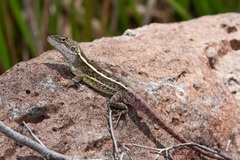
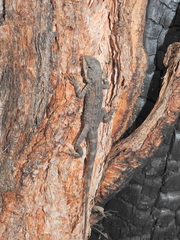
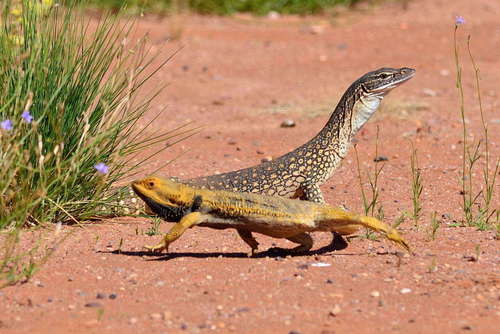
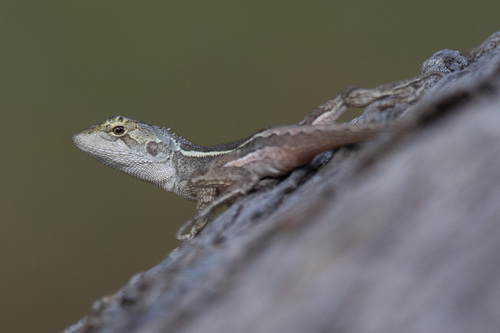
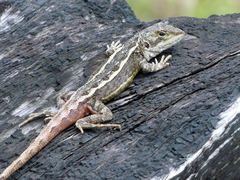
Diporiphora nobbi, also known commonly as the nobbi lashtail or the nobbi, is a species of lizard in the family Agamidae. The species is endemic to Australia. The Nobbi Dragon, Diporiphora nobbi, is a lizard species endemic to Northern and Eastern Australia. A part of the family Agamidae which is commonly known as the Dragon Family. The Nobbi Dragon reaches lengths of 20 cm long from the snout to tail, with specific colourations of browns and blacks with two distinct strips running horizontally along its back beginning at the head and finishing at the end of the tail on either side of the spine. The Nobbi Dragon can also be identified as having less than 20 dorsal scale rows at the level of the axilla deferring from other diporiphora species. They reside near and in shrubbery of tree trunks, in arid shrublands, savannas and forests, running on their hind legs when threatened. The Nobbi Dragon is a part of the Diporiphora genus which has 21 species which is distinct from other Agamidae species due to their climbing ability and morphological attributes. Like other reptiles the Nobbi Dragon reproduces sexual and is a oviparous animal laying eggs and embryo's developing inside... Wikipedia →

Global Distribution

Parks Where Found

# Park Country Daily sighting probability
1 Hattah-Kulkyne National Park 🇦🇺 Australia
~40%
2 Flinders Ranges National Park 🇦🇺 Australia
~30%

Zoos & Centres Where Found

# Zoo / Centre Country
1 Sydney Zoo 🇦🇺 Australia In captivity

Before you go

What are the chances of seeing a Nobbi in Hattah-Kulkyne National Park?

Likely

About 40% of wildlife watchers report a Nobbi sighting in Hattah-Kulkyne National Park on a given day, based on 29 verified sightings from GBIF citizen-science data from 2019 to 2026. It is the 6th most-seen of the 19 reptiles we can rate there. Over three days the chance rises to about 80%, and over a week to over 90%, if each day is a fresh chance.

When is the best time to see a Nobbi in Hattah-Kulkyne National Park?

November

In that month about 60% of wildlife watchers report a Nobbi in Hattah-Kulkyne National Park on a given day, against under 5% in June to August, the lowest months. That is one of Hattah-Kulkyne National Park's wettest months, with about 40 mm of rain against 5 mm in February.

What time of day is best to see a Nobbi?

Between 11 am and 2 pm

Across all the parks we cover, that three-hour window holds the most Nobbi sightings with a recorded time, and about 9 in 10 of them come between 6 am and 6 pm: it is a daytime animal.

Is Hattah-Kulkyne National Park the best place to see a Nobbi?

Yes

Of the 2 parks where we can rate Nobbi sightings, Hattah-Kulkyne National Park has the highest daily chance: about 40%. Next come Flinders Ranges National Park (Australia, about 30%).

Where does the Nobbi sighting chance come from?

GBIF citizen-science records

It is estimated from how often the Nobbi is recorded against all the reptiles logged in Hattah-Kulkyne National Park (29 verified sightings from 2019 to 2026), calibrated against known sighting rates. Figures are rounded to the nearest 10% because citizen-science data supports honest approximations, not decimals, and months with records from fewer than five people show "—". How it works.
← Back to Hattah-Kulkyne National Park