Altai Weasel

Altai Weasel

Mustela altaica

Silhouette: Margot Michaud · PhyloPic

LCNTNear ThreatenedVUENCR
Daily sighting probability ~20% · Possible
at Hemis National Park

In 3 days ~50% in a week ~80%

8 Verified sightings at Hemis National Park From 2019 to 2026
8 In 1 park
November Best month
🌅 Crepuscular When it's spotted

About the Altai Weasel

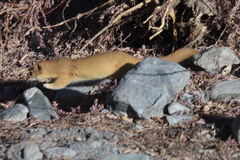
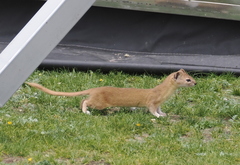
The mountain weasel (Mustela altaica), also known as the pale weasel, Altai weasel or solongoi, primarily lives in high-altitude environments, as well as rocky tundra and grassy woodlands. This weasel rests in rock crevices, tree trunks, and abandoned burrows of other animals or the animals it previously hunted. The home range size of this animal is currently unknown. Geographical distribution for this species lies in parts of Asia from Kazakhstan, Tibet, and the Himalayas to Mongolia, northeastern China, and southern Siberia. The most common area for this species, however, is Ladakh, India. The conservation status, according to the IUCN, is near threatened because it is considered to be in significant decline and requires monitoring mainly because of habitat and resource loss.

Sexual dimorphism is slight in the Altai weasel. The male body length from head to base of the tail is about 8.5–11 in (220–280 mm), with the tail adding about 4–6 in (100–150 mm). Males can weigh 8–12 oz (230–340 g). Females are slightly smaller, with their head and body lengths measuring around 8.5–10 in (220–250 mm), with their tails adding 3.5–5 in (89–127 mm), and they weigh about 4–8 oz... Wikipedia →

Global Distribution

Parks Where Found

# Park Country Daily sighting probability
1 Hemis National Park 🇮🇳 India
~20%

More parks will be added in future updates.

Before you go

What are the chances of seeing an Altai Weasel in Hemis National Park?

Possible

About 20% of wildlife watchers report an Altai Weasel sighting in Hemis National Park on a given day, based on 8 verified sightings from GBIF citizen-science data from 2019 to 2026. It is the 6th most-seen of the 7 mammals we can rate there. Over three days the chance rises to about 50%, and over a week to about 80%, if each day is a fresh chance.

When is the best time to see an Altai Weasel in Hemis National Park?

November

In that month about 40% of wildlife watchers report an Altai Weasel in Hemis National Park on a given day, against under 5% in February, June, October and December, the lowest months. That is one of Hemis National Park's driest months, with about 10 mm of rain against 65 mm in July.

What time of day is best to see an Altai Weasel?

Between 5 and 8 am

Across all the parks we cover, that three-hour window holds the most Altai Weasel sightings with a recorded time, and about 6 in 10 of them come between 6 am and 6 pm: it is most active around dawn and dusk.

Where else can you see an Altai Weasel?

Only Hemis National Park, in our data

Hemis National Park is the only park on Wallace's Line with enough records to rate Altai Weasel sightings: about 20% of wildlife watchers there report one on a given day.

Which relatives of the Altai Weasel live in Hemis National Park?

Same order: Carnivora

The closest relatives of the Altai Weasel that you can see in Hemis National Park (order Carnivora, Carnivorans) are Snow Leopard (about 50%) and Eurasian Lynx (about 20%), with each one's daily chance of a sighting.

Where does the Altai Weasel sighting chance come from?

GBIF citizen-science records

It is estimated from how often the Altai Weasel is recorded against all the mammals logged in Hemis National Park (8 verified sightings from 2019 to 2026), calibrated against known sighting rates. Figures are rounded to the nearest 10% because citizen-science data supports honest approximations, not decimals, and months with records from fewer than five people show "—". How it works.

← Back to Hemis National Park