Urial

Urial

Ovis vignei

Silhouette: Scott Hartman · PhyloPic

LCNTVUVulnerableENCR
Daily sighting probability ~40% · Likely
at Hemis National Park

In 3 days ~80% in a week >90%

26 Verified sightings at Hemis National Park From 2019 to 2026
26 In 1 park
January Best month
☀️ Diurnal When it's spotted

About the Urial

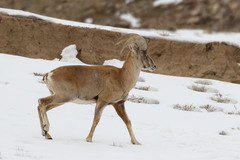
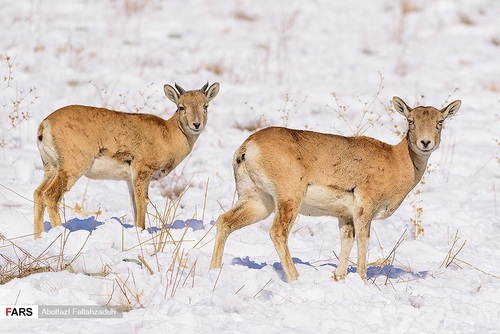
The urial ( OOR-ee-əl; Ovis vignei), also known as arkars, shapo, or shapu, is a wild sheep native to Central and South Asia. It is listed as Vulnerable on the IUCN Red List. Ovis vignei was the scientific name proposed by Edward Blyth in 1841 for wild sheep in the Sulaiman Mountains. The specific name honours Godfrey Vigne (1801–1863).

The vignei subspecies group consists of six individual subspecies: Ladakh urial (Ovis vignei vignei): northern India (Ladakh), northern Pakistan (Gilgit-Baltistan) Transcaspian urial (Ovis vignei arkal): Ustjurt-Plateau (Turkmenistan, Uzbekistan, northern Iran) and western Kazakhstan

Blanford's urial or Baluchistan urial (Ovis vignei blanfordi): Pakistan (Balochistan) Bukhara urial (Ovis vignei bochariensis): Uzbekistan, Tajikistan, Turkmenistan, Afghanistan Afghan urial or Turkmenian sheep (Ovis vignei cycloceros): southern Turkmenistan, eastern Iran, Afghanistan, Pakistan (north Balochistan)

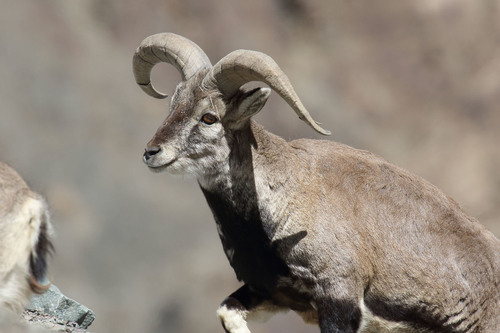
Punjab urial (Ovis vignei punjabiensis): Pakistan (Punjab) Urial males have large horns, curling outwards from the top of the head turning in to end somewhere behind the head; females have shorter, compressed horns. The horns... Wikipedia →
Sounds

Recording0:41

Portugal · 2025

© FreckLes · iNaturalist · CC BY-NC 4.0

Recording0:11

Canada · 2023

© Braden J. Judson · iNaturalist · CC BY-NC 4.0

Global Distribution

Parks Where Found

# Park Country Daily sighting probability
1 Hemis National Park 🇮🇳 India
~40%

More parks will be added in future updates.

Zoos & Centres Where Found

# Zoo / Centre Country
1 Liberec Zoo 🇨🇿 Czechia In captivity
2 Nordens Ark 🇸🇪 Sweden In captivity
3 Lahore Zoo Safari 🇵🇰 Pakistan In captivity
4 Tallinn Zoo 🇪🇪 Estonia In captivity
5 National Zoological Garden of South Africa 🇿🇦 South Africa In captivity
6 Saint Louis Zoo 🇺🇸 United States In captivity
7 Eram Zoo 🇮🇷 Iran In captivity

Before you go

What are the chances of seeing an Urial in Hemis National Park?

Likely

About 40% of wildlife watchers report an Urial sighting in Hemis National Park on a given day, based on 26 verified sightings from GBIF citizen-science data from 2019 to 2026. It is the 5th most-seen of the 7 mammals we can rate there. Over three days the chance rises to about 80%, and over a week to over 90%, if each day is a fresh chance.

When is the best time to see an Urial in Hemis National Park?

January

In that month about 70% of wildlife watchers report an Urial in Hemis National Park on a given day, against about 10% in February and November–December, the lowest months.

What time of day is best to see an Urial?

Between 9 am and noon

Across all the parks we cover, that three-hour window holds the most Urial sightings with a recorded time, and about 7 in 10 of them come between 6 am and 6 pm: it is a daytime animal.

Where else can you see an Urial?

Only Hemis National Park, in our data

Hemis National Park is the only park on Wallace's Line with enough records to rate Urial sightings: about 40% of wildlife watchers there report one on a given day.

Which relatives of the Urial live in Hemis National Park?

Same family: Bovidae

The closest relatives of the Urial that you can see in Hemis National Park (family Bovidae, Bovids) are Bharal (about 80%) and Domestic Yak (about 40%), with each one's daily chance of a sighting.

Where does the Urial sighting chance come from?

GBIF citizen-science records

It is estimated from how often the Urial is recorded against all the mammals logged in Hemis National Park (26 verified sightings from 2019 to 2026), calibrated against known sighting rates. Figures are rounded to the nearest 10% because citizen-science data supports honest approximations, not decimals, and months with records from fewer than five people show "—". How it works.

← Back to Hemis National Park