Bharal

Bharal

Pseudois nayaur

Silhouette: [unknown] · PhyloPic

LCLeast ConcernNTVUENCR
Daily sighting probability ~80% · Very likely
at Hemis National Park

In 3 days >90%

22 Verified sightings at Hemis National Park From 2019 to 2026
22 In 1 park
September Best month
☀️ Diurnal When it's spotted

About the Bharal

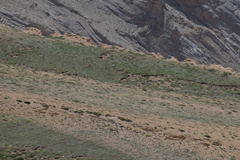
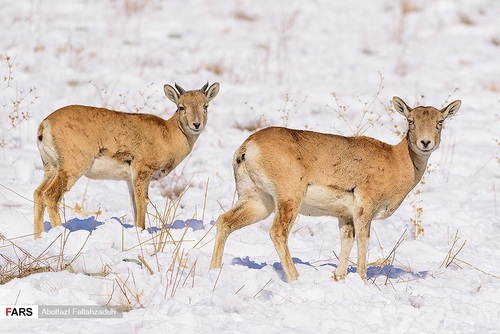
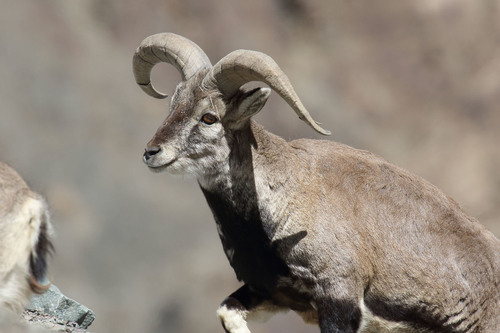
The bharal (Pseudois nayaur), also called the blue sheep, is a caprine native to the high Himalayas. It inhabits the Himalayan alpine meadows and rocky slopes across Bhutan, China, India, Myanmar, Nepal, and Pakistan, typically at altitudes of 2,200–5,500 m (7,200–18,000 ft).

The bharal is the only member of its genus Pseudois and is genetically closer to goats (Capra) than sheep (Ovis). The dwarf blue sheep was once considered a separate species but is now classified as a variant of the Chinese blue sheep.

The bharal is a medium-sized caprine, measuring 115–165 cm (45–65 in) in length, and weighing 35–75 kg (77–165 lb). It has a slate-grey fur with white underparts. Both sexes have horns, with the males having larger curved horns measuring up to 80 cm (31 in). The Helanshan variant is smaller in size, with less pronounced sexual dimorphism and straighter horns.

The bharal is mainly a grazer, feeding on grasses, but also browses shrubs when food is scarce. It relies on camouflage and shelter under the cliffs to evade predators. Rutting occurs from late November to mid-January, with males usually engaging in various maneuvers to mate. Though it is classified as Least Concern by the IUCN, it face threats from poaching and competition with livestock, but these impacts are limited due to their often isolated and rugged habitats. Wikipedia →
Global Distribution

Parks Where Found

# Park Country Daily sighting probability
1 Hemis National Park 🇮🇳 India
~80%

More parks will be added in future updates.

Zoos & Centres Where Found

# Zoo / Centre Country
1 Pairi Daiza 🇧🇪 Belgium In captivity
2 Prague Zoo 🇨🇿 Czechia In captivity
3 Tierpark Berlin 🇩🇪 Germany In captivity
4 Kaliningrad Zoo 🇷🇺 Russia In captivity
5 Tallinn Zoo 🇪🇪 Estonia In captivity
6 Parc zoologique de Montpellier 🇫🇷 France In captivity
7 Nuremberg Zoo 🇩🇪 Germany In captivity
8 Tiergarten Am Tiergarten 28 in Nürnberg 🇩🇪 Germany In captivity
9 Chongqing Zoo 🇨🇳 China In captivity
10 Warsaw Zoo 🇵🇱 Poland In captivity
11 Chengdu Zoo 🇨🇳 China In captivity
12 Motithang Takin Preserve 🇧🇹 Bhutan In captivity
13 Zoologischer Garten Halle 🇩🇪 Germany In captivity
14 Ménagerie du Jardin des Plantes 🇫🇷 France In captivity
15 Zoopark Limpopo 🇷🇺 Russia In captivity
16 Kathmandu Zoo 🇳🇵 Nepal In captivity
17 Костромской зоопарк 🇷🇺 Russia In captivity
18 Pt. G.B. Pant High Altitude Zoo, Nainital 🇮🇳 India In captivity
19 Padmaja Naidu Himalayan Zoological Park 🇮🇳 India In captivity
20 herpetarium warszawskiego ZOO 🇵🇱 Poland In captivity
21 Rákosův pavilon 🇨🇿 Czechia In captivity
22 Tiergarten Am Tiergarten 12 in Nürnberg 🇩🇪 Germany In captivity
23 Tiergarten Am Tiergarten 14 in Nürnberg 🇩🇪 Germany In captivity
24 Tiergarten Am Tiergarten 6 in Nürnberg 🇩🇪 Germany In captivity
25 Velemlokárium 🇨🇿 Czechia In captivity
26 akwarium warszawskiego ZOO 🇵🇱 Poland In captivity
27 hipopotamiarnia i akwarium morskie warszawskiego ZOO 🇵🇱 Poland In captivity

Before you go

What are the chances of seeing a Bharal in Hemis National Park?

Very likely

About 80% of wildlife watchers report a Bharal sighting in Hemis National Park on a given day, based on 22 verified sightings from GBIF citizen-science data from 2019 to 2026. It is the most-seen of the 7 mammals we can rate there. Over three days the chance rises to over 90%, if each day is a fresh chance.

When is the best time to see a Bharal in Hemis National Park?

September

In that month about 90% of wildlife watchers report a Bharal in Hemis National Park on a given day, against about 60% in March, the lowest month. April and October–January have too few records to rate.

What time of day is best to see a Bharal?

Between 1 and 4 pm

Across all the parks we cover, that three-hour window holds the most Bharal sightings with a recorded time, and about 9 in 10 of them come between 6 am and 6 pm: it is a daytime animal.

Where else can you see a Bharal?

Only Hemis National Park, in our data

Hemis National Park is the only park on Wallace's Line with enough records to rate Bharal sightings: about 80% of wildlife watchers there report one on a given day.

Which relatives of the Bharal live in Hemis National Park?

Same family: Bovidae

The closest relatives of the Bharal that you can see in Hemis National Park (family Bovidae, Bovids) are Domestic Yak (about 40%) and Urial (about 40%), with each one's daily chance of a sighting.

Where does the Bharal sighting chance come from?

GBIF citizen-science records

It is estimated from how often the Bharal is recorded against all the mammals logged in Hemis National Park (22 verified sightings from 2019 to 2026), calibrated against known sighting rates. Figures are rounded to the nearest 10% because citizen-science data supports honest approximations, not decimals, and months with records from fewer than five people show "—". How it works.

← Back to Hemis National Park