
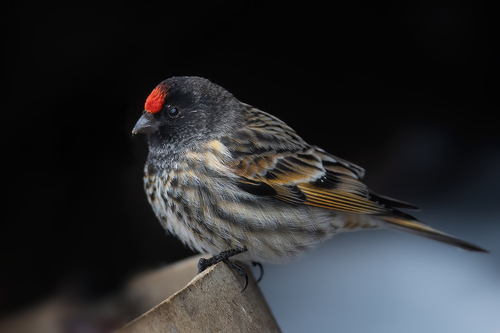
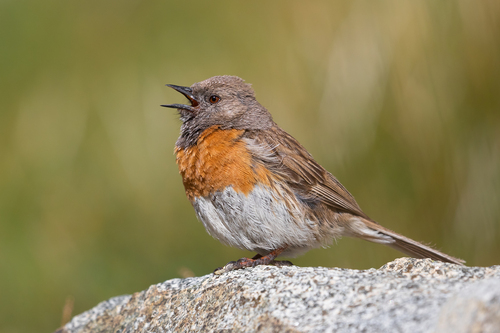
White-browed Tit-Warbler

White-browed Tit-Warbler

Leptopoecile sophiae

Silhouette: Sheatherius · PhyloPic

LCLeast ConcernNTVUENCR
Daily sighting probability ~20% · Possible
at Hemis National Park

In 3 days ~60% in a week ~90%

33 Verified sightings at Hemis National Park From 2019 to 2026
44 In all 2 parks
June Best month
☀️ Diurnal When it's spotted

About the White-browed Tit-Warbler

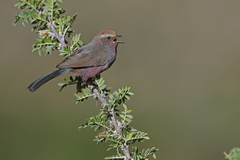
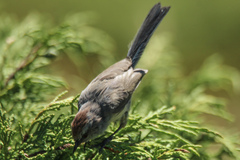
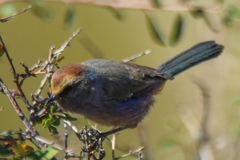
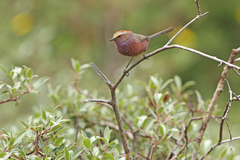
The white-browed tit-warbler (Leptopoecile sophiae) is a species of bird in the family Aegithalidae. The species was first described by Nikolai Severtzov in 1873. It is resident in the Tian Shan and central China as well as in the Himalayas where it is mainly found in winter. Its natural habitat is boreal forests.

The white-browed tit warbler is a passerine bird in the bushtit family. It was first described in 1873 by Russian ornithologist Nikolai Severtzov. The genus name, Leptopoecile, comes from Greek leptos, which means "slender" or "delicate". James A. Jobling supposed, that the specific epithet, sophiae, comes from the female eponym "Sophia"; it might refer to Sophia Maria Alexandrovna, who was tzarina of Russia during Severtzov's lifetime. It is more likely, however, that the species epithet refers to Severtsov's wife, Sofia Alexandrovna Poltoratskaya. For about a year (1865-1866) Sophia was a member of Severtsov's expedition to the Tian Shan and Issyk-Kul. She collected plants and insects and, as a talented artist, made many sketches.

Four subspecies are recognized: It ranges from southeast... Wikipedia →

Sounds

Call0:29

China · 2024

© Peter Boesman · XC916283 · CC BY-NC-ND 4.0

Begging call0:42

India · 2023

© Viral joshi · XC824180 · CC BY-NC-SA 4.0

Call0:21

China · 2020

© PT xiao · XC669665 · CC BY-NC-SA 4.0

Global Distribution

Parks Where Found

# Park Country Daily sighting probability
1 Hemis National Park 🇮🇳 India
~20%
2 Jiuzhaigou National Park 🇨🇳 China
~10%

Cities Where Found

# City Country Daily sighting probability
1 Almaty 🇰🇿 Kazakhstan
~10%

Before you go

What are the chances of seeing a White-browed Tit-Warbler in Hemis National Park?

Possible

About 20% of wildlife watchers report a White-browed Tit-Warbler sighting in Hemis National Park on a given day, based on 33 verified sightings from GBIF citizen-science data from 2019 to 2026. It is the 19th most-seen of the 52 birds we can rate there. Over three days the chance rises to about 60%, and over a week to about 90%, if each day is a fresh chance.

When is the best time to see a White-browed Tit-Warbler in Hemis National Park?

June

In that month about 40% of wildlife watchers report a White-browed Tit-Warbler in Hemis National Park on a given day, against about 10% in April–May and August, the lowest months. That is one of Hemis National Park's wettest months, with about 45 mm of rain against 10 mm in October. January has too few records to rate.

What time of day is best to see a White-browed Tit-Warbler?

Between 9 am and noon

Across all the parks we cover, that three-hour window holds the most White-browed Tit-Warbler sightings with a recorded time, and about 9 in 10 of them come between 6 am and 6 pm: it is a daytime animal.

Is Hemis National Park the best place to see a White-browed Tit-Warbler?

Yes

Of the 2 parks where we can rate White-browed Tit-Warbler sightings, Hemis National Park has the highest daily chance: about 20%. Next come Jiuzhaigou National Park (China, about 10%).

Which relatives of the White-browed Tit-Warbler live in Hemis National Park?

Same order: Passeriformes

The closest relatives of the White-browed Tit-Warbler that you can see in Hemis National Park (order Passeriformes, Perching Birds) are Eurasian Magpie (about 80%), Red-billed Chough (about 70%) and Fire-fronted Serin (about 60%), with each one's daily chance of a sighting.

Where does the White-browed Tit-Warbler sighting chance come from?

GBIF citizen-science records

It is estimated from how often the White-browed Tit-Warbler is recorded against all the birds logged in Hemis National Park (33 verified sightings from 2019 to 2026), calibrated against known sighting rates. Figures are rounded to the nearest 10% because citizen-science data supports honest approximations, not decimals, and months with records from fewer than five people show "—". How it works.

← Back to Hemis National Park