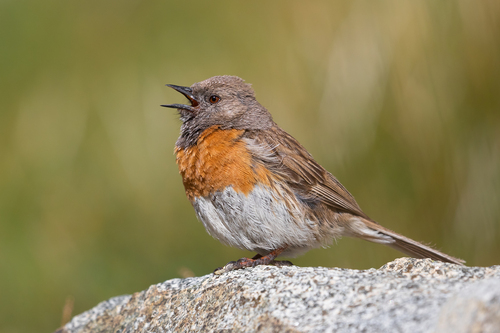
Eurasian Crag Martin

Eurasian Crag Martin

Ptyonoprogne rupestris

Silhouette: Sheatherius · PhyloPic

LCLeast ConcernNTVUENCR
Daily sighting probability ~30% · Possible
at Hemis National Park

In 3 days ~70% in a week ~90%

35 Verified sightings at Hemis National Park From 2019 to 2026
7,725 In all 18 parks
May Best month
☀️ Diurnal When it's spotted

About the Eurasian Crag Martin

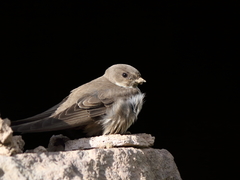
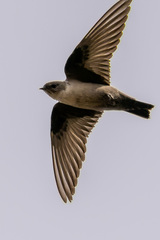
The Eurasian crag martin or just crag martin (Ptyonoprogne rupestris) is a small passerine bird in the swallow family. It is about 14 cm (5.5 in) long with ash-brown upperparts and paler underparts, and a short, square tail that has distinctive white patches on most of its feathers. It breeds in the mountains of southern Europe, northwestern Africa and across the Palearctic. It can be confused with the three other species in its genus, but is larger with brighter tail spots and different plumage tone. Many European birds are resident, but some northern populations and most Asian breeders are migratory, wintering in northern Africa, the Middle East or India.

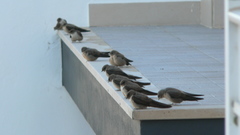
The Eurasian crag martin builds a nest adherent to the rock under a cliff overhang or increasingly onto a man-made structure. It makes a neat half-cup mud nest with an inner soft lining of feathers and dry grass. Nests are often solitary, although a few pairs may breed relatively close together at good locations. Two to five brown-blotched white eggs are incubated mainly by the female, and both parents feed the chicks. This species does not form large breeding colonies, but is gregarious outside the breeding season. It feeds on a wide variety of insects that it catches with its beak while flying near to cliff faces or over streams and alpine meadows. Adults and young may be hunted and eaten by birds of prey or corvids, and this species is a host of blood-sucking mites. With its large, expanding range and large population, there are no significant conservation concerns involving the species.

This bird is closely related to the other three crag martins which share its genus, and has sometimes been considered to be the same species as one or more of them, although it appears that there are areas where two species' ranges overlap without hybridisation occurring. All four Ptyonoprogne crag martins are quite similar in behaviour to other Old World swallows that build mud nests, and are sometimes subsumed into the larger genus Hirundo, but this approach leads to inconsistencies in classifying several other genera, particularly the house martins. Wikipedia →

Sounds

Call0:18

France · 2026

© Thierry THOMAS · XC1184014 · CC BY-NC-SA 4.0

Alarm call0:29

Austria · 2026

© J. Veeken · XC1167338 · CC BY-NC-SA 4.0

Flight call0:14

China · 2026

© Wang zikun · XC1105602 · CC BY-NC-SA 4.0

Global Distribution

Parks Where Found

# Park Country Daily sighting probability
1 Vanoise National Park 🇫🇷 France
~60%
2 Gobi Gurvansaikhan National Park 🇲🇳 Mongolia
~60%
3 Monfragüe National Park 🇪🇸 Spain
~50%
4 Aigüestortes National Park 🇪🇸 Spain
~50%
5 Picos de Europa National Park 🇪🇸 Spain
~50%
6 Ordesa y Monte Perdido National Park 🇪🇸 Spain
~50%
7 Hohe Tauern National Park 🇦🇹 Austria
~40%
8 Cévennes National Park 🇫🇷 France
~40%
9 Mercantour National Park 🇫🇷 France
~40%
10 Pyrénées National Park 🇫🇷 France
~40%
11 Ecrins National Park 🇫🇷 France
~40%
12 Hemis National Park 🇮🇳 India
~30%
13 Sierra Nevada National Park 🇪🇸 Spain
~20%
14 Jiuzhaigou National Park 🇨🇳 China
~20%
15 Sierra de Guadarrama National Park 🇪🇸 Spain
~10%
16 Doñana National Park 🇪🇸 Spain
~10%
17 Triglav National Park 🇸🇮 Slovenia
<5%
18 Camargue 🇫🇷 France
<5%

Cities Where Found

# City Country Daily sighting probability
1 Riyadh 🇸🇦 Saudi Arabia
~20%
2 Porto 🇵🇹 Portugal
~10%
3 Barcelona 🇪🇸 Spain
~10%
4 Karaj 🇮🇷 Iran
~10%
5 Valencia 🇪🇸 Spain
~10%
6 Yerevan 🇦🇲 Armenia
~10%
7 Madrid 🇪🇸 Spain
~10%
8 Lisbon 🇵🇹 Portugal
<5%
9 Tehran 🇮🇷 Iran
<5%
10 Antalya 🇹🇷 Turkey
<5%

Before you go

What are the chances of seeing a Eurasian Crag Martin in Hemis National Park?

Possible

About 30% of wildlife watchers report a Eurasian Crag Martin sighting in Hemis National Park on a given day, based on 35 verified sightings from GBIF citizen-science data from 2019 to 2026. It is the 12th most-seen of the 52 birds we can rate there. Over three days the chance rises to about 70%, and over a week to about 90%, if each day is a fresh chance.

When is the best time to see a Eurasian Crag Martin in Hemis National Park?

May

In that month about 70% of wildlife watchers report a Eurasian Crag Martin in Hemis National Park on a given day, against about 10% in March and November–December, the lowest months. January has too few records to rate.

What time of day is best to see a Eurasian Crag Martin?

Between 11 am and 2 pm

Across all the parks we cover, that three-hour window holds the most Eurasian Crag Martin sightings with a recorded time, and about 8 in 10 of them come between 6 am and 6 pm: it is a daytime animal.

Which relatives of the Eurasian Crag Martin live in Hemis National Park?

Same order: Passeriformes

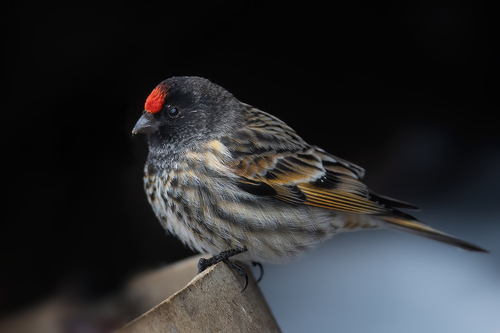
The closest relatives of the Eurasian Crag Martin that you can see in Hemis National Park (order Passeriformes, Perching Birds) are Eurasian Magpie (about 80%), Red-billed Chough (about 70%) and Fire-fronted Serin (about 60%), with each one's daily chance of a sighting.

Where does the Eurasian Crag Martin sighting chance come from?

GBIF citizen-science records

It is estimated from how often the Eurasian Crag Martin is recorded against all the birds logged in Hemis National Park (35 verified sightings from 2019 to 2026), calibrated against known sighting rates. Figures are rounded to the nearest 10% because citizen-science data supports honest approximations, not decimals, and months with records from fewer than five people show "—". How it works.

← Back to Hemis National Park