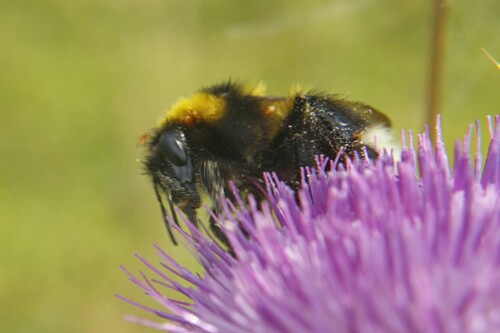
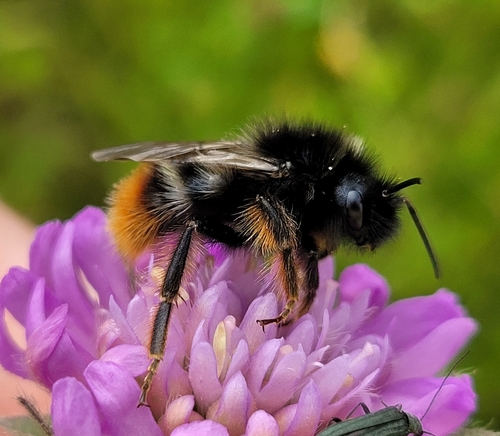
Brown-Banded Carder-Bumble Bee

Brown-Banded Carder-Bumble Bee

Bombus humilis

Daily sighting probability ~10% · With luck
at Hohe Tauern National Park

In 3 days ~30% in a week ~50%

11 Verified sightings at Hohe Tauern National Park From 2019 to 2026
43 In all 4 parks
September Best month
☀️ Diurnal When it's spotted

About the Brown-Banded Carder-Bumble Bee

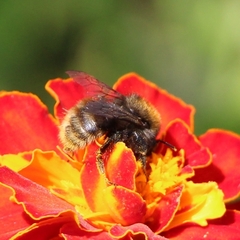
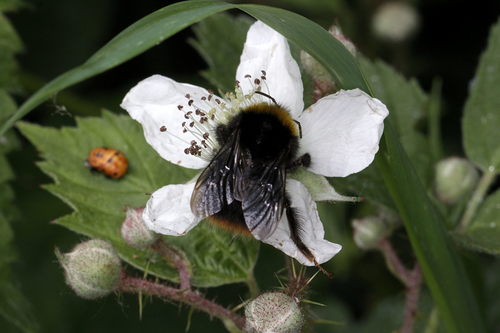
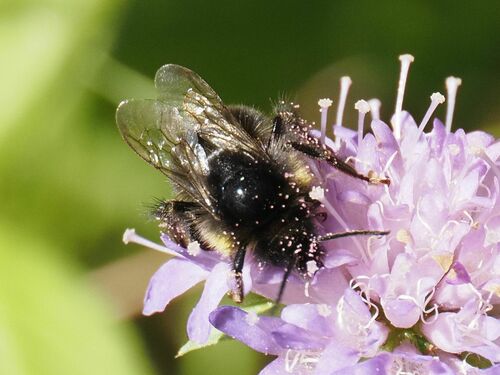
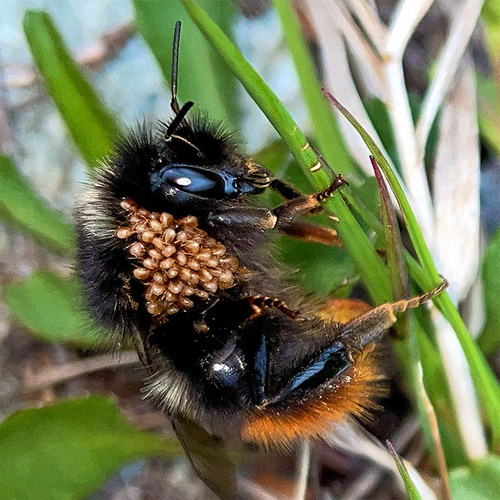
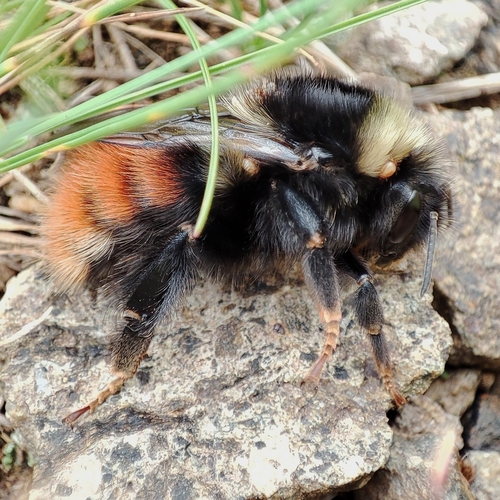
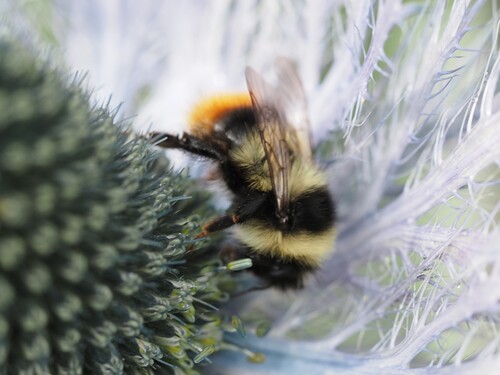
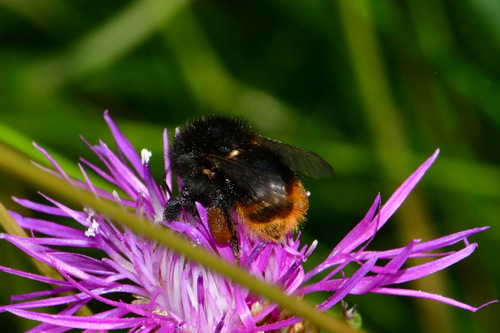
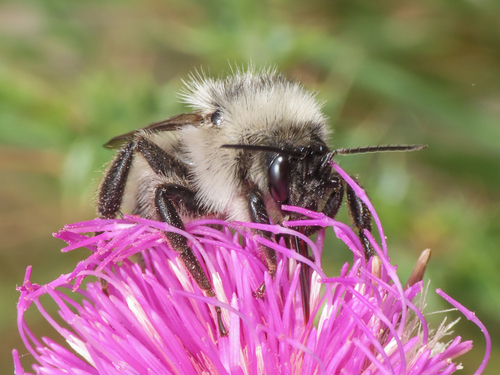
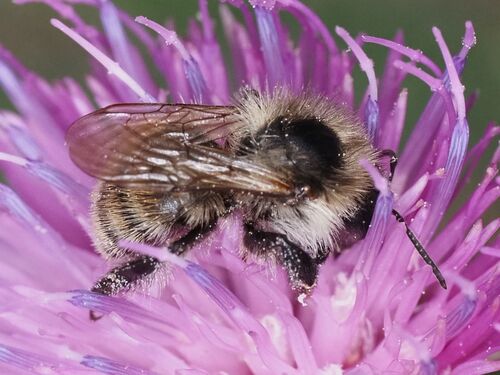
The brown-banded carder bee (Bombus humilis) is a bumblebee found in most of Europe west of Russia, with the exception of Ireland and Iceland. It is also found in Turkey, on the Tibetan plateau, northern China, eastern and southern Mongolia, and parts of North Korea. In Britain, it is limited to the coast and chalkland areas of southern England, though the species has also been found in the Queen Elizabeth Olympic Park. The brown-banded carder bee is similar in appearance to the moss carder bee. As they share similar habitats, care must be taken to distinguish between the two.

The brown-banded carder bee is medium-sized with a relatively long tongue. The queen is 16–18 mm (0.63–0.71 in) long, the worker 10–15 mm (0.39–0.59 in). The thorax is usually yellow-orange on top, with beige flanks, but may be dark brown. Most of the abdomen is beige, too, although with a somewhat striped effect. Both queens (the reproductive females) and workers usually have a broad, dark brown band (hence the common name) on the upper side of the abdomen, near the front, although it can be missing on some workers. A few black hairs - may only be one or two – are present on the thorax near... Wikipedia →
Global Distribution

Parks Where Found

# Park Country Daily sighting probability
1 Hohe Tauern National Park 🇦🇹 Austria
~10%
2 Bavarian Forest National Park 🇩🇪 Germany
~10%
3 Ecrins National Park 🇫🇷 France
~10%
4 Pyrénées National Park 🇫🇷 France
<5%

Cities Where Found

# City Country Daily sighting probability
1 Kharkiv 🇺🇦 Ukraine
~10%
2 Budapest 🇭🇺 Hungary
~10%
3 Vienna 🇦🇹 Austria
~10%
4 Kazan 🇷🇺 Russia
~10%
5 London 🇬🇧 United Kingdom
<5%
6 Munich 🇩🇪 Germany
<5%
7 Warsaw 🇵🇱 Poland
<5%
8 Nizhny Novgorod 🇷🇺 Russia
<5%
9 Prague 🇨🇿 Czechia
<5%
10 Berlin 🇩🇪 Germany
<5%

Before you go

What are the chances of seeing a Brown-Banded Carder-Bumble Bee in Hohe Tauern National Park?

With luck

About 10% of wildlife watchers report a Brown-Banded Carder-Bumble Bee sighting in Hohe Tauern National Park on a given day, based on 11 verified sightings from GBIF citizen-science data from 2019 to 2026. It is the 142nd most-seen of the 165 insects we can rate there. Over three days the chance rises to about 30%, and over a week to about 50%, if each day is a fresh chance.

When is the best time to see a Brown-Banded Carder-Bumble Bee in Hohe Tauern National Park?

August and September

In those months about 20% of wildlife watchers report a Brown-Banded Carder-Bumble Bee in Hohe Tauern National Park on a given day, against under 5% in January–July and October, the lowest months. December has too few records to rate.

What time of day is best to see a Brown-Banded Carder-Bumble Bee?

Between 11 am and 2 pm

Across all the parks we cover, that three-hour window holds the most Brown-Banded Carder-Bumble Bee sightings with a recorded time, and about 9 in 10 of them come between 6 am and 6 pm: it is a daytime animal.

Is Hohe Tauern National Park the best place to see a Brown-Banded Carder-Bumble Bee?

Yes

Of the 4 parks where we can rate Brown-Banded Carder-Bumble Bee sightings, Hohe Tauern National Park has the highest daily chance: about 10%. Next come Bavarian Forest National Park (Germany, about 10%) and Ecrins National Park (France, about 10%).

Which relatives of the Brown-Banded Carder-Bumble Bee live in Hohe Tauern National Park?

Same genus: Bombus

The closest relatives of the Brown-Banded Carder-Bumble Bee that you can see in Hohe Tauern National Park (genus Bombus, Bumble Bees) are Common Carder Bumble Bee (about 20%), Early Bumble Bee (about 20%) and Broken-Belted Bumble Bee (about 20%), with each one's daily chance of a sighting.

Where does the Brown-Banded Carder-Bumble Bee sighting chance come from?

GBIF citizen-science records

It is estimated from how often the Brown-Banded Carder-Bumble Bee is recorded against all the insects logged in Hohe Tauern National Park (11 verified sightings from 2019 to 2026), calibrated against known sighting rates. Figures are rounded to the nearest 10% because citizen-science data supports honest approximations, not decimals, and months with records from fewer than five people show "—". How it works.

← Back to Hohe Tauern National Park