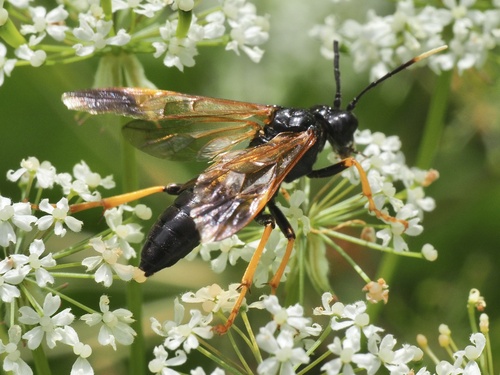
Large Velvet Ant

Large Velvet Ant

Mutilla europaea

Daily sighting probability ~10% · With luck
at Hohe Tauern National Park

In 3 days ~30% in a week ~60%

6 Verified sightings at Hohe Tauern National Park From 2019 to 2026
86 In all 8 parks
May Best month
☀️ Diurnal When it's spotted

About the Large Velvet Ant

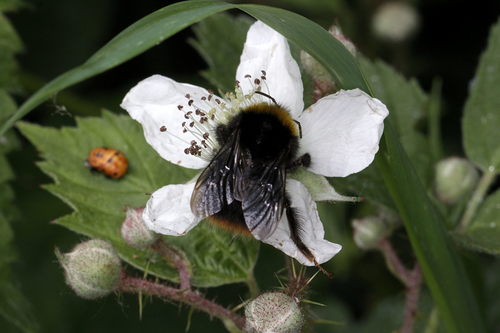
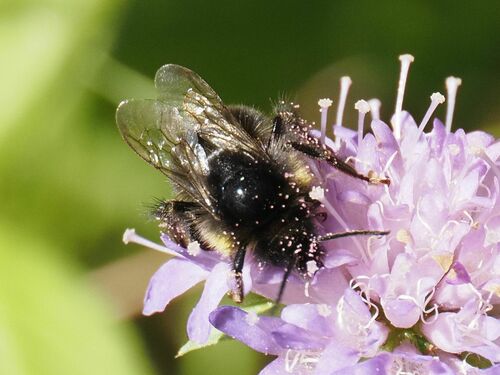
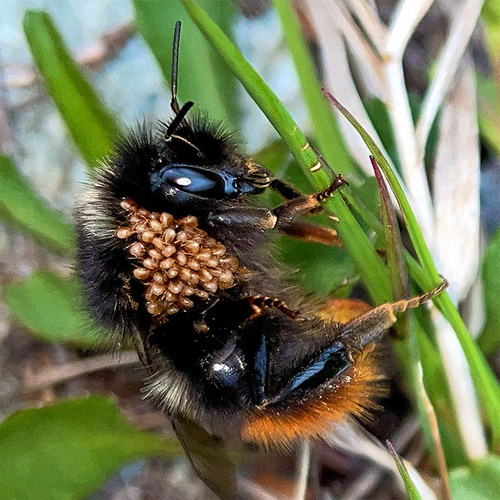
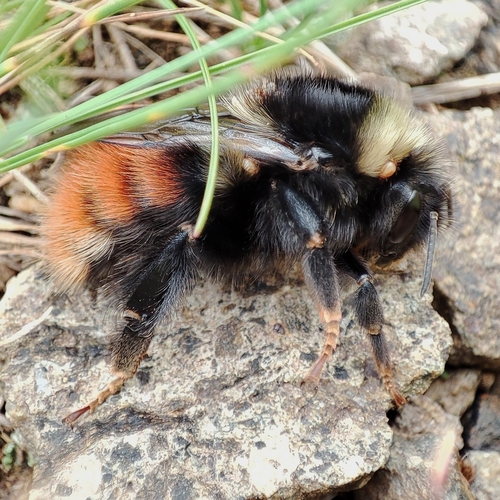
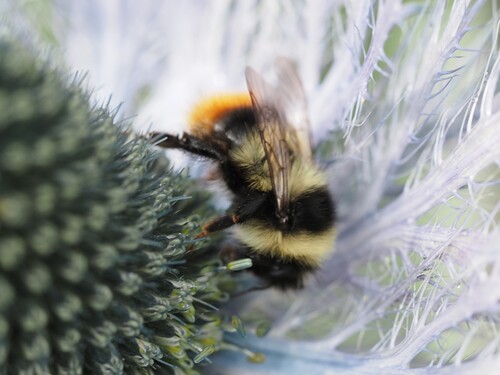
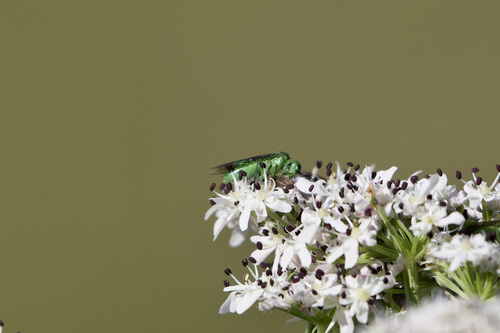
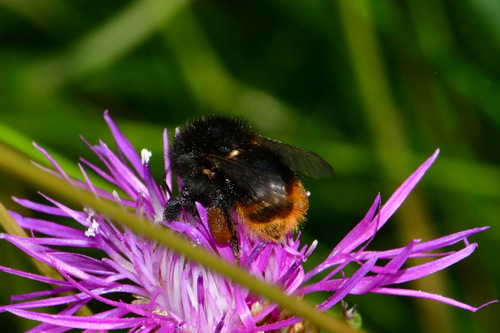
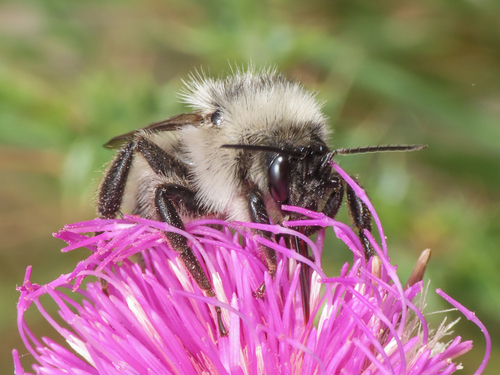
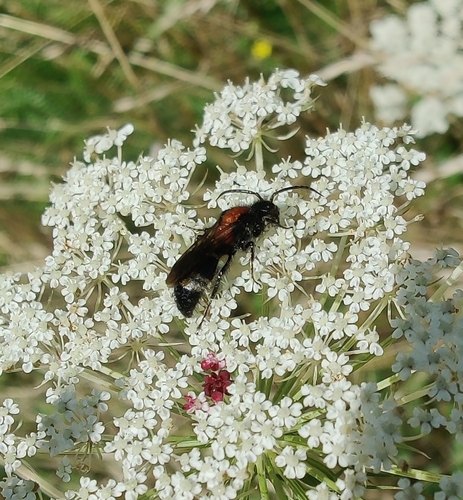
Mutilla europaea, the large velvet ant, is a species of parasitoid wasps belonging to the family Mutillidae. It is a parasitoid on various species of bumblebees and is found in Europe, Asia, and North Africa. The males of M. europaea are dark red on the apex of mandible and the thorax. The first and second terga on the abdomen have bands of long silver setae, that on the second tergum may either be interrupted or wavy. The sides of the second tergum are clothed in long silver setae. The tip of the abdomen and the rest of the body are covered with long black, straight setae. The legs are largely covered in black setae, with a scattering of silver setae. Some variation occurs, and in some specimens, silver dominate setae dominate the hind legs, some males are completely black. In females, the mesonotum is red, and sometimes extends to parts of the pronotum. The first tergum has a band of long, silver setae, the remaining terga are spotted with silver setae along their flanks; they can be close together. The legs have some short, adjecting black and silver setae. The presence of the setae, or bristles, gives rise to the name "velvet ant".

Mutilla europaea... Wikipedia →
Global Distribution

Parks Where Found

# Park Country Daily sighting probability
1 Tatra National Park 🇸🇰 Slovakia
~20%
2 Vanoise National Park 🇫🇷 France
~20%
3 Mercantour National Park 🇫🇷 France
~10%
4 Aigüestortes National Park 🇪🇸 Spain
~10%
5 Hohe Tauern National Park 🇦🇹 Austria
~10%
6 Ecrins National Park 🇫🇷 France
~10%
7 Cairngorms National Park 🇬🇧 United Kingdom
~10%
8 Pyrénées National Park 🇫🇷 France
~10%

Cities Where Found

# City Country Daily sighting probability
1 Helsinki 🇫🇮 Finland
<5%

Before you go

What are the chances of seeing a Large Velvet Ant in Hohe Tauern National Park?

With luck

About 10% of wildlife watchers report a Large Velvet Ant sighting in Hohe Tauern National Park on a given day, based on 6 verified sightings from GBIF citizen-science data from 2019 to 2026. It is the 115th most-seen of the 165 insects we can rate there. Over three days the chance rises to about 30%, and over a week to about 60%, if each day is a fresh chance.

When is the best time to see a Large Velvet Ant in Hohe Tauern National Park?

May

In that month about 30% of wildlife watchers report a Large Velvet Ant in Hohe Tauern National Park on a given day, against under 5% in February–April and September–October, the lowest months. December has too few records to rate.

What time of day is best to see a Large Velvet Ant?

Between noon and 3 pm

Across all the parks we cover, that three-hour window holds the most Large Velvet Ant sightings with a recorded time, and nearly all of them come between 6 am and 6 pm: it is a daytime animal.

Is Hohe Tauern National Park the best place to see a Large Velvet Ant?

5th of 8

Of the 8 parks where we can rate Large Velvet Ant sightings, Hohe Tauern National Park ranks 5th at about 10%. The best odds are in Tatra National Park (Slovakia, about 20%), Vanoise National Park (France, about 20%) and Mercantour National Park (France, about 10%).

Which relatives of the Large Velvet Ant live in Hohe Tauern National Park?

Same order: Hymenoptera

The closest relatives of the Large Velvet Ant that you can see in Hohe Tauern National Park (order Hymenoptera, Ants, Bees, Wasps, and Sawflies) are Common Carder Bumble Bee (about 20%), Early Bumble Bee (about 20%) and Broken-Belted Bumble Bee (about 20%), with each one's daily chance of a sighting.

Where does the Large Velvet Ant sighting chance come from?

GBIF citizen-science records

It is estimated from how often the Large Velvet Ant is recorded against all the insects logged in Hohe Tauern National Park (6 verified sightings from 2019 to 2026), calibrated against known sighting rates. Figures are rounded to the nearest 10% because citizen-science data supports honest approximations, not decimals, and months with records from fewer than five people show "—". How it works.

← Back to Hohe Tauern National Park