Ceylon Myna

Ceylon Myna

Gracula ptilogenys

Silhouette: Rafael Maia · PhyloPic

LCNTNear ThreatenedVUENCR Endemic
Daily sighting probability <5% · Rare
at Horton Plains National Park

In 3 days <5% in a week ~10%

9 Verified sightings at Horton Plains National Park From 2019 to 2026
964 In all 2 parks
February Best month
🌅 Crepuscular When it's spotted

About the Ceylon Myna

The Sri Lanka hill myna or Ceylon myna (Gracula ptilogenys) is a myna, a member of the starling family. This bird is endemic to Sri Lanka. This passerine is typically found in forest and cultivation. The Sri Lanka myna builds a nest in a hole. The normal clutch is two eggs.

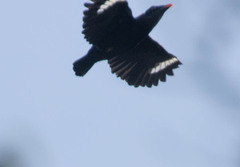
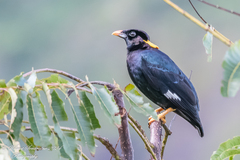
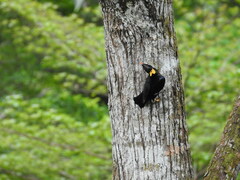
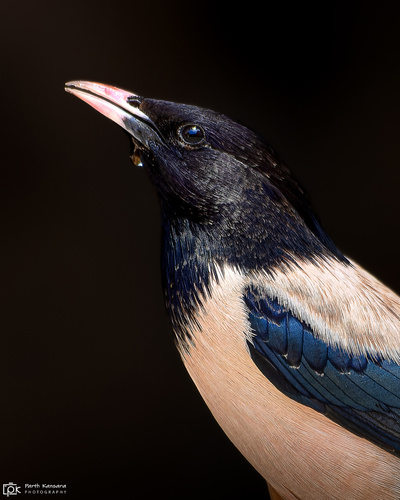
These 25 cm long birds have green-glossed black plumage, purple-tinged on the head and neck. There are large white wing patches, which are obvious in flight. The strong legs are bright yellow, and there are yellow wattles on the nape.

The different shape and position of the wattles and the stouter orange-red bill distinguish this species from the southern hill myna, which also occurs in Sri Lankan forests. The sexes are similar in plumage, but can be distinguished by iris color, which is pale in females and dark in males. Juveniles have a duller bill and smaller wattles, and are less glossy overall.

Like most starlings, the Sri Lanka myna is fairly omnivorous, eating fruit, nectar and insects. In Sri Lanka, the Myna bird is known in many names including Sela lihiniya, Mal kawadiya, Kampatiya in the Sinhala language. The name Sela Lihiniya is often mentioned in poems and other similar literature and... Wikipedia →

Sounds

Call0:13

Sri Lanka · 2026

© Uku Paal · XC1096467 · CC BY-NC-SA 4.0

Song0:22

Sri Lanka · 2020

© KASUN CHATHURANGA · XC537002 · CC BY-NC-ND 4.0

Call1:15

Sri Lanka · 2015

© Simon Elliott · XC591031 · CC BY-NC-ND 4.0

Global Distribution

Parks Where Found

# Park Country Daily sighting probability
1 Sinharaja Forest Reserve 🇱🇰 Sri Lanka
~50%
2 Horton Plains National Park 🇱🇰 Sri Lanka
<5%

Cities Where Found

# City Country Daily sighting probability
1 Colombo [Sri Jayawardenepura Kotte] 🇱🇰 Sri Lanka
<5%

Before you go

What are the chances of seeing a Ceylon Myna in Horton Plains National Park?

Rare

Under 5% of wildlife watchers report a Ceylon Myna sighting in Horton Plains National Park on a given day, based on 9 verified sightings from GBIF citizen-science data from 2019 to 2026. It is the 90th most-seen of the 102 birds we can rate there. Over three days the chance rises to under 5%, and over a week to about 10%, if each day is a fresh chance.

When is the best time to see a Ceylon Myna in Horton Plains National Park?

February

In that month about 10% of wildlife watchers report a Ceylon Myna in Horton Plains National Park on a given day, against under 5% in March to January, the lowest months. That is one of Horton Plains National Park's driest months, with about 90 mm of rain against 370 mm in October.

What time of day is best to see a Ceylon Myna?

Between 2 and 5 am

Across all the parks we cover, that three-hour window holds the most Ceylon Myna sightings with a recorded time, and about 6 in 10 of them come between 6 am and 6 pm: it is most active around dawn and dusk.

Is Horton Plains National Park the best place to see a Ceylon Myna?

2nd of 2

Of the 2 parks where we can rate Ceylon Myna sightings, Horton Plains National Park ranks 2nd at under 5%. The best odds are in Sinharaja Forest Reserve (Sri Lanka, about 50%).

Where does the Ceylon Myna sighting chance come from?

GBIF citizen-science records

It is estimated from how often the Ceylon Myna is recorded against all the birds logged in Horton Plains National Park (9 verified sightings from 2019 to 2026), calibrated against known sighting rates. Figures are rounded to the nearest 10% because citizen-science data supports honest approximations, not decimals, and months with records from fewer than five people show "—". How it works.

← Back to Horton Plains National Park