Sickle-winged Nightjar

Sickle-winged Nightjar

Eleothreptus anomalus

Silhouette: Sheatherius · PhyloPic

LCNTVUVulnerableENCR
Daily sighting probability <5% · Rare
at Iberá National Park

In 3 days ~10%

29 Verified sightings at Iberá National Park From 2019 to 2026
42 In all 2 parks
November Best month
🌙 Nocturnal When it's spotted

About the Sickle-winged Nightjar

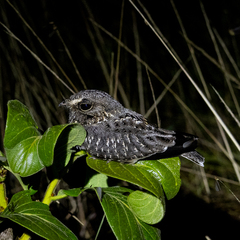
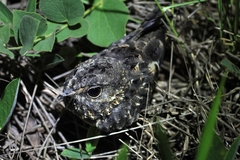
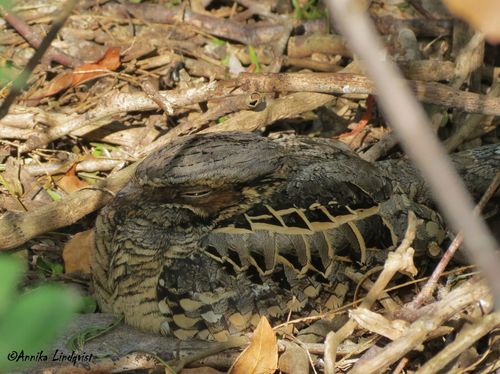
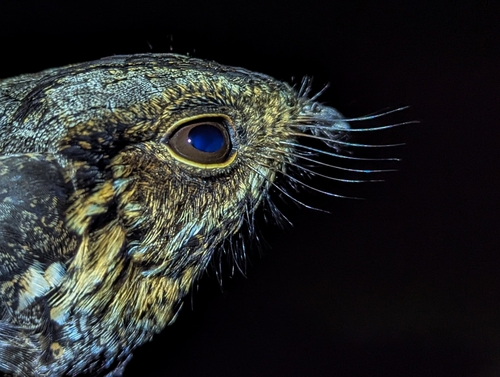
The sickle-winged nightjar (Eleothreptus anomalus) is a species of nightjar in the family Caprimulgidae. It is found in Argentina, Brazil, Paraguay and possibly Uruguay. The sickle-winged nightjar was described as Amblypterus anomalus which was later lumped into genus Caprimulgus. Since the early 2010s it has been placed in its current genus Eleothreptus, which it shares with the white-winged nightjar (E. candicans). It is monotypic.

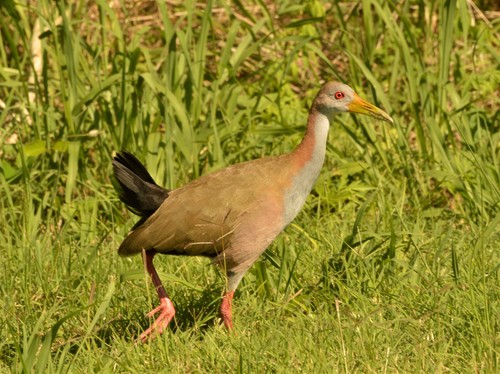
The sickle-winged nightjar is 18 to 20 cm (7.1 to 7.9 in) long; one male weighed 43.7 g (1.5 oz). The adult male's upperparts are grayish brown spotted with dark shades of brown. The wings have a hooked "sickle" appearance due to the shape of the primary flight feathers. They are generally grayish brown, with blackish brown, cinnamon, and white markings. The chin is buffish white with brown bars; the throat brown with a cinnamon tinge, brown bars, and buffy streaks; the breast brown with buff spots and streaks; and the belly and flanks pale buff with brown bars. The adult female is browner than the male and does not have the modified primaries. The pattern and shades of the spots and bars are somewhat different... Wikipedia →

Sounds

Call1:29

Brazil · 2018

© Marco Cruz · XC439760 · CC BY-NC-SA 4.0

Song0:05

Argentina · 2015

© Nestor Fariña · XC408027 · CC BY-NC-SA 4.0

?0:16

Paraguay · 2009

© Paul Smith · XC43206 · CC BY-NC-ND 2.5

Global Distribution

Parks Where Found

# Park Country Daily sighting probability
1 Serra da Canastra National Park 🇧🇷 Brazil
<5%
2 Iberá National Park 🇦🇷 Argentina
<5%

Cities Where Found

# City Country Daily sighting probability
1 Curitiba 🇧🇷 Brazil
<5%

Before you go

What are the chances of seeing a Sickle-winged Nightjar in Iberá National Park?

Rare

Under 5% of wildlife watchers report a Sickle-winged Nightjar sighting in Iberá National Park on a given day, based on 29 verified sightings from GBIF citizen-science data from 2019 to 2026. It is the 229th most-seen of the 284 birds we can rate there. Over three days the chance rises to about 10%, if each day is a fresh chance.

When is the best time to see a Sickle-winged Nightjar in Iberá National Park?

Any time of year

In every month with enough records, under 5% of wildlife watchers report a Sickle-winged Nightjar in Iberá National Park on a given day, so our monthly data shows no clear season.

What time of day is best to see a Sickle-winged Nightjar?

Between 6 and 9 pm

Across all the parks we cover, that three-hour window holds the most Sickle-winged Nightjar sightings with a recorded time, and about 8 in 10 of them come between 6 pm and 6 am: it is mostly seen at night.

Is Iberá National Park the best place to see a Sickle-winged Nightjar?

Among the best

Of the 2 parks where we can rate Sickle-winged Nightjar sightings, Iberá National Park ranks 2nd at under 5%, level with the leaders once rounded. The best odds are in Serra da Canastra National Park (Brazil, under 5%).

Where does the Sickle-winged Nightjar sighting chance come from?

GBIF citizen-science records

It is estimated from how often the Sickle-winged Nightjar is recorded against all the birds logged in Iberá National Park (29 verified sightings from 2019 to 2026), calibrated against known sighting rates. Figures are rounded to the nearest 10% because citizen-science data supports honest approximations, not decimals, and months with records from fewer than five people show "—". How it works.

← Back to Iberá National Park