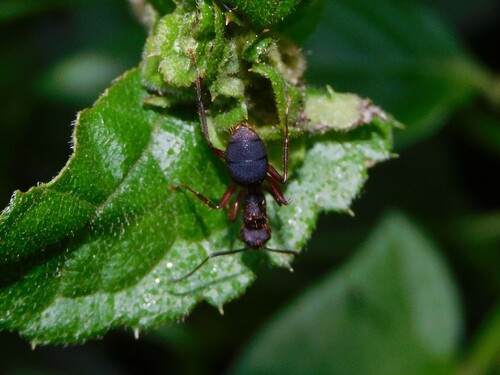
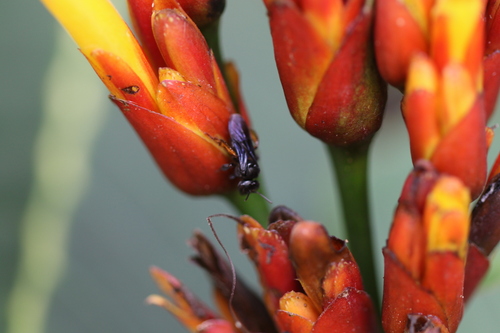
Daily sighting probability ~10% · With luck
at Iguazú National Park

In 3 days ~30% in a week ~50%

14 Verified sightings at Iguazú National Park From 2019 to 2026
29 In all 2 parks
January Best month
☀️ Diurnal When it's spotted

About the Agelaia pallipes

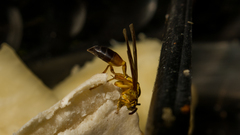
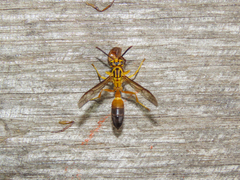
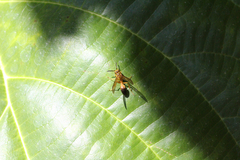
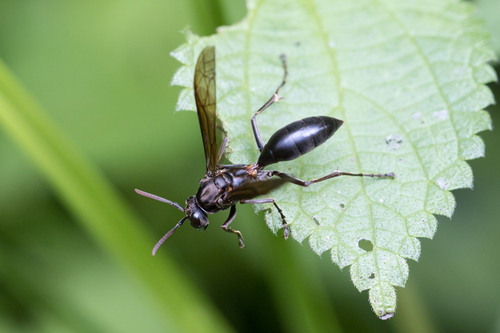
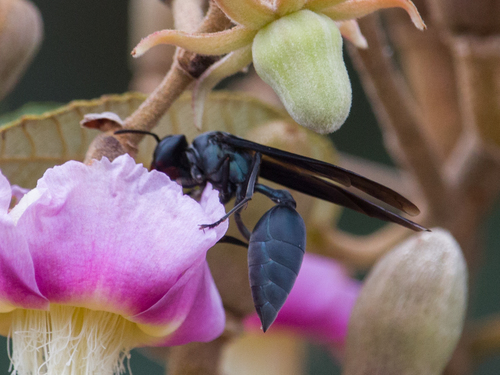
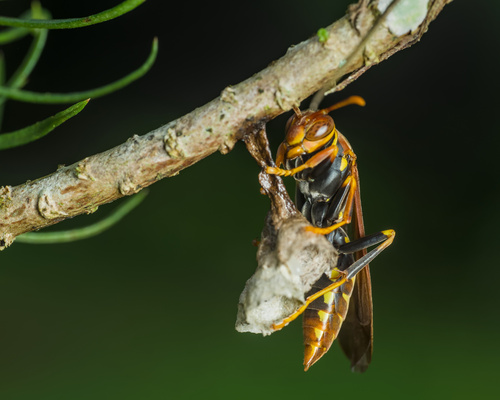
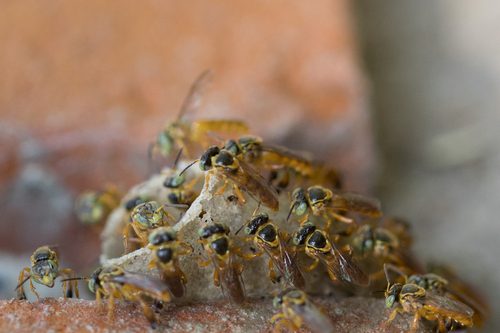
Agelaia pallipes is a species of social paper wasp found from Costa Rica to Brazil, Argentina and Paraguay. A. pallipes is ground-nesting and is one of the most aggressive wasps in South America. This species is a predator of other insects, including flies, moths, and ground crickets, as well as baby birds.

A. pallipes is part of the family Vespidae, subfamily Polistinae, tribe Epiponini, and subsequently the genus Agelaia. Vespidae is characterized by the eusociality of its members. Eusociality refers to the complex organization of animal behavior and is defined by these four attributes: adults live in groups, cooperative care of juveniles, reproductive division of labor where only specific members have the capacity to reproduce, and an overlap of generations. In Polistinae, prey and other food resources are masticated and fed to larvae, who in turn give back a clear but nutritious liquid which the adults then consume. The Epopini is a tribe of Polistinae characterized by being polygynic, with many queens and reproduction in swarms.

Relatives of A. pallipes in the Agelaia genus include: A. vicina, A. flavipennis, A. areata, A. angulicollis, A. cajennensis... Wikipedia →
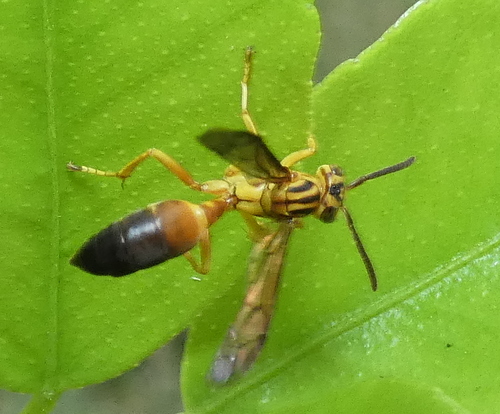
Global Distribution

Parks Where Found

# Park Country Daily sighting probability
1 Iguazú National Park 🇦🇷 Argentina
~10%
2 Iguaçu National Park 🇧🇷 Brazil
~10%

Cities Where Found

# City Country Daily sighting probability
1 João Pessoa 🇧🇷 Brazil
~20%
2 Recife 🇧🇷 Brazil
~10%

Before you go

What are the chances of seeing an Agelaia pallipes in Iguazú National Park?

With luck

About 10% of wildlife watchers report an Agelaia pallipes sighting in Iguazú National Park on a given day, based on 14 verified sightings from GBIF citizen-science data from 2019 to 2026. It is the 119th most-seen of the 306 insects we can rate there. Over three days the chance rises to about 30%, and over a week to about 50%, if each day is a fresh chance.

When is the best time to see an Agelaia pallipes in Iguazú National Park?

December and January

In those months about 20% of wildlife watchers report an Agelaia pallipes in Iguazú National Park on a given day, against under 5% in April, June and September, the lowest months.

What time of day is best to see an Agelaia pallipes?

Between 2 and 5 pm

Across all the parks we cover, that three-hour window holds the most Agelaia pallipes sightings with a recorded time, and nearly all of them come between 6 am and 6 pm: it is a daytime animal.

Is Iguazú National Park the best place to see an Agelaia pallipes?

Yes

Of the 2 parks where we can rate Agelaia pallipes sightings, Iguazú National Park has the highest daily chance: about 10%. Next come Iguaçu National Park (Brazil, about 10%).

Where does the Agelaia pallipes sighting chance come from?

GBIF citizen-science records

It is estimated from how often the Agelaia pallipes is recorded against all the insects logged in Iguazú National Park (14 verified sightings from 2019 to 2026), calibrated against known sighting rates. Figures are rounded to the nearest 10% because citizen-science data supports honest approximations, not decimals, and months with records from fewer than five people show "—". How it works.

← Back to Iguazú National Park