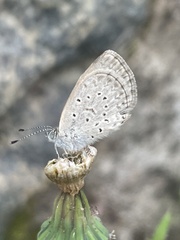
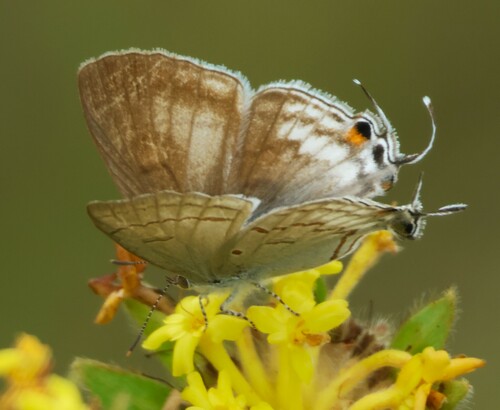
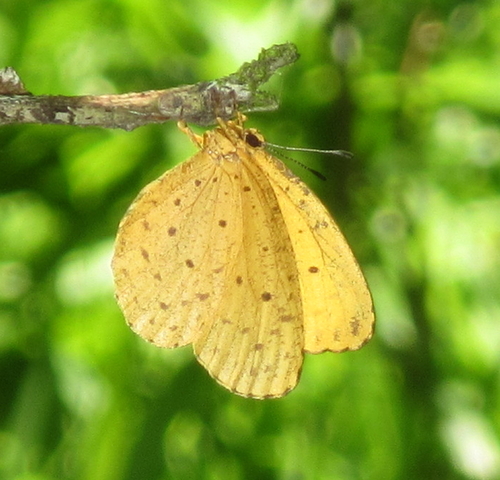
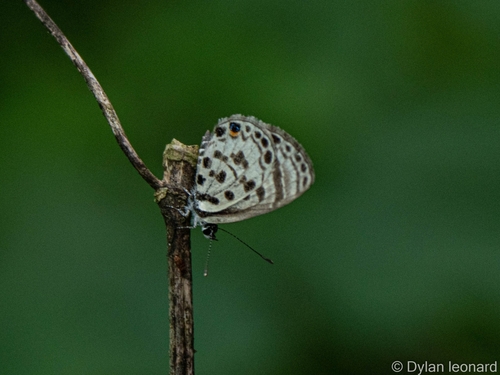
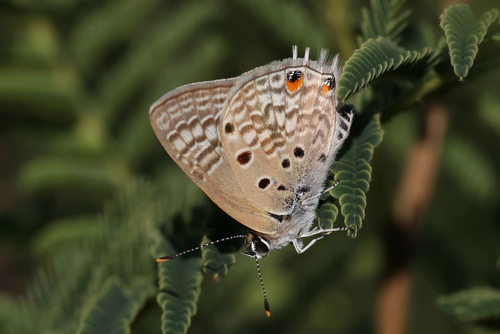
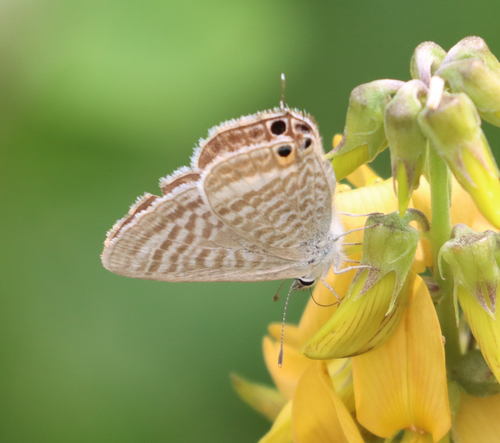
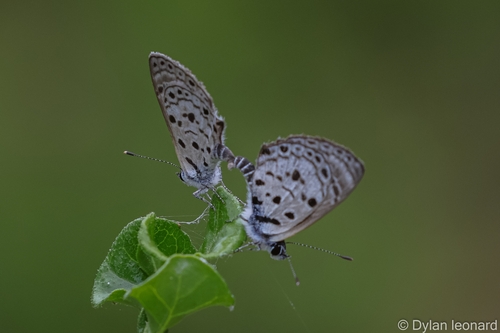
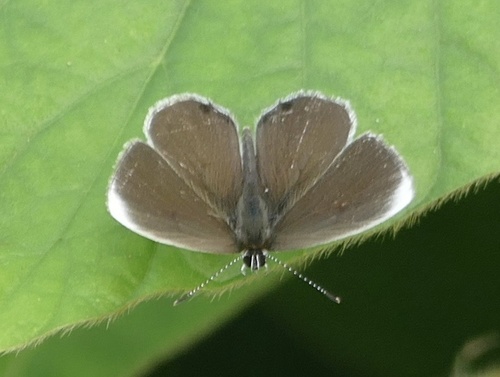
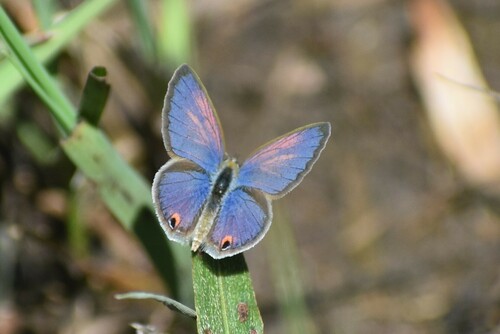
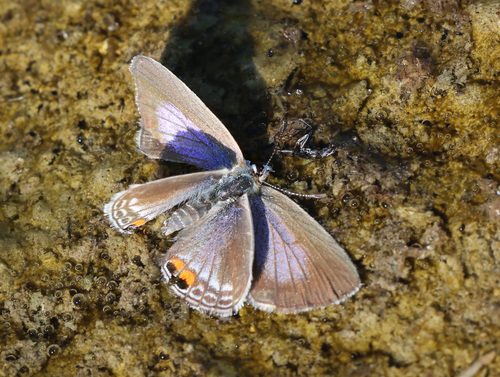
African Grass Blue

African Grass Blue

Zizeeria knysna

Daily sighting probability ~20% · Possible
at iSimangaliso Wetland Park

In 3 days ~40% in a week ~70%

60 Verified sightings at iSimangaliso Wetland Park From 2019 to 2026
622 In all 12 parks
April Best month
☀️ Diurnal When it's spotted

About the African Grass Blue

Zizeeria knysna, the dark grass blue or African grass blue, is a species of blue butterfly (Lycaenidae) found in Africa, on Cyprus and the Iberian Peninsula. Sometimes mistakenly called Zizeeria lysimon (Hübner), that species name is invalid as it is preoccupied by Papilio lisimon Stoll, [1790], a butterfly in the family Riodinidae.

The wingspan is 18–23 mm for males and 21–26 mm for females. The butterfly flies nearly year-round. The larvae feed on Medicago, Melilotus, Acanthyllis, Armeria delicatula, Polygonum equisetiforme, Tribulus terrestris and Oxalis.

Butterflies of Europe[link removed] Zizeeria at Markku Savela's Lepidoptera and Some Other Life Forms Wikipedia →

Global Distribution

Parks Where Found

# Park Country Daily sighting probability
1 South Luangwa National Park 🇿🇲 Zambia
~40%
2 Gonarezhou National Park 🇿🇼 Zimbabwe
~30%
3 iSimangaliso Wetland Park 🇿🇦 South Africa
~20%
4 Gorongosa National Park 🇲🇿 Mozambique
~20%
5 Garden Route National Park 🇿🇦 South Africa
~20%
6 Addo Elephant National Park 🇿🇦 South Africa
~20%
7 Doñana National Park 🇪🇸 Spain
~20%
8 Murchison Falls National Park 🇺🇬 Uganda
~10%
9 Table Mountain National Park 🇿🇦 South Africa
~10%
10 Kruger National Park 🇿🇦 South Africa
~10%
11 Nairobi National Park 🇰🇪 Kenya
~10%
12 Sierra Nevada National Park 🇪🇸 Spain
~10%

Cities Where Found

# City Country Daily sighting probability
1 Lusaka 🇿🇲 Zambia
~90%
2 Kigali 🇷🇼 Rwanda
~50%
3 Antananarivo 🇲🇬 Madagascar
~40%
4 Accra 🇬🇭 Ghana
~20%
5 Johannesburg 🇿🇦 South Africa
~20%
6 Pretoria 🇿🇦 South Africa
~20%
7 Kampala 🇺🇬 Uganda
~20%
8 Serrekunda 🇬🇲 Gambia
~20%
9 Nairobi 🇰🇪 Kenya
~20%
10 Durban 🇿🇦 South Africa
~20%

Before you go

What are the chances of seeing an African Grass Blue in iSimangaliso Wetland Park?

Possible

About 20% of wildlife watchers report an African Grass Blue sighting in iSimangaliso Wetland Park on a given day, based on 60 verified sightings from GBIF citizen-science data from 2019 to 2026. It is the 32nd most-seen of the 316 insects we can rate there. Over three days the chance rises to about 40%, and over a week to about 70%, if each day is a fresh chance.

When is the best time to see an African Grass Blue in iSimangaliso Wetland Park?

April

In that month about 30% of wildlife watchers report an African Grass Blue in iSimangaliso Wetland Park on a given day, against under 5% in February, the lowest month.

What time of day is best to see an African Grass Blue?

Between 10 am and 1 pm

Across all the parks we cover, that three-hour window holds the most African Grass Blue sightings with a recorded time, and about 9 in 10 of them come between 6 am and 6 pm: it is a daytime animal.

Is iSimangaliso Wetland Park the best place to see an African Grass Blue?

3rd of 12

Of the 12 parks where we can rate African Grass Blue sightings, iSimangaliso Wetland Park ranks 3rd at about 20%. The best odds are in South Luangwa National Park (Zambia, about 40%) and Gonarezhou National Park (Zimbabwe, about 30%).

Which relatives of the African Grass Blue live in iSimangaliso Wetland Park?

Same family: Lycaenidae

The closest relatives of the African Grass Blue that you can see in iSimangaliso Wetland Park (family Lycaenidae, Gossamer-winged Butterflies) are Common Hairstreak (about 20%), Forest Hairtail (about 20%) and Tropical Pentila (about 10%), with each one's daily chance of a sighting.

Where does the African Grass Blue sighting chance come from?

GBIF citizen-science records

It is estimated from how often the African Grass Blue is recorded against all the insects logged in iSimangaliso Wetland Park (60 verified sightings from 2019 to 2026), calibrated against known sighting rates. Figures are rounded to the nearest 10% because citizen-science data supports honest approximations, not decimals, and months with records from fewer than five people show "—". How it works.

← Back to iSimangaliso Wetland Park