Triangles
Daily sighting probability <5% · Rare
at iSimangaliso Wetland Park

In 3 days ~10% in a week ~30%

5 Verified sightings at iSimangaliso Wetland Park From 2019 to 2026
137 In all 7 parks
April Best month
🌙 Nocturnal When it's spotted

About the Triangles

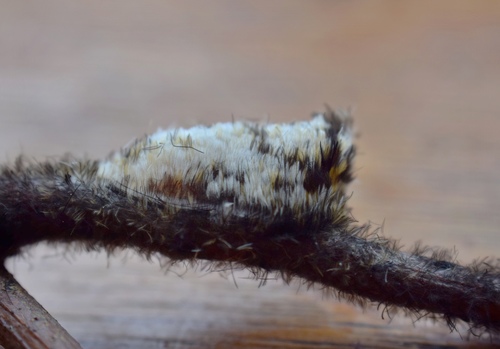
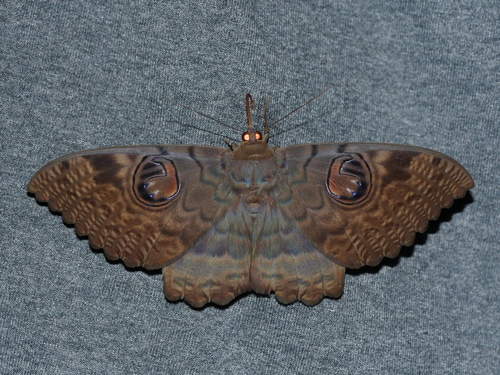
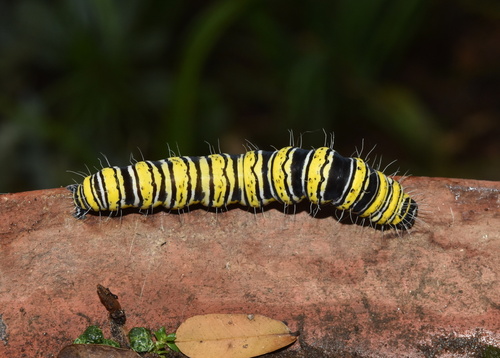
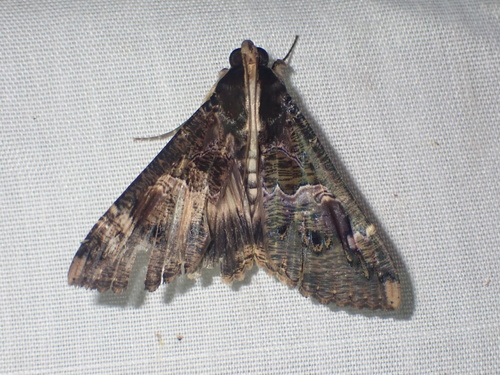
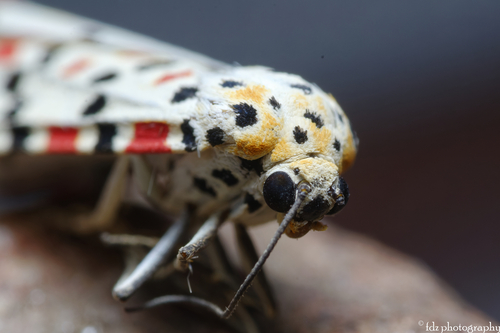
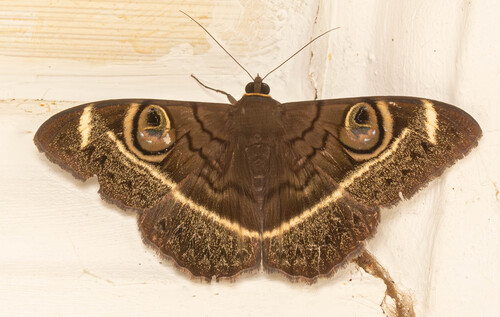
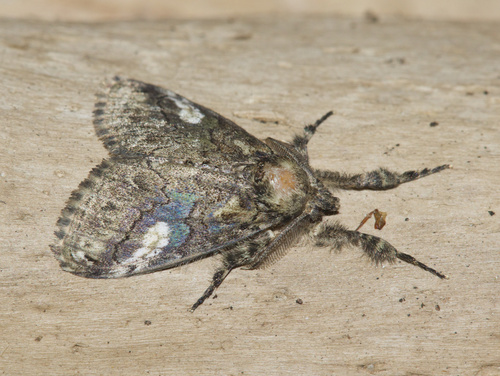
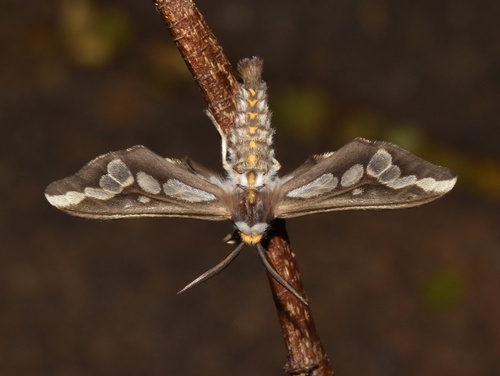
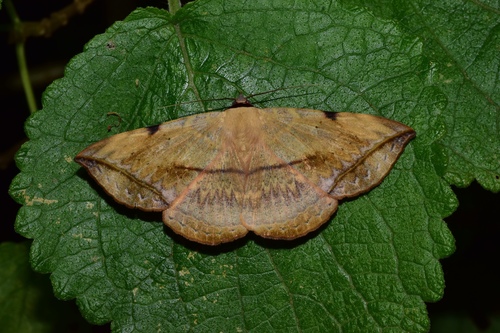
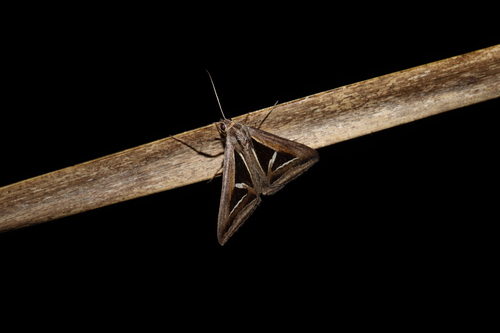
Trigonodes hyppasia, the triangles or semi-looper, is a moth in the family Erebidae. The species was first described by Pieter Cramer in 1779. It is largely cosmopolitan, found throughout Borneo, Fiji, India, Maldives, Nepal, Sri Lanka, São Tomé and Príncipe, Taiwan, Thailand, Zimbabwe, northern Australia, and almost all African countries.

The moth family Noctuidae are mostly classified in the family Erebidae now, along with all of the former members of the families Arctiidae and Lymantriidae. This re-classification has not yet met with general consensus, and many resources and publications still follow the older classification scheme.

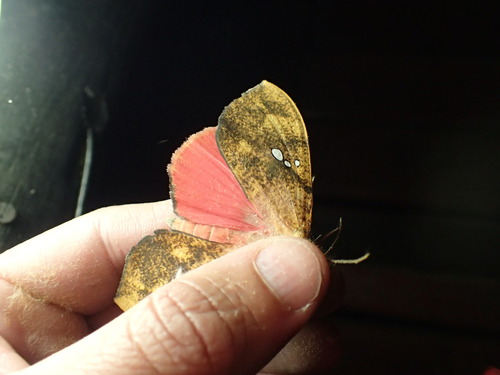
The wingspan is about 30–46 mm. Antennae of male ciliated. Mid and hind tibia hairy. Body pale ochreous brown, slightly suffused with fuscous or dark grey brown. Forewings with a large black white-edged triangular patch easily distinguished below the cell from near base to towards outer angle. A similar smaller patch found beyond the cell on vein 5, with some pale fulvous behind it. A slightly sinuous submarginal pale line with patches of black suffusion found inside it and a series of black specks beyond it. A dark marginal... Wikipedia →
Global Distribution

Parks Where Found

# Park Country Daily sighting probability
1 Kanha National Park 🇮🇳 India
~20%
2 Lamington National Park 🇦🇺 Australia
~20%
3 Kruger National Park 🇿🇦 South Africa
~10%
4 Daintree National Park 🇦🇺 Australia
~10%
5 Springbrook National Park 🇦🇺 Australia
~10%
6 Kaeng Krachan National Park 🇹🇭 Thailand
~10%
7 iSimangaliso Wetland Park 🇿🇦 South Africa
<5%

Cities Where Found

# City Country Daily sighting probability
1 Naha 🇯🇵 Japan
~20%
2 New Delhi 🇮🇳 India
~10%
3 Hyderabad 🇮🇳 India
~10%
4 Kochi 🇮🇳 India
<5%
5 Pune 🇮🇳 India
<5%
6 Singapore 🇸🇬 Singapore
<5%
7 Chennai 🇮🇳 India
<5%
8 Johannesburg 🇿🇦 South Africa
<5%
9 Bengaluru 🇮🇳 India
<5%
10 Durban 🇿🇦 South Africa
<5%

Before you go

What are the chances of seeing a Triangles in iSimangaliso Wetland Park?

Rare

Under 5% of wildlife watchers report a Triangles sighting in iSimangaliso Wetland Park on a given day, based on 5 verified sightings from GBIF citizen-science data from 2019 to 2026. It is the 272nd most-seen of the 316 insects we can rate there. Over three days the chance rises to about 10%, and over a week to about 30%, if each day is a fresh chance.

When is the best time to see a Triangles in iSimangaliso Wetland Park?

March to May

In those months about 10% of wildlife watchers report a Triangles in iSimangaliso Wetland Park on a given day, against under 5% in June to February, the lowest months.

What time of day is best to see a Triangles?

Between 7 and 10 pm

Across all the parks we cover, that three-hour window holds the most Triangles sightings with a recorded time, and about 7 in 10 of them come between 6 pm and 6 am: it is mostly seen at night.

Is iSimangaliso Wetland Park the best place to see a Triangles?

7th of 7

Of the 7 parks where we can rate Triangles sightings, iSimangaliso Wetland Park ranks 7th at under 5%. The best odds are in Kanha National Park (India, about 20%), Lamington National Park (Australia, about 20%) and Kruger National Park (South Africa, about 10%).

Which relatives of the Triangles live in iSimangaliso Wetland Park?

Same family: Erebidae

The closest relatives of the Triangles that you can see in iSimangaliso Wetland Park (family Erebidae, Underwing, Tiger, Tussock, and Allied Moths) are Pleasant Hornet Moth (about 10%), Walker's Owl (about 10%) and African Peach Moth (about 10%), with each one's daily chance of a sighting.

Where does the Triangles sighting chance come from?

GBIF citizen-science records

It is estimated from how often the Triangles is recorded against all the insects logged in iSimangaliso Wetland Park (5 verified sightings from 2019 to 2026), calibrated against known sighting rates. Figures are rounded to the nearest 10% because citizen-science data supports honest approximations, not decimals, and months with records from fewer than five people show "—". How it works.

← Back to iSimangaliso Wetland Park