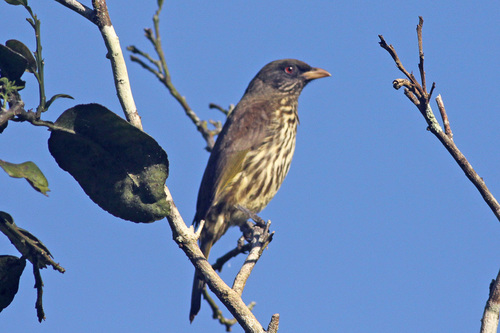
Greater Antillean Bullfinch

Greater Antillean Bullfinch

Melopyrrha violacea

Silhouette: Sheatherius · PhyloPic

LCLeast ConcernNTVUENCR
Daily sighting probability ~30% · Possible
at Jaragua National Park

In 3 days ~60% in a week ~90%

62 Verified sightings at Jaragua National Park From 2019 to 2026
677 In all 3 parks
January Best month
☀️ Diurnal When it's spotted

About the Greater Antillean Bullfinch

The Greater Antillean bullfinch (Melopyrrha violacea) is a species of bird in the family Thraupidae, the tanagers and allies. It is found in the Bahamas, Hispaniola (the Dominican Republic, Haiti, and their offshore islands), Jamaica, and the Turks and Caicos Islands.

The Greater Antillean bullfinch has a complicated taxonomic history. It was formally described by the Swedish naturalist Carl Linnaeus in 1758 in the tenth edition of his Systema Naturae under the binomial name Loxia violacea. The specific epithet violacea is from Latin violaceus meaning "violet-colored". Linnaeus based his description on "The Purple Gross-beak" that had been described and illustrated by Mark Catesby in 1731. The type locality is the Bahamas. The species was later placed in the genus Loxigilla.

A molecular phylogenetic study published in 2014 found that Loxigilla was polyphyletic and in the subsequent rearrangement, by 2020 most taxonomic systems had moved the Greater Antillean bullfinch and the Puerto Rican bullfinch to Melopyrrha. In 2016 BirdLife International's Handbook of the Birds of the World (HBW) had moved the two species to genus Pyrrhulagra but in 2022 moved them... Wikipedia →

Sounds

Song0:07

Bahamas · 2010

© Paul Driver · XC775671 · CC BY-NC-SA 4.0

Recording0:18

Jamaica · 2024

© bobhighcock · iNaturalist · CC BY-NC 4.0

Recording0:14

Bahamas · 2023

© David Chernack · iNaturalist · CC BY-NC 4.0

Global Distribution

Parks Where Found

# Park Country Daily sighting probability
1 Blue and John Crow Mountains National Park 🇯🇲 Jamaica
~60%
2 Jaragua National Park 🇩🇴 Dominican Republic
~30%
3 Los Haitises National Park 🇩🇴 Dominican Republic
<5%

Before you go

What are the chances of seeing a Greater Antillean Bullfinch in Jaragua National Park?

Possible

About 30% of wildlife watchers report a Greater Antillean Bullfinch sighting in Jaragua National Park on a given day, based on 62 verified sightings from GBIF citizen-science data from 2019 to 2026. It is the 21st most-seen of the 92 birds we can rate there. Over three days the chance rises to about 60%, and over a week to about 90%, if each day is a fresh chance.

When is the best time to see a Greater Antillean Bullfinch in Jaragua National Park?

January

In that month about 50% of wildlife watchers report a Greater Antillean Bullfinch in Jaragua National Park on a given day, against about 10% in April, the lowest month. That is one of Jaragua National Park's driest months, with about 20 mm of rain against 120 mm in October. June to September have too few records to rate.

What time of day is best to see a Greater Antillean Bullfinch?

Between 7 and 10 am

Across all the parks we cover, that three-hour window holds the most Greater Antillean Bullfinch sightings with a recorded time, and about 9 in 10 of them come between 6 am and 6 pm: it is a daytime animal.

Is Jaragua National Park the best place to see a Greater Antillean Bullfinch?

2nd of 3

Of the 3 parks where we can rate Greater Antillean Bullfinch sightings, Jaragua National Park ranks 2nd at about 30%. The best odds are in Blue and John Crow Mountains National Park (Jamaica, about 60%).

Which relatives of the Greater Antillean Bullfinch live in Jaragua National Park?

Same family: Thraupidae

The closest relatives of the Greater Antillean Bullfinch that you can see in Jaragua National Park (family Thraupidae, Tanagers and Allies) are Bananaquit (about 30%) and Yellow-faced Grassquit (about 10%), with each one's daily chance of a sighting.

Where does the Greater Antillean Bullfinch sighting chance come from?

GBIF citizen-science records

It is estimated from how often the Greater Antillean Bullfinch is recorded against all the birds logged in Jaragua National Park (62 verified sightings from 2019 to 2026), calibrated against known sighting rates. Figures are rounded to the nearest 10% because citizen-science data supports honest approximations, not decimals, and months with records from fewer than five people show "—". How it works.

← Back to Jaragua National Park