Palm Crow

Palm Crow

Corvus palmarum

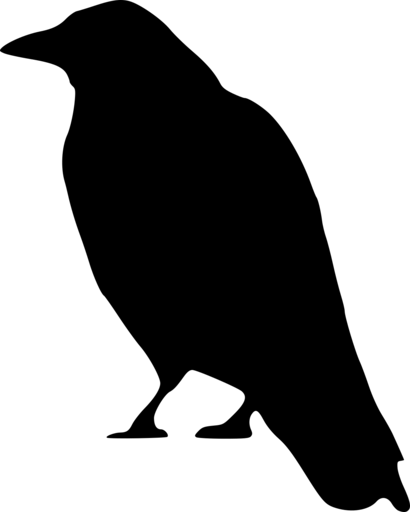
Silhouette: Peileppe · PhyloPic

LCLeast ConcernNTVUENCR
Daily sighting probability ~10% · With luck
at Jaragua National Park

In 3 days ~20% in a week ~30%

7 Verified sightings at Jaragua National Park From 2019 to 2026
7 In 1 park
March Best month
☀️ Diurnal When it's spotted

About the Palm Crow

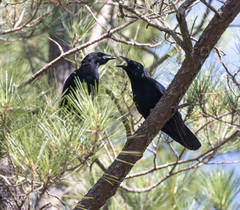
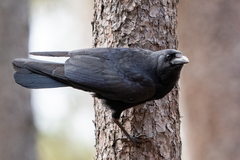
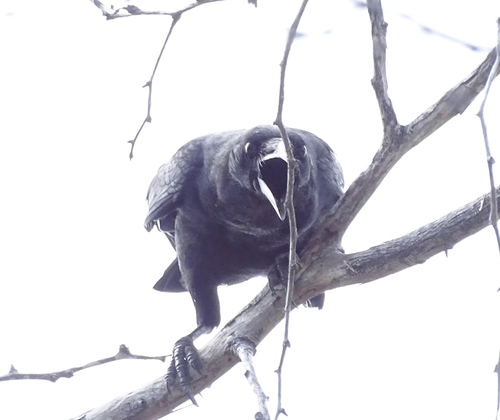
The Hispaniolan palm crow (Corvus palmarum) is a relatively small corvid endemic to the Caribbean island of Hispaniola, which is shared by Haiti and the Dominican Republic. The Hispaniolan palm crow was originally described in 1835 by the German naturalist Duke Paul Wilhelm of Württemberg with the binomial Corvus palmarum. At the time it included what is now the Cuban palm crow (Corvus minutus); the taxon was called the palm crow. Most taxonomic systems eventually followed a 1997 publication in recognizing the Hispaniolan and Cuban palm crows as separate monotypic species. However, as of late 2025, BirdLife International's Handbook of the Birds of the World (HBW) retains the "palm crow" as a single species with two subspecies.

Despite the Hispaniolan palm crow being sympatric with the white-necked crow (Corvus leucognaphalus) on Hispaniola, it appears to be more closely related to the fish crow (C. ossifragus) of the East Coast of the United States and as two smaller species, the Tamaulipas crow (C. imparatus) and Sinaloan crow (C. sinaloae) of Mexico, than to the white-necked crow. The white-necked is more closely related to the Cuban crow (C. nasicus... Wikipedia →

Sounds

Call1:09

Dominican Republic · 2023

© Barry Edmonston · XC794386 · CC BY-NC-SA 4.0

Call1:07

Dominican Republic · 2022

© Bobby Wilcox · XC714293 · CC BY-NC-SA 4.0

Call0:50

Dominican Republic · 2018

© George Wagner · XC438078 · CC BY-NC-SA 4.0

Global Distribution

Parks Where Found

# Park Country Daily sighting probability
1 Jaragua National Park 🇩🇴 Dominican Republic
~10%

More parks will be added in future updates.

Before you go

What are the chances of seeing a Palm Crow in Jaragua National Park?

With luck

About 10% of wildlife watchers report a Palm Crow sighting in Jaragua National Park on a given day, based on 7 verified sightings from GBIF citizen-science data from 2019 to 2026. It is the 72nd most-seen of the 92 birds we can rate there. Over three days the chance rises to about 20%, and over a week to about 30%, if each day is a fresh chance.

When is the best time to see a Palm Crow in Jaragua National Park?

February and March

In those months about 10% of wildlife watchers report a Palm Crow in Jaragua National Park on a given day, against under 5% in April–May and October–January, the lowest months. Those are among Jaragua National Park's driest months, with about 30 mm of rain a month against 120 mm in October. June to September have too few records to rate.

What time of day is best to see a Palm Crow?

Between 9 am and noon

Across all the parks we cover, that three-hour window holds the most Palm Crow sightings with a recorded time, and about 8 in 10 of them come between 6 am and 6 pm: it is a daytime animal.

Where else can you see a Palm Crow?

Only Jaragua National Park, in our data

Jaragua National Park is the only park on Wallace's Line with enough records to rate Palm Crow sightings: about 10% of wildlife watchers there report one on a given day.

Where does the Palm Crow sighting chance come from?

GBIF citizen-science records

It is estimated from how often the Palm Crow is recorded against all the birds logged in Jaragua National Park (7 verified sightings from 2019 to 2026), calibrated against known sighting rates. Figures are rounded to the nearest 10% because citizen-science data supports honest approximations, not decimals, and months with records from fewer than five people show "—". How it works.
← Back to Jaragua National Park