Spotted Forktail

Spotted Forktail

Enicurus maculatus

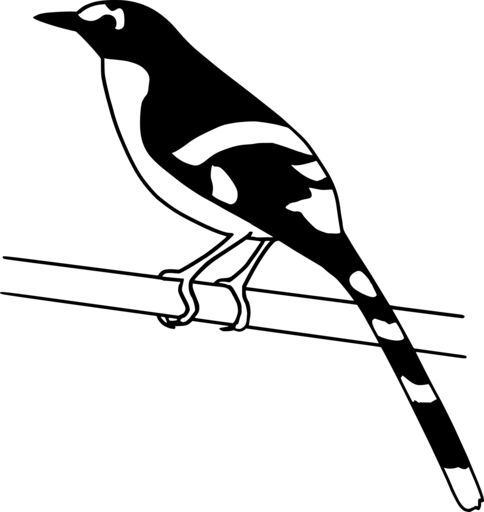
Silhouette: Andy Wilson · PhyloPic

LCLeast ConcernNTVUENCR
Daily sighting probability <5% · Rare
at Jim Corbett National Park

In 3 days ~10% in a week ~20%

77 Verified sightings at Jim Corbett National Park From 2019 to 2026
444 In all 4 parks
January Best month
☀️ Diurnal When it's spotted

About the Spotted Forktail

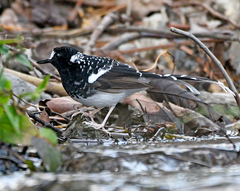
The spotted forktail (Enicurus maculatus) is a species of bird in the family Muscicapidae. It is found in the Himalayas and the hills of Northeast India, Bangladesh, Myanmar, and southern China including Yunnan. Birds of this species are 25 cm with a long tail. The sexes are alike, having a white forehead and a black crown and nape, a black back spotted white, and a broad white wing bar. The tail is deeply forked, graduated black and white. The white spotted back easily identifies this species from other similar sized forktail. Its call is a shrill, screechy KREE, mostly given in flight; it also makes some shrill, squeaky notes while perched. It breeds mostly at 1200–3600 m, and descends to about 600 m in winter. Its natural habitat is subtropical or tropical moist montane forests, where it is found in boulder-strewn torrents, forest streams, and roadside canals. Wikipedia →

Sounds

Call0:08

India · 2024

© Lars Lachmann · XC893942 · CC BY-NC-SA 4.0

Song0:08

India · 2019

© Andrew Spencer · XC547747 · CC BY-NC-ND 4.0

Alarm call0:43

India · 2018

© Rolf A. de By · XC407521 · CC BY-NC-SA 4.0

Global Distribution

Parks Where Found

# Park Country Daily sighting probability
1 Namdapha National Park 🇮🇳 India
~10%
2 Royal Manas National Park 🇧🇹 Bhutan
~10%
3 Langtang National Park 🇳🇵 Nepal
~10%
4 Jim Corbett National Park 🇮🇳 India
<5%

Cities Where Found

# City Country Daily sighting probability
1 Kathmandu 🇳🇵 Nepal
<5%

Before you go

What are the chances of seeing a Spotted Forktail in Jim Corbett National Park?

Rare

Under 5% of wildlife watchers report a Spotted Forktail sighting in Jim Corbett National Park on a given day, based on 77 verified sightings from GBIF citizen-science data from 2019 to 2026. It is the 222nd most-seen of the 368 birds we can rate there. Over three days the chance rises to about 10%, and over a week to about 20%, if each day is a fresh chance.

When is the best time to see a Spotted Forktail in Jim Corbett National Park?

December and January

In those months about 10% of wildlife watchers report a Spotted Forktail in Jim Corbett National Park on a given day, against under 5% in February to November, the lowest months. Those are among Jim Corbett National Park's driest months, with about 30 mm of rain a month against 360 mm in July.

What time of day is best to see a Spotted Forktail?

Between 2 and 5 pm

Across all the parks we cover, that three-hour window holds the most Spotted Forktail sightings with a recorded time, and about 9 in 10 of them come between 6 am and 6 pm: it is a daytime animal.

Where does the Spotted Forktail sighting chance come from?

GBIF citizen-science records

It is estimated from how often the Spotted Forktail is recorded against all the birds logged in Jim Corbett National Park (77 verified sightings from 2019 to 2026), calibrated against known sighting rates. Figures are rounded to the nearest 10% because citizen-science data supports honest approximations, not decimals, and months with records from fewer than five people show "—". How it works.

← Back to Jim Corbett National Park