Severtzov's Grouse

Severtzov's Grouse

Tetrastes sewerzowi

Silhouette: Sheatherius · PhyloPic

LCNTNear ThreatenedVUENCR Endemic
Daily sighting probability ~10% · With luck
at Jiuzhaigou National Park

In 3 days ~20% in a week ~30%

8 Verified sightings at Jiuzhaigou National Park From 2019 to 2026
8 In 1 park
April Best month

About the Severtzov's Grouse

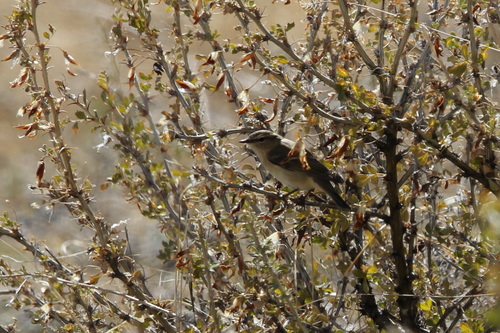
The Chinese grouse (Tetrastes sewerzowi), also known as Severtzov's grouse, is the smallest grouse in the world. The species was first discovered and described by Przewalski in 1876. It is endemic to China, where it is considered endangered by the China Red Data Book.

The bird is named after a Russian explorer and naturalist, Nikolai Alekseevich Severtzov. The females have an average mass between 270–407 g (9.5–14.4 oz), and the males between 279–390 g (9.8–13.8 oz). The average body length is 327–384 mm (12.9–15.1 in) for females and 355–403 mm (14.0–15.9 in) for males, making it the smallest of the grouse species.

Chinese grouse are mostly brown, with lots of white and black patterning on their bellies. The males have a black chin patch, while females do not. Chinese grouse look similar to hazel grouse (Tetrastes bonasia), with a few differences in plumage colouration and pattern. Both males and females have a red comb above their eyes, though it is more prominent in the males.

All grouse are in the family Phasianidae, which also includes pheasants and turkeys. Different sources place the Chinese grouse into either the Tetrastes genus along with the... Wikipedia →


Global Distribution

Parks Where Found

# Park Country Daily sighting probability
1 Jiuzhaigou National Park 🇨🇳 China
~10%

More parks will be added in future updates.

Before you go

What are the chances of seeing a Severtzov's Grouse in Jiuzhaigou National Park?

With luck

About 10% of wildlife watchers report a Severtzov's Grouse sighting in Jiuzhaigou National Park on a given day, based on 8 verified sightings from GBIF citizen-science data from 2019 to 2026. It is the 108th most-seen of the 131 birds we can rate there. Over three days the chance rises to about 20%, and over a week to about 30%, if each day is a fresh chance.

When is the best time to see a Severtzov's Grouse in Jiuzhaigou National Park?

April to June

In those months about 10% of wildlife watchers report a Severtzov's Grouse in Jiuzhaigou National Park on a given day, against under 5% in July to December, the lowest months. Those are among Jiuzhaigou National Park's wettest months, with about 140 mm of rain a month against 15 mm in December. January to March have too few records to rate.

Where else can you see a Severtzov's Grouse?

Only Jiuzhaigou National Park, in our data

Jiuzhaigou National Park is the only park on Wallace's Line with enough records to rate Severtzov's Grouse sightings: about 10% of wildlife watchers there report one on a given day.

Which relatives of the Severtzov's Grouse live in Jiuzhaigou National Park?

Same family: Phasianidae

The closest relatives of the Severtzov's Grouse that you can see in Jiuzhaigou National Park (family Phasianidae, Pheasants, Grouse, and Allies) are Blue Eared Pheasant (about 30%), Blood Pheasant (about 20%) and Tibetan Snowcock (about 10%), with each one's daily chance of a sighting.

Where does the Severtzov's Grouse sighting chance come from?

GBIF citizen-science records

It is estimated from how often the Severtzov's Grouse is recorded against all the birds logged in Jiuzhaigou National Park (8 verified sightings from 2019 to 2026), calibrated against known sighting rates. Figures are rounded to the nearest 10% because citizen-science data supports honest approximations, not decimals, and months with records from fewer than five people show "—". How it works.

← Back to Jiuzhaigou National Park