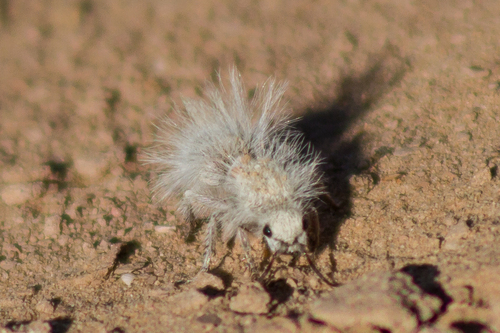
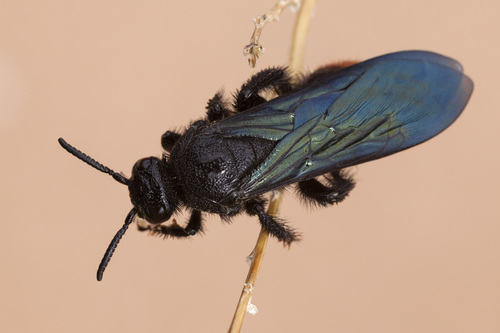
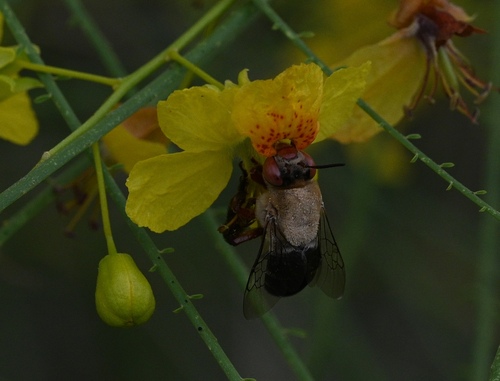
Milde's Tarantula-Hawk Wasp

Milde's Tarantula-Hawk Wasp

Pepsis mildei

Daily sighting probability ~10% · With luck
at Joshua Tree National Park

In 3 days ~20% in a week ~40%

10 Verified sightings at Joshua Tree National Park From 2019 to 2026
10 In 1 park
September Best month
☀️ Diurnal When it's spotted

About the Milde's Tarantula-Hawk Wasp

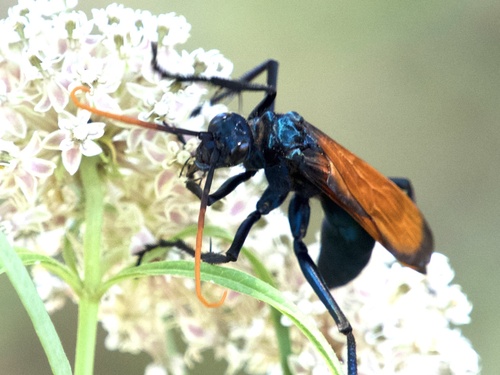
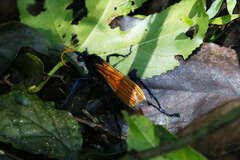
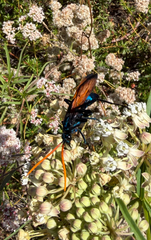
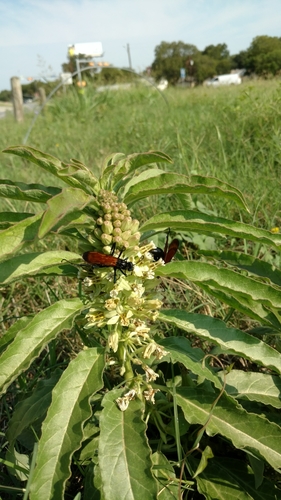
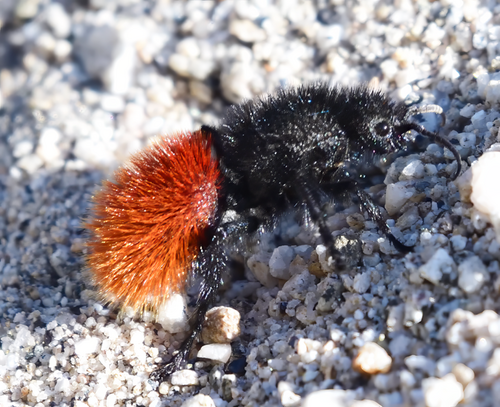
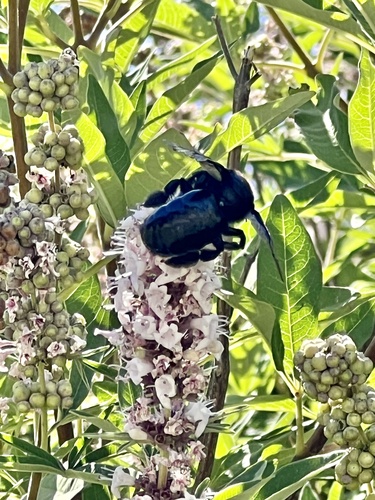
Pepsis mildei, also known as Milde's tarantula-hawk wasp, is a species of predatory spider wasp native to the Western Hemisphere. These wasps capture live tarantulas to feed to their larva; the adults graze on flowers. Tarantula hawks generally have no meaningful predators. The wing color is black and/or orange, with rare leucistic wing coloration known in males. The wings of P. mildei are duller overall than those of Pepsis grossa or Pepsis cinnabarina. Per Edward Essig, Milde's tarantula-hawk wasp usually measures 20–30 millimeters in length and is a metallic blue-black overall, with "the antennae reddish, dusky at extreme base in the male and the basal third dusky in the female; the wings fiery red with the bases and apices dusky". In all tarantula wasps, the antennae can be used to distinguish between males and female: males are straight or gently arced, while the females have curved antennae. The lifespan of males is one to two months, while female Milde's tarantula-hawk wasps live for a longer span of time.

Pepsis mildei's range appears to be North America and Central America. In the U.S. this wasp is relatively common and widely distributed; it has been documented... Wikipedia →

Global Distribution

Parks Where Found

# Park Country Daily sighting probability
1 Joshua Tree National Park 🇺🇸 United States
~10%

More parks will be added in future updates.

Cities Where Found

# City Country Daily sighting probability
1 San José 🇨🇷 Costa Rica
<5%
2 Mexico City 🇲🇽 México
<5%
3 Los Angeles 🇺🇸 United States
<5%
4 San Diego 🇺🇸 United States
<5%

Before you go

What are the chances of seeing a Milde's Tarantula-Hawk Wasp in Joshua Tree National Park?

With luck

About 10% of wildlife watchers report a Milde's Tarantula-Hawk Wasp sighting in Joshua Tree National Park on a given day, based on 10 verified sightings from GBIF citizen-science data from 2019 to 2026. It is the 112th most-seen of the 190 insects we can rate there. Over three days the chance rises to about 20%, and over a week to about 40%, if each day is a fresh chance.

When is the best time to see a Milde's Tarantula-Hawk Wasp in Joshua Tree National Park?

September

In that month about 20% of wildlife watchers report a Milde's Tarantula-Hawk Wasp in Joshua Tree National Park on a given day, against under 5% in July and November–May, the lowest months.

What time of day is best to see a Milde's Tarantula-Hawk Wasp?

Between 9 am and noon

Across all the parks we cover, that three-hour window holds the most Milde's Tarantula-Hawk Wasp sightings with a recorded time, and nearly all of them come between 6 am and 6 pm: it is a daytime animal.

Where else can you see a Milde's Tarantula-Hawk Wasp?

Only Joshua Tree National Park, in our data

Joshua Tree National Park is the only park on Wallace's Line with enough records to rate Milde's Tarantula-Hawk Wasp sightings: about 10% of wildlife watchers there report one on a given day.

Where does the Milde's Tarantula-Hawk Wasp sighting chance come from?

GBIF citizen-science records

It is estimated from how often the Milde's Tarantula-Hawk Wasp is recorded against all the insects logged in Joshua Tree National Park (10 verified sightings from 2019 to 2026), calibrated against known sighting rates. Figures are rounded to the nearest 10% because citizen-science data supports honest approximations, not decimals, and months with records from fewer than five people show "—". How it works.

← Back to Joshua Tree National Park