House Gecko

House Gecko

Gehyra australis

Silhouette: Gopal Murali · PhyloPic

LCLeast ConcernNTVUENCR Endemic
Daily sighting probability ~20% · Possible
at Kakadu National Park

In 3 days ~50% in a week ~80%

18 Verified sightings at Kakadu National Park From 2019 to 2026
18 In 1 park
December Best month
🌙 Nocturnal When it's spotted

About the House Gecko

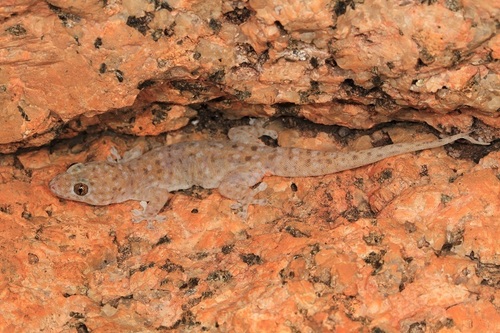
Gehyra australis, the Australian house gecko, northern dtella or top-end dtella, is a species of gecko native to northern and eastern Australia. It is also widespread in Indonesia, alongside common house geckos and four-clawed geckos.

Gehyra australis is primarily an arboreal gecko inhabiting woodlands and coastal and riverine forests. It can also occur near human dwellings and gardens. It is oviparous. In 2020, as a result of molecular genetic analysis, three new species were proposed for lineages of the Gehyra australis species complex: G. arnhemica (east Arnhem Land), G. gemina (northern deserts), and G. lauta (gulf, NT–Qld border). Names for the new species were registered in Zoobank. Under this definition, the range of G. australis sensu stricto is limited to the western Top End region of the Northern Territory, from Darwin surrounds to Port Essington, and Gregory National Park To Eva Valley at the edge of the Arnhem Plateau.

Members of the australis species complex are generally arboreal, and tend to be smaller than the rock-dwelling (saxicolous) koira group, though G. lauta is larger-bodied. G. chimera is adapted to an arboreal lifestyle: it had previously... Wikipedia →

Global Distribution

Parks Where Found

# Park Country Daily sighting probability
1 Kakadu National Park 🇦🇺 Australia
~20%

More parks will be added in future updates.

Before you go

What are the chances of seeing a House Gecko in Kakadu National Park?

Possible

About 20% of wildlife watchers report a House Gecko sighting in Kakadu National Park on a given day, based on 18 verified sightings from GBIF citizen-science data from 2019 to 2026. It is the 18th most-seen of the 54 reptiles we can rate there. Over three days the chance rises to about 50%, and over a week to about 80%, if each day is a fresh chance.

When is the best time to see a House Gecko in Kakadu National Park?

December

In that month about 50% of wildlife watchers report a House Gecko in Kakadu National Park on a given day, against under 5% in February–March, August and November, the lowest months. That is one of Kakadu National Park's wettest months, with about 250 mm of rain against almost none in August.

What time of day is best to see a House Gecko?

Between 8 and 11 pm

Across all the parks we cover, that three-hour window holds the most House Gecko sightings with a recorded time, and about 8 in 10 of them come between 6 pm and 6 am: it is mostly seen at night.

Where else can you see a House Gecko?

Only Kakadu National Park, in our data

Kakadu National Park is the only park on Wallace's Line with enough records to rate House Gecko sightings: about 20% of wildlife watchers there report one on a given day.

Which relatives of the House Gecko live in Kakadu National Park?

Same genus: Gehyra

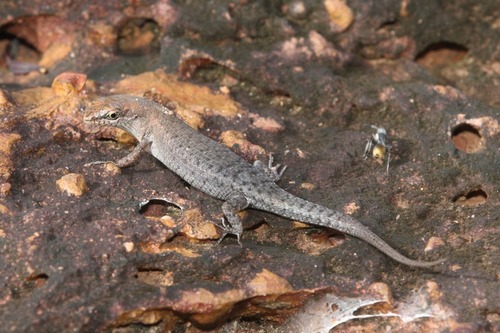
The closest relatives of the House Gecko that you can see in Kakadu National Park (genus Gehyra, Dtellas) are Arnhem Land Spotted Dtella (about 20%) and Northern Spotted Rock Dtella (about 10%), with each one's daily chance of a sighting.

Where does the House Gecko sighting chance come from?

GBIF citizen-science records

It is estimated from how often the House Gecko is recorded against all the reptiles logged in Kakadu National Park (18 verified sightings from 2019 to 2026), calibrated against known sighting rates. Figures are rounded to the nearest 10% because citizen-science data supports honest approximations, not decimals, and months with records from fewer than five people show "—". How it works.

← Back to Kakadu National Park