Brown Tree Snake

Brown Tree Snake

Boiga irregularis

Silhouette: Alex Slavenko · PhyloPic

LCLeast ConcernNTVUENCR
Daily sighting probability ~30% · Possible
at Kakadu National Park

In 3 days ~60% in a week ~90%

27 Verified sightings at Kakadu National Park From 2019 to 2026
240 In all 9 parks
March Best month
☀️🌙 Day & Night When it's spotted

About the Brown Tree Snake

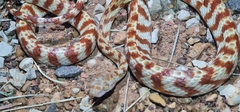
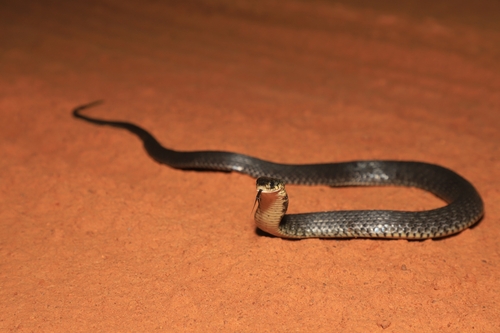
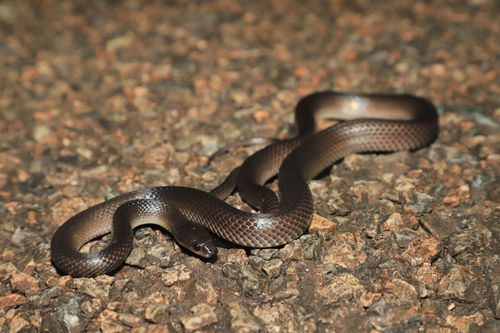
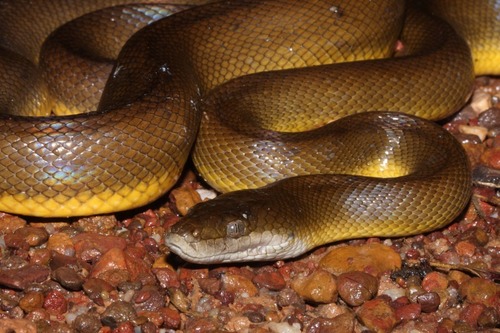
The brown tree snake (Boiga irregularis), also known as the brown catsnake, is an arboreal rear-fanged colubrid snake native to eastern and northern coastal Australia, eastern Indonesia (Sulawesi to Papua), Papua New Guinea, and many islands in northwestern Melanesia. The snake is slender, which facilitates climbing, and can reach up to 2 metres in length. Its coloration may also vary, some being brown, green, or even red. Brown tree snakes prey on a wide range of animals, from invertebrates to birds and even some small mammals. It is one of the very few colubrids found in Australia, where elapids are more common.

Due to an accidental introduction after the events of World War II, this snake is now infamous for being an invasive species responsible for extirpating the majority of the native bird population in Guam. Currently, efforts are being made to reduce and control the population on Guam and prevent the snake from spreading to other locations. Researchers are employing various methods, including aerial baiting, to attempt to control the population, while multiple agencies continue to fund and support the species' removal.

The brown tree snake is a nocturnal, arboreal... Wikipedia →

Global Distribution

Parks Where Found

# Park Country Daily sighting probability
1 Litchfield National Park 🇦🇺 Australia
~40%
2 Daintree National Park 🇦🇺 Australia
~40%
3 Tangkoko Nature Reserve 🇮🇩 Indonesia
~30%
4 Raja Ampat 🇮🇩 Indonesia
~30%
5 Kakadu National Park 🇦🇺 Australia
~30%
6 Nitmiluk National Park 🇦🇺 Australia
~30%
7 Lamington National Park 🇦🇺 Australia
~20%
8 Springbrook National Park 🇦🇺 Australia
~20%
9 Royal National Park 🇦🇺 Australia
~10%

Cities Where Found

# City Country Daily sighting probability
1 Sydney 🇦🇺 Australia
<5%

Zoos & Centres Where Found

# Zoo / Centre Country
1 Melbourne Zoo 🇦🇺 Australia In captivity
2 Featherdale Sydney Wildlife Park 🇦🇺 Australia In captivity
3 Alexandra Park Zoo 🇦🇺 Australia In captivity
4 Port Moresby Nature Park 🇵🇬 Papua New Guinea In captivity

Before you go

What are the chances of seeing a Brown Tree Snake in Kakadu National Park?

Possible

About 30% of wildlife watchers report a Brown Tree Snake sighting in Kakadu National Park on a given day, based on 27 verified sightings from GBIF citizen-science data from 2019 to 2026. It is the 9th most-seen of the 54 reptiles we can rate there. Over three days the chance rises to about 60%, and over a week to about 90%, if each day is a fresh chance.

When is the best time to see a Brown Tree Snake in Kakadu National Park?

March

In that month about 50% of wildlife watchers report a Brown Tree Snake in Kakadu National Park on a given day, against under 5% in December to February, the lowest months. That is one of Kakadu National Park's wettest months, with about 170 mm of rain against almost none in August.

What time of day is best to see a Brown Tree Snake?

Between 7 and 10 pm

Across all the parks we cover, that three-hour window holds the most Brown Tree Snake sightings with a recorded time, and about 7 in 10 of them come between 6 pm and 6 am: it is seen both by day and at night.

Which relatives of the Brown Tree Snake live in Kakadu National Park?

Same family: Colubridae

The closest relatives of the Brown Tree Snake that you can see in Kakadu National Park (family Colubridae, Colubrid Snakes) are Mair's Keelback (about 30%), Black Treesnake (about 20%) and Slaty-grey snake (about 20%), with each one's daily chance of a sighting.

Where does the Brown Tree Snake sighting chance come from?

GBIF citizen-science records

It is estimated from how often the Brown Tree Snake is recorded against all the reptiles logged in Kakadu National Park (27 verified sightings from 2019 to 2026), calibrated against known sighting rates. Figures are rounded to the nearest 10% because citizen-science data supports honest approximations, not decimals, and months with records from fewer than five people show "—". How it works.

← Back to Kakadu National Park