Northern Brown Bandicoot

Northern Brown Bandicoot

Isoodon macrourus

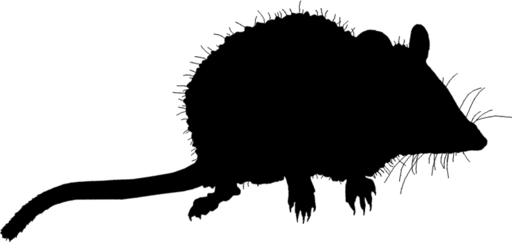
Silhouette: Steven Traver · PhyloPic

LCLeast ConcernNTVUENCR
Daily sighting probability ~10% · With luck
at Kakadu National Park

In 3 days ~30% in a week ~50%

5 Verified sightings at Kakadu National Park From 2019 to 2026
116 In all 4 parks
January Best month
🌅 Crepuscular When it's spotted

About the Northern Brown Bandicoot

The northern brown bandicoot (Isoodon macrourus), a marsupial species, is a bandicoot found only on the northern and eastern coasts of Australia and nearby islands, mainly Papua New Guinea. It is not, however, found far inland.

This species can be set apart from other marsupials by two traits; it is both polyprotodont (i.e., several pairs of lower front teeth) and syndactylous. The northern brown bandicoot has typical body and tail lengths of 40 and 15 cm (15.7 and 5.9 in), respectively. On average it weighs 1,200 g (2.6 lb). This marsupial has a thick harsh coat but is not spiny. The dorsal pelage is light brown in appearance with speckled black patterns throughout. On the ventral surface it is solid white. The northern brown bandicoot has a reverse pouch so it won't fill with soil when digging. This bandicoot also has short, rounded ears and a short nose. One can easily mistake the northern brown bandicoot for the southern brown bandicoot. The two species differ in both size, with the northern brown bandicoot larger, and regional locality, in that the southern brown bandicoot is found only on the southern coastline of Australia.

The male is typically 5–7 cm (2.0... Wikipedia →

Global Distribution

Parks Where Found

# Park Country Daily sighting probability
1 Daintree National Park 🇦🇺 Australia
~30%
2 Lamington National Park 🇦🇺 Australia
~20%
3 Springbrook National Park 🇦🇺 Australia
~20%
4 Kakadu National Park 🇦🇺 Australia
~10%

Cities Where Found

# City Country Daily sighting probability
1 Brisbane 🇦🇺 Australia
~10%

Zoos & Centres Where Found

# Zoo / Centre Country
1 Lone Pine Koala Sanctuary 🇦🇺 Australia In captivity

Before you go

What are the chances of seeing a Northern Brown Bandicoot in Kakadu National Park?

With luck

About 10% of wildlife watchers report a Northern Brown Bandicoot sighting in Kakadu National Park on a given day, based on 5 verified sightings from GBIF citizen-science data from 2019 to 2026. It is the 11th most-seen of the 11 mammals we can rate there. Over three days the chance rises to about 30%, and over a week to about 50%, if each day is a fresh chance.

When is the best time to see a Northern Brown Bandicoot in Kakadu National Park?

January

In that month about 50% of wildlife watchers report a Northern Brown Bandicoot in Kakadu National Park on a given day, against under 5% in March–May and August–December, the lowest months. That is one of Kakadu National Park's wettest months, with about 350 mm of rain against almost none in August.

What time of day is best to see a Northern Brown Bandicoot?

Between 7 and 10 pm

Across all the parks we cover, that three-hour window holds the most Northern Brown Bandicoot sightings with a recorded time, and about 7 in 10 of them come between 6 pm and 6 am: it is most active around dawn and dusk.

Is Kakadu National Park the best place to see a Northern Brown Bandicoot?

4th of 4

Of the 4 parks where we can rate Northern Brown Bandicoot sightings, Kakadu National Park ranks 4th at about 10%. The best odds are in Daintree National Park (Australia, about 30%), Lamington National Park (Australia, about 20%) and Springbrook National Park (Australia, about 20%).

Where does the Northern Brown Bandicoot sighting chance come from?

GBIF citizen-science records

It is estimated from how often the Northern Brown Bandicoot is recorded against all the mammals logged in Kakadu National Park (5 verified sightings from 2019 to 2026), calibrated against known sighting rates. Figures are rounded to the nearest 10% because citizen-science data supports honest approximations, not decimals, and months with records from fewer than five people show "—". How it works.

← Back to Kakadu National Park