Pied Heron

Pied Heron

Egretta picata

Silhouette: L. Shyamal · PhyloPic

LCLeast ConcernNTVUENCR
Daily sighting probability ~40% · Likely
at Kakadu National Park

In 3 days ~80% in a week >90%

763 Verified sightings at Kakadu National Park From 2019 to 2026
799 In all 3 parks
October Best month
☀️ Diurnal When it's spotted

About the Pied Heron

The pied heron (Egretta picata), also known as the pied egret is a bird found in coastal and subcoastal areas of monsoonal northern Australia as well as some parts of Wallacea and New Guinea. The species was originally described by ornithologist John Gould in 1845. Recent taxonomists put this species in the genus Egretta. There are no recognised subspecies.

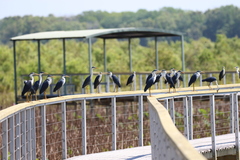
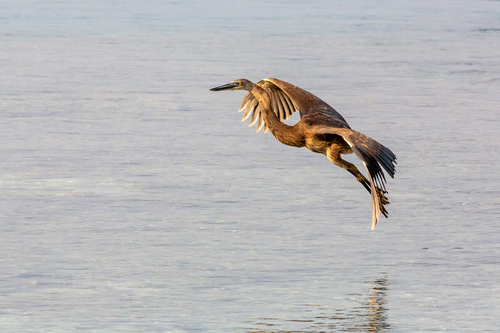
It is a small heron, 43–55 cm (17–22 in) long, with dark slaty wings, body, and crested head, with a white throat and neck. The appearance is similar to the white-necked heron. Males (247–280 g (8.7–9.9 oz)) are heavier than females (225–242 g (7.9–8.5 oz)), but the two are similar in appearance.

Immature birds lack the crest as well as the dark colouring on the head and may look like small versions of the white-necked heron. The juveniles were once classified as a separate species. Its habitat mainly comprises a range of wetlands and wet grasslands. The call of the pied heron is a loud 'awk' or 'ohrk' in flight. Soft cooing is given around the nest. Little else is known about vocalisations. Breeding takes place from February... Wikipedia →

Sounds

Call0:06

Australia · 2022

© Marc Anderson · XC816276 · CC BY-NC-ND 4.0

Call0:04

Indonesia · 2012

© Philippe Verbelen · XC377240 · CC BY-NC-SA 4.0

Call0:16

Australia · 2023

© James Lambert · XC842792 · CC BY-NC-ND 4.0

Global Distribution

Parks Where Found

# Park Country Daily sighting probability
1 Kakadu National Park 🇦🇺 Australia
~40%
2 Litchfield National Park 🇦🇺 Australia
~10%
3 Daintree National Park 🇦🇺 Australia
<5%

Zoos & Centres Where Found

# Zoo / Centre Country
1 Healesville Sanctuary 🇦🇺 Australia In captivity
2 Berlin Zoological Garden 🇩🇪 Germany In captivity
3 Taronga Zoo 🇦🇺 Australia In captivity
4 Crocodylus Park 🇦🇺 Australia In captivity
5 Melbourne Zoo 🇦🇺 Australia In captivity
6 Perth Zoo 🇦🇺 Australia In captivity
7 Frankfurt Zoological Garden 🇩🇪 Germany In captivity
8 Adelaide Zoo 🇦🇺 Australia In captivity
9 Featherdale Sydney Wildlife Park 🇦🇺 Australia In captivity
10 Aquarium Berlin 🇩🇪 Germany In captivity
11 Birdworld Kuranda 🇦🇺 Australia In captivity
12 Kuranda Koala Gardens 🇦🇺 Australia In captivity
13 Cairns Zoom and Wildlife Dome 🇦🇺 Australia In captivity
14 The Lair 🇦🇺 Australia In captivity
15 Wildlife Habitat Port Douglas 🇦🇺 Australia In captivity

Before you go

What are the chances of seeing a Pied Heron in Kakadu National Park?

Likely

About 40% of wildlife watchers report a Pied Heron sighting in Kakadu National Park on a given day, based on 763 verified sightings from GBIF citizen-science data from 2019 to 2026. It is the 32nd most-seen of the 186 birds we can rate there. Over three days the chance rises to about 80%, and over a week to over 90%, if each day is a fresh chance.

When is the best time to see a Pied Heron in Kakadu National Park?

October and November

In those months about 60% of wildlife watchers report a Pied Heron in Kakadu National Park on a given day, against about 20% in January and March, the lowest months. February has too few records to rate.

What time of day is best to see a Pied Heron?

Between 7 and 10 am

Across all the parks we cover, that three-hour window holds the most Pied Heron sightings with a recorded time, and about 9 in 10 of them come between 6 am and 6 pm: it is a daytime animal.

Is Kakadu National Park the best place to see a Pied Heron?

Yes

Of the 3 parks where we can rate Pied Heron sightings, Kakadu National Park has the highest daily chance: about 40%. Next come Litchfield National Park (Australia, about 10%) and Daintree National Park (Australia, under 5%).

Which relatives of the Pied Heron live in Kakadu National Park?

Same genus: Egretta

The closest relatives of the Pied Heron that you can see in Kakadu National Park (genus Egretta, Small Egrets and Herons) are intermediate egret (about 50%), Little Egret (about 40%) and White-faced Heron (about 10%), with each one's daily chance of a sighting.

Where does the Pied Heron sighting chance come from?

GBIF citizen-science records

It is estimated from how often the Pied Heron is recorded against all the birds logged in Kakadu National Park (763 verified sightings from 2019 to 2026), calibrated against known sighting rates. Figures are rounded to the nearest 10% because citizen-science data supports honest approximations, not decimals, and months with records from fewer than five people show "—". How it works.

← Back to Kakadu National Park