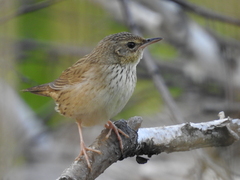
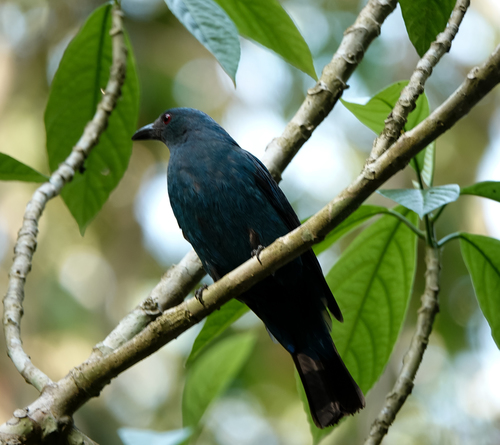
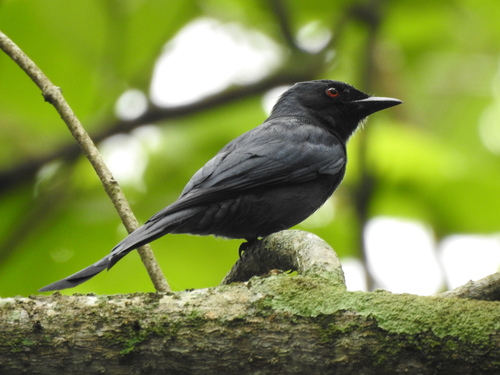
Lanceolated Warbler

Lanceolated Warbler

Locustella lanceolata

Silhouette: Afsarnayakkan · PhyloPic

LCLeast ConcernNTVUENCR
Daily sighting probability <5% · Rare
at Khao Yai National Park

In 3 days <5% in a week ~10%

16 Verified sightings at Khao Yai National Park From 2019 to 2026
112 In all 4 parks
March Best month

About the Lanceolated Warbler

The lanceolated warbler (Locustella lanceolata) is a species of Old World warbler in the genus Locustella. It breeds from northwest European Russia across the Palearctic to northern Hokkaidō, Japan. It is migratory, wintering in Southeast Asia. The genus name Locustella is from Latin and is a diminutive of locusta, "grasshopper". This refers to the song of the common grasshopper warbler and some others in this genus. The specific lanceolata is Latin for "spear-shaped" and refers to the streaks on the breast.

This small passerine bird is a species found in grassland with some thicker shrubby vegetation or trees, often close to water in bogs or wet clearings. Five eggs are laid in a nest in a tussock. This species is a rare vagrant to western Europe. One of the best places to see this skulking species as a vagrant is Fair Isle, Shetland.

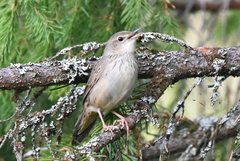
This is a small warbler. The adult has a streaked brown back and whitish grey underparts, which have small lance-head like streaks, that are also found on the undertail. The sexes are identical, as with most warblers, but young birds are yellower below. Like most warblers, it is insectivorous.

This is a skulking species which is very difficult to see except sometimes when singing. It creeps through grass and low foliage. The song is a monotonous mechanical insect-like reeling as in other species in the group, often given at dusk. Wikipedia →

Sounds

Call0:06

China · 2026

© Wang zikun · XC1184443 · CC BY-NC-SA 4.0

Song1:14

China · 2026

© Peter Boesman · XC1147608 · CC BY-NC-ND 4.0

Alarm call0:04

Vietnam · 2024

© Ding Li Yong · XC861954 · CC BY-NC-ND 4.0

Global Distribution

Parks Where Found

# Park Country Daily sighting probability
1 Kaeng Krachan National Park 🇹🇭 Thailand
<5%
2 Doi Inthanon National Park 🇹🇭 Thailand
<5%
3 Khao Yai National Park 🇹🇭 Thailand
<5%
4 Cat Tien National Park 🇻🇳 Vietnam
<5%

Cities Where Found

# City Country Daily sighting probability
1 Đà Nẵng 🇻🇳 Vietnam
~20%
2 Beijing 🇨🇳 China
<5%
3 Hong Kong 🇨🇳 China
<5%
4 Bangkok 🇹🇭 Thailand
<5%
5 Kaohsiung 🇹🇼 Taiwan
<5%
6 Phnom Penh 🇰🇭 Cambodia
<5%
7 Kolkata 🇮🇳 India
<5%
8 Singapore 🇸🇬 Singapore
<5%

Before you go

What are the chances of seeing a Lanceolated Warbler in Khao Yai National Park?

Rare

Under 5% of wildlife watchers report a Lanceolated Warbler sighting in Khao Yai National Park on a given day, based on 16 verified sightings from GBIF citizen-science data from 2019 to 2026. It is the 234th most-seen of the 278 birds we can rate there. Over three days the chance rises to under 5%, and over a week to about 10%, if each day is a fresh chance.

When is the best time to see a Lanceolated Warbler in Khao Yai National Park?

Any time of year

In every month with enough records, under 5% of wildlife watchers report a Lanceolated Warbler in Khao Yai National Park on a given day, so our monthly data shows no clear season.

Is Khao Yai National Park the best place to see a Lanceolated Warbler?

Among the best

Of the 4 parks where we can rate Lanceolated Warbler sightings, Khao Yai National Park ranks 3rd at under 5%, level with the leaders once rounded. The best odds are in Kaeng Krachan National Park (Thailand, under 5%) and Doi Inthanon National Park (Thailand, under 5%).

Which relatives of the Lanceolated Warbler live in Khao Yai National Park?

Same order: Passeriformes

The closest relatives of the Lanceolated Warbler that you can see in Khao Yai National Park (order Passeriformes, Perching Birds) are Black-crested Bulbul (about 80%), Asian Fairy-bluebird (about 60%) and Gray-eyed Bulbul (about 50%), with each one's daily chance of a sighting.

Where does the Lanceolated Warbler sighting chance come from?

GBIF citizen-science records

It is estimated from how often the Lanceolated Warbler is recorded against all the birds logged in Khao Yai National Park (16 verified sightings from 2019 to 2026), calibrated against known sighting rates. Figures are rounded to the nearest 10% because citizen-science data supports honest approximations, not decimals, and months with records from fewer than five people show "—". How it works.

← Back to Khao Yai National Park