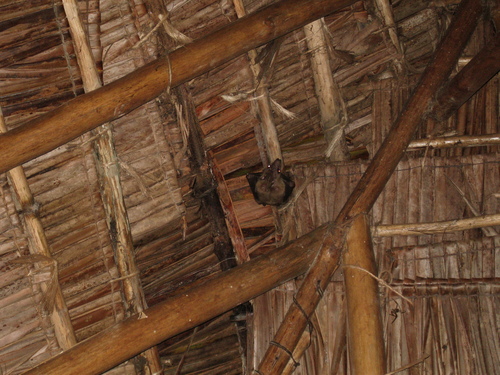
Ashy Red Colobus

Ashy Red Colobus

Piliocolobus tephrosceles

Silhouette: Margot Michaud · PhyloPic

LCNTVUENEndangeredCR
Daily sighting probability ~70% · Very likely
at Kibale National Park

In 3 days >90%

154 Verified sightings at Kibale National Park From 2019 to 2026
154 In 1 park
January Best month
☀️ Diurnal When it's spotted

About the Ashy Red Colobus

The Ugandan red colobus (Piliocolobus tephrosceles) or ashy red colobus is an endangered species of red colobus monkey, recognised as a distinct species since 2001. There is disagreement however over taxonomy with many considering the Ugandan red colobus to be a subspecies (Procolobus rufomitratus tephrosceles). The Ugandan red colobus is an Old World monkey which is found in five locations across Uganda and Tanzania.

Recognised as a distinct species in 2001 the Ugandan red colobus had previously been considered a subspecies of P. badius, and later a subspecies of P. foai. There is currently a debate as to whether it should be considered a subspecies of P. rufomitratus.

The Ugandan red colobus has a rust-red cap with a dark grey to black face, although infants are born with completely black faces. There is more variation amongst the coat colours of the Ugandan red colobus with back colour ranging from black to dark grey through to a reddish brown. The sides of the body and the arms and legs are a light grey. They have very long dark to light brown tails which they rely on for balancing when climbing and leaping through the canopy. The Ugandan red colobus... Wikipedia →

Global Distribution

Parks Where Found

# Park Country Daily sighting probability
1 Kibale National Park 🇺🇬 Uganda
~70%

More parks will be added in future updates.

Before you go

What are the chances of seeing an Ashy Red Colobus in Kibale National Park?

Very likely

About 70% of wildlife watchers report an Ashy Red Colobus sighting in Kibale National Park on a given day, based on 154 verified sightings from GBIF citizen-science data from 2019 to 2026. It is the 4th most-seen of the 13 mammals we can rate there. Over three days the chance rises to over 90%, if each day is a fresh chance.

When is the best time to see an Ashy Red Colobus in Kibale National Park?

January, April, June, August and October–November

In those months about 80% of wildlife watchers report an Ashy Red Colobus in Kibale National Park on a given day, against about 60% in February, the lowest month.

What time of day is best to see an Ashy Red Colobus?

Between 2 and 5 pm

Across all the parks we cover, that three-hour window holds the most Ashy Red Colobus sightings with a recorded time, and about 9 in 10 of them come between 6 am and 6 pm: it is a daytime animal.

Where else can you see an Ashy Red Colobus?

Only Kibale National Park, in our data

Kibale National Park is the only park on Wallace's Line with enough records to rate Ashy Red Colobus sightings: about 70% of wildlife watchers there report one on a given day.

Which relatives of the Ashy Red Colobus live in Kibale National Park?

Same family: Cercopithecidae

The closest relatives of the Ashy Red Colobus that you can see in Kibale National Park (family Cercopithecidae, Old World Monkeys) are Olive Baboon (about 80%), Red-tailed Monkey (about 80%) and Mantled Guereza (about 70%), with each one's daily chance of a sighting.

Where does the Ashy Red Colobus sighting chance come from?

GBIF citizen-science records

It is estimated from how often the Ashy Red Colobus is recorded against all the mammals logged in Kibale National Park (154 verified sightings from 2019 to 2026), calibrated against known sighting rates. Figures are rounded to the nearest 10% because citizen-science data supports honest approximations, not decimals, and months with records from fewer than five people show "—". How it works.

← Back to Kibale National Park