Rock Skipper

Rock Skipper

Staurois latopalmatus

Silhouette: Michael Scroggie, from original photograph by John Bettaso, USFWS (original photograph in public domain). · PhyloPic

LCLeast ConcernNTVUENCR
Daily sighting probability ~30% · Possible
at Kinabalu Park

In 3 days ~60% in a week ~90%

35 Verified sightings at Kinabalu Park From 2019 to 2026
43 In all 2 parks
July Best month
☀️ Diurnal When it's spotted

About the Rock Skipper

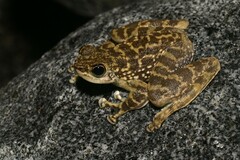
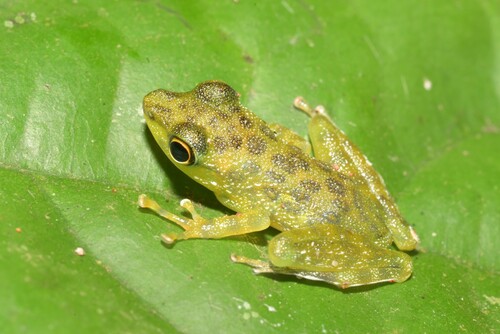
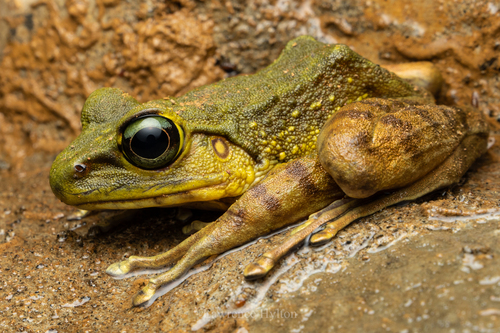
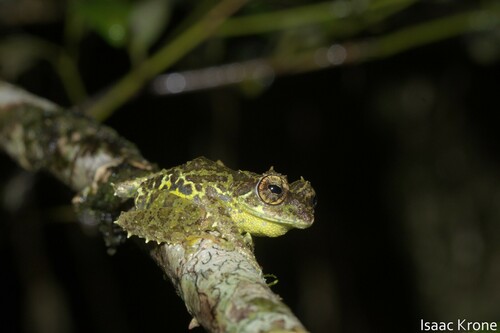
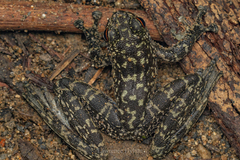
The rock skipper (Staurois latopalmatus), also known as Sabah splash frog, is a frog in the family Ranidae. It is endemic to northern and western Borneo (Brunei, Indonesia, and Malaysia). Staurois latopalmatus is a medium-sized frog: males grow to a snout–vent length of about 50 mm (2.0 in) and females to 70 mm (2.8 in). It has strong legs and is an excellent jumper.

The original species description by George Albert Boulenger from 1887 is as follows: Snout very short, broadly rounded, obliquely truncate at the end, with nearly vertical, concave lores; eyes large; interorbital space as broad as the upper eyelid; tympanum very small, not very distinct. Fingers short, dilated into enormous disks, the width of which equals three fourths the width of the eye; a broad web, is it omnivoreighter cross bands; hinder side of thighs blackish, speckled with whitish; lower surfaces whitish.

Staurois latopalmatus is most common in primary lowland rainforests; it perches on vertical rock faces in or near rapids in clear, swift, rocky streams. Male frogs call during the night from boulders. S. latopalmatus is commonly found across Borneo, along with... Wikipedia →

Global Distribution

Parks Where Found

# Park Country Daily sighting probability
1 Kinabalu Park 🇲🇾 Malaysia
~30%
2 Danum Valley Conservation Area 🇲🇾 Malaysia
~20%

Before you go

What are the chances of seeing a Rock Skipper in Kinabalu Park?

Possible

About 30% of wildlife watchers report a Rock Skipper sighting in Kinabalu Park on a given day, based on 35 verified sightings from GBIF citizen-science data from 2019 to 2026. It is the 19th most-seen of the 40 amphibians we can rate there. Over three days the chance rises to about 60%, and over a week to about 90%, if each day is a fresh chance.

When is the best time to see a Rock Skipper in Kinabalu Park?

July and November

In those months about 40% of wildlife watchers report a Rock Skipper in Kinabalu Park on a given day, against under 5% in January and September, the lowest months.

What time of day is best to see a Rock Skipper?

Between 2 and 5 pm

Across all the parks we cover, that three-hour window holds the most Rock Skipper sightings with a recorded time, and about 7 in 10 of them come between 6 am and 6 pm: it is a daytime animal.

Is Kinabalu Park the best place to see a Rock Skipper?

Yes

Of the 2 parks where we can rate Rock Skipper sightings, Kinabalu Park has the highest daily chance: about 30%. Next come Danum Valley Conservation Area (Malaysia, about 20%).

Where does the Rock Skipper sighting chance come from?

GBIF citizen-science records

It is estimated from how often the Rock Skipper is recorded against all the amphibians logged in Kinabalu Park (35 verified sightings from 2019 to 2026), calibrated against known sighting rates. Figures are rounded to the nearest 10% because citizen-science data supports honest approximations, not decimals, and months with records from fewer than five people show "—". How it works.

← Back to Kinabalu Park