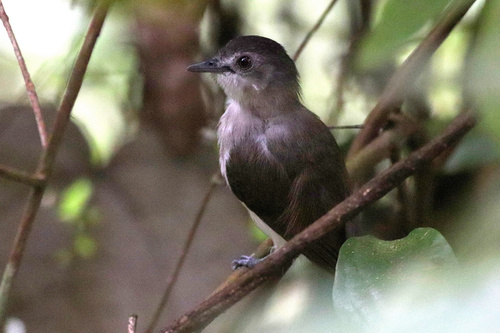
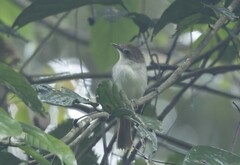
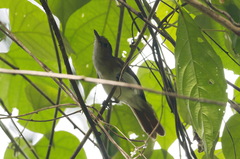

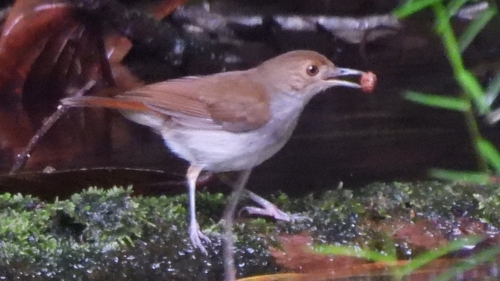
Sooty-capped Babbler

Sooty-capped Babbler

Malacopteron affine

Silhouette: Sheatherius · PhyloPic

LCNTNear ThreatenedVUENCR
Daily sighting probability ~10% · With luck
at Kinabatangan Wildlife Sanctuary

In 3 days ~20% in a week ~40%

163 Verified sightings at Kinabatangan Wildlife Sanctuary From 2019 to 2026
1,339 In all 7 parks
March Best month
🌅 Crepuscular When it's spotted

About the Sooty-capped Babbler

The sooty-capped babbler (Malacopteron affine) is a member of the family Pellorneidae. It occurs in Malaysia, Indonesia, Brunei, Thailand, and Singapore. The sooty-capped babbler is also known in Malay as rimba tinjau belukar. Its main diet is small insects.

It is threatened by habitat loss. Wikipedia →

Sounds

Call0:27

Malaysia · 2026

© Ding Li Yong · XC1186802 · CC BY-NC-ND 4.0

Song0:23

Malaysia · 2026

© Kim Chuah Lim · XC1146391 · CC BY-NC-SA 4.0

Alarm call0:34

Malaysia · 2024

© Greg Irving · XC921989 · CC BY-NC-SA 4.0

Global Distribution

Parks Where Found

# Park Country Daily sighting probability
1 Danum Valley Conservation Area 🇲🇾 Malaysia
~40%
2 Taman Negara National Park 🇲🇾 Malaysia
~30%
3 Way Kambas National Park 🇮🇩 Indonesia
~20%
4 Kinabatangan Wildlife Sanctuary 🇲🇾 Malaysia
~10%
5 Gunung Leuser National Park 🇮🇩 Indonesia
~10%
6 Kinabalu Park 🇲🇾 Malaysia
<5%
7 Sepilok 🇲🇾 Malaysia
<5%

Before you go

What are the chances of seeing a Sooty-capped Babbler in Kinabatangan Wildlife Sanctuary?

With luck

About 10% of wildlife watchers report a Sooty-capped Babbler sighting in Kinabatangan Wildlife Sanctuary on a given day, based on 163 verified sightings from GBIF citizen-science data from 2019 to 2026. It is the 93rd most-seen of the 231 birds we can rate there. Over three days the chance rises to about 20%, and over a week to about 40%, if each day is a fresh chance.

When is the best time to see a Sooty-capped Babbler in Kinabatangan Wildlife Sanctuary?

March

In that month about 20% of wildlife watchers report a Sooty-capped Babbler in Kinabatangan Wildlife Sanctuary on a given day, against under 5% in May–June and October–February, the lowest months.

What time of day is best to see a Sooty-capped Babbler?

Between 2 and 5 am

Across all the parks we cover, that three-hour window holds the most Sooty-capped Babbler sightings with a recorded time, and about 7 in 10 of them come between 6 pm and 6 am: it is most active around dawn and dusk.

Where does the Sooty-capped Babbler sighting chance come from?

GBIF citizen-science records

It is estimated from how often the Sooty-capped Babbler is recorded against all the birds logged in Kinabatangan Wildlife Sanctuary (163 verified sightings from 2019 to 2026), calibrated against known sighting rates. Figures are rounded to the nearest 10% because citizen-science data supports honest approximations, not decimals, and months with records from fewer than five people show "—". How it works.

← Back to Kinabatangan Wildlife Sanctuary