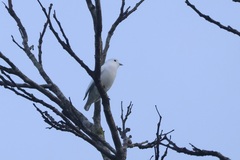
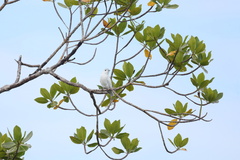
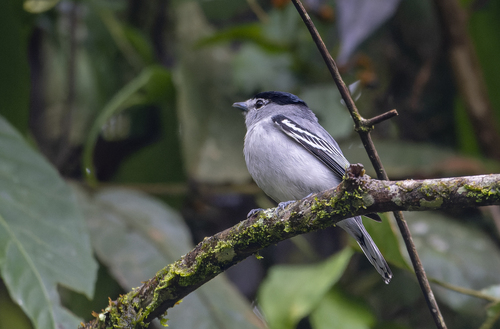
Snowy Cotinga

Snowy Cotinga

Carpodectes nitidus

Silhouette: Edwin Price · PhyloPic

LCLeast ConcernNTVUENCR
Daily sighting probability <5% · Rare
at La Amistad International Park (Panama)

In 3 days ~10% in a week ~30%

447 Verified sightings at La Amistad International Park (Panama) From 2019 to 2026
983 In all 6 parks
October Best month
☀️ Diurnal When it's spotted

About the Snowy Cotinga

The snowy cotinga (Carpodectes nitidus) is a medium-sized species of passerine bird in the family Cotingidae. It is found in Costa Rica, Honduras, Nicaragua, and Panama. The snowy cotinga shares genus Carpodectes with the yellow-billed cotinga (C. antoniae) and the black-tipped cotinga (C. hopkei). One early twentieth century author treated them as conspecific but they have been otherwise treated as separate species. The three form a superspecies. The snowy cotinga is monotypic.

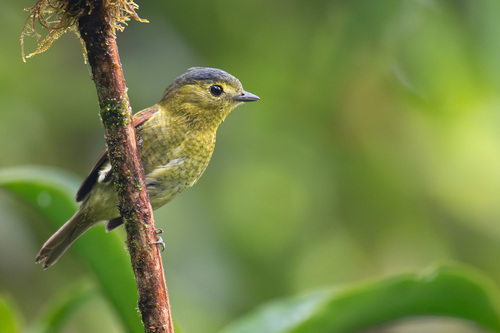
The snowy cotinga is 19.5 to 21 cm (7.7 to 8.3 in) long and weighs an average of 105 g (3.7 oz). The species is sexually dimorphic. Adult males are mostly white with a light bluish gray crown and a very light bluish gray wash on their upperparts and wings. Their flight feathers are wide and have rounded tips. Adult females have a brownish gray head and upperparts with a darker crown. Their tail is blackish. Their wings are mostly blackish with white to grayish white edges on the coverts and inner flight feathers. Their chin is a very light gray; the rest of their underparts are a paler gray than their upperparts that becomes white on the flanks, belly, and undertail... Wikipedia →

Sounds

Call0:26

Costa Rica · 2018

© Brendan Sloan · XC405999 · CC BY-NC-SA 4.0

Global Distribution

Parks Where Found

# Park Country Daily sighting probability
1 Bastimentos Island National Marine Park 🇵🇦 Panama
~10%
2 La Amistad International Park (Panama) 🇵🇦 Panama
<5%
3 Gandoca-Manzanillo Wildlife Refuge 🇨🇷 Costa Rica
<5%
4 Cahuita National Park 🇨🇷 Costa Rica
<5%
5 Tortuguero National Park 🇨🇷 Costa Rica
<5%
6 Braulio Carrillo National Park 🇨🇷 Costa Rica
<5%

Before you go

What are the chances of seeing a Snowy Cotinga in La Amistad International Park (Panama)?

Rare

Under 5% of wildlife watchers report a Snowy Cotinga sighting in La Amistad International Park (Panama) on a given day, based on 447 verified sightings from GBIF citizen-science data from 2019 to 2026. It is the 265th most-seen of the 657 birds we can rate there. Over three days the chance rises to about 10%, and over a week to about 30%, if each day is a fresh chance.

When is the best time to see a Snowy Cotinga in La Amistad International Park (Panama)?

February and October–November

In those months about 10% of wildlife watchers report a Snowy Cotinga in La Amistad International Park (Panama) on a given day, against under 5% in March–September and December–January, the lowest months.

What time of day is best to see a Snowy Cotinga?

Between 6 and 9 am

Across all the parks we cover, that three-hour window holds the most Snowy Cotinga sightings with a recorded time, and about 9 in 10 of them come between 6 am and 6 pm: it is a daytime animal.

Is La Amistad International Park (Panama) the best place to see a Snowy Cotinga?

2nd of 6

Of the 6 parks where we can rate Snowy Cotinga sightings, La Amistad International Park (Panama) ranks 2nd at under 5%. The best odds are in Bastimentos Island National Marine Park (Panama, about 10%).

Which relatives of the Snowy Cotinga live in La Amistad International Park (Panama)?

Same family: Cotingidae

The closest relatives of the Snowy Cotinga that you can see in La Amistad International Park (Panama) (family Cotingidae, Cotingas) are Masked Tityra (about 20%), Three-wattled Bellbird (about 10%) and Cinnamon Becard (about 10%), with each one's daily chance of a sighting.

Where does the Snowy Cotinga sighting chance come from?

GBIF citizen-science records

It is estimated from how often the Snowy Cotinga is recorded against all the birds logged in La Amistad International Park (Panama) (447 verified sightings from 2019 to 2026), calibrated against known sighting rates. Figures are rounded to the nearest 10% because citizen-science data supports honest approximations, not decimals, and months with records from fewer than five people show "—". How it works.

← Back to La Amistad International Park (Panama)