



All 2 in 3 days here: ~90%
Gandoca-Manzanillo Wildlife Refuge
🇨🇷 Costa Rica
Southern Caribbean, Costa Rica 983 spp. recorded
Gandoca-Manzanillo protects 19 km of pristine Caribbean coastline — from coral reefs and mangrove wetlands to lowland tropical forest stretching to the Panamanian border. The refuge is a critical nesting site for leatherback, hawksbill, and green sea turtles, while its offshore waters are home to bottlenose and tucuxi dolphins, and one of Costa Rica's last remaining manatee populations.
9.630° N 82.625° W
🦜 Nature

569 Species sighted
67,562 Verified sightings From 2019 to 2026
Oct Best month
⭐ Iconic Species
📊 Most Spotted
⭐ Iconic Species
📊 Most Spotted
📊 Most Spotted
📊 Most Spotted
⭐ Iconic Species
📊 Most Spotted
📊 Most Spotted
🌙 Most active after dark
+ 540 more species with insufficient data
Challenges you can complete here


All 3 in 3 days here: ~60%


All 5 in 3 days here: ~30%
All 3 in 3 days here: ~10%
Recent sightings in Gandoca-Manzanillo Wildlife Refuge
LIVEiNaturalistSighting Calendar
How many species you'd see in a day
63Jan
66Feb
63Mar
60Apr
60May
64Jun
60Jul
62Aug
64Sep
69Oct
56Nov
58Dec
Sighting Zones
Warmer areas are where all species together are recorded most often.
-
Playa Manzanillo
Daily sight. prob.vs avg Strawberry Poison-dart Frog~90%+20%
 White-throated Gecko~90%+20%
 Mantled Howler Monkey~80%+20%
 Hoffmann's Two-toed Sloth~80%+10%
 Brown-throated Sloth~70%+10%
 Border Anole~70%+20%
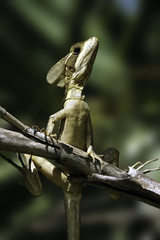 Brown Basilisk~70%+30%
 Middle American Ameiva~70%+30%
 Four-lined Ameiva~70%+30%
 Striped Poison-Dart Frog~60%+30%
 Crested Anole~60%+10%
 Green Iguana~60%+10%
-
ARA Project
Daily sight. prob.vs avg- Hoffmann's Two-toed Sloth~80%+10%
- Mantled Howler Monkey~80%+10%
- White-throated Gecko~80%+10%
- Strawberry Poison-dart Frog~70%≈
- Brown-throated Sloth~70%+10%
 Green and Black Dart-poison Frog~70%≈
- Green Iguana~60%+10%
- Border Anole~60%+10%
 Basiisk Verde~60%+20%
 Central American Agouti~60%-10%
 Giant Marine Toad~50%+20%
 Red-eyed Treefrog~50%≈
-
Playa Chiquita
Daily sight. prob.vs avg- Central American Agouti~80%+10%
- Red-eyed Treefrog~80%+20%
 Sylvia's Tree Frog~70%+30%
- Hoffmann's Two-toed Sloth~70%-10%
- Green and Black Dart-poison Frog~70%≈
- Mantled Howler Monkey~70%≈
- White-throated Gecko~60%≈
- Brown-throated Sloth~60%≈
- Border Anole~60%≈
- Green Iguana~60%+10%
 Masked Tree Frog~50%+10%
 Helmeted Iguana~50%+10%
-
Punta Mona
Daily sight. prob.vs avg- Strawberry Poison-dart Frog~90%+20%
- White-throated Gecko~80%+10%
- Middle American Ameiva~80%+30%
- Mantled Howler Monkey~70%+10%
- Striped Poison-Dart Frog~70%+30%
- Brown-throated Sloth~60%≈
- Brown Basilisk~60%+10%
- Green Iguana~60%+10%
- Border Anole~50%≈
- Hoffmann's Two-toed Sloth~50%-30%
 Common Caiman~50%+20%
- Helmeted Iguana~50%+10%
-
Quebrada Milla
Daily sight. prob.vs avg- Strawberry Poison-dart Frog~90%+10%
- Border Anole~70%+20%
- Mantled Howler Monkey~70%≈
- Green and Black Dart-poison Frog~70%≈
- Common Caiman~60%+30%
- Middle American Ameiva~60%+20%
 Striped Rocket Frog~60%+30%
- Hoffmann's Two-toed Sloth~50%-20%
- Helmeted Iguana~50%+10%
- White-throated Gecko~50%-20%
- Basiisk Verde~50%+10%
- Sylvia's Tree Frog~50%+10%
🏕️ Experience
Essentials
Entrance
Free
Tourism
Medium
Typical stay
1–2
daysTrails
Easy
World Heritage
No
Climate
Temp °C Rain mm
JanFebMarAprMayJunJulAugSepOctNovDec
0.0 Excellent
Wallace's Line Score
How good is this park for seeing wildlife? 🦜
Biodiversity
ExcellentHow rich is the wildlife?
4.7
Species by taxon
🦅 Birds 587
🐒 Mammals 201
🦎 Reptiles 129
🐸 Amphibians 66
983 Total Species
828 Global average across 316 parks
35 Threatened 50 Endemic
🔭
Sighting
ExcellentHow likely to see animals?
4.3
🎯
Top-12 Avg Probability
68% 📊
Coverage (270 species at ≥5% of 983 in the inventory)
27% 🔀
Taxon variety in top 12 (5 bird, 4 mammal, 2 amphibian, 1 reptile)
91% 🔭
Species per 10 outings (distinct species a visitor would meet over 10 outings — effort held equal across parks)
168 🌟
Iconic-group species (≥15%) (every species from the 19 iconic groups — monkeys, cats, toucans, macaws, sloths, crocodilians… — not just the 4 highlighted above)
22 ⭐
High-prob species (>40%)
37 🏕️
Experience
Very goodHow easy and pleasant is the visit?
3.9
Climate Mixed Medium
Entrance Free High
Tourism High Low
Trails Easy High
World Heritage No —
What visitors say
Here, we saw another helmeted iguana and a coati (a raccoon-like animal with a long snout) up in a tree.
We see a squirrel determined to gnaw the hard shell of one of the many coconuts in a heavy bunch and then secure breakfast from there.
There, on the advice of a local, we spotted sloths in the trees and small iguanas on palms...
For wildlife photographers, we definitely recommend visiting the Ara Manzanillo project, which is a great spot for observing and photographing the Green Macaw.
Before you go
What animals can you see in Gandoca-Manzanillo Wildlife Refuge?
983 species
Gandoca-Manzanillo Wildlife Refuge has 983 recorded vertebrate species. The ones wildlife watchers report most often on a given day are Strawberry Poison-dart Frog (about 80%), Hoffmann's Two-toed Sloth (about 70%), Green and Black Dart-poison Frog (about 70%), White-throated Gecko (about 70%) and Mantled Howler Monkey (about 70%). Among birds, the most-seen is Great Kiskadee (about 70%).
When is the best time to visit Gandoca-Manzanillo Wildlife Refuge for wildlife?
January–March and August–October
In those months the park's 12 most-seen species average about 70% on a given day, against about 60% in April–July and November–December.
Can you see a Strawberry Poison-dart Frog in Gandoca-Manzanillo Wildlife Refuge?
Yes
About 80% of wildlife watchers report a Strawberry Poison-dart Frog sighting in Gandoca-Manzanillo Wildlife Refuge on a given day, based on 275 verified sightings from GBIF citizen-science data from 2019 to 2026. The best time is January–March, May, July–August and October (about 80%).
Can you see a Hoffmann's Two-toed Sloth in Gandoca-Manzanillo Wildlife Refuge?
Yes
About 70% of wildlife watchers report a Hoffmann's Two-toed Sloth sighting in Gandoca-Manzanillo Wildlife Refuge on a given day, based on 217 verified sightings from GBIF citizen-science data from 2019 to 2026. The best time is January–February and August–October (about 80%).
Can you see a Mantled Howler Monkey in Gandoca-Manzanillo Wildlife Refuge?
Yes
About 70% of wildlife watchers report a Mantled Howler Monkey sighting in Gandoca-Manzanillo Wildlife Refuge on a given day, based on 211 verified sightings from GBIF citizen-science data from 2019 to 2026. The best time is January–February and October (about 80%).
Where in Gandoca-Manzanillo Wildlife Refuge is wildlife easiest to see?
Around Playa Manzanillo
The richest sighting zone is around Playa Manzanillo, followed by ARA Project and Playa Chiquita, ranked by how many of the park's headline animals visitors can expect to see in each. See the zones on the map.
Is Gandoca-Manzanillo Wildlife Refuge good for wildlife watching?
4.4 out of 5
On the Wallace's Line Score, Gandoca-Manzanillo Wildlife Refuge rates 4.4/5: 57th of 316 parks worldwide and 3rd in Central America. 49 of its species are reported by about 40% or more of wildlife watchers on a given day.