Common Scaly-foot

Common Scaly-foot

Pygopus lepidopodus

Silhouette: SeismicShrimp · PhyloPic

LCLeast ConcernNTVUENCR Endemic
Daily sighting probability ~10% · With luck
at Lamington National Park

In 3 days ~20% in a week ~50%

6 Verified sightings at Lamington National Park From 2019 to 2026
97 In all 3 parks
March Best month
☀️🌙 Day & Night When it's spotted

About the Common Scaly-foot

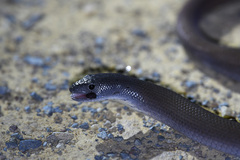
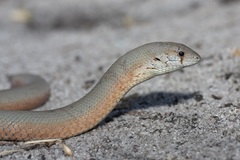
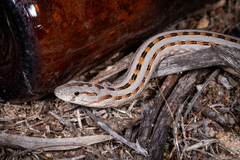
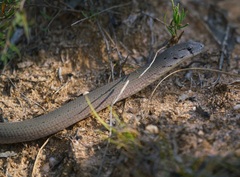
The common scaly-foot (Pygopus lepidopodus) is a widespread species of legless lizard in the Pygopodidae family. It is endemic to Australia. Mostly active at dusk or dawn (crepuscular), it can be nocturnal after high daytime temperatures. It lives in long grasses, heaths, and woodlands, and is most often seen on warm mornings, foraging for food. When threatened, the scaly-foot flashes its thick, fleshy tongue, in an apparent mimicry of snakes. Usually two eggs are laid per clutch.

Its diet includes a variety of invertebrates such as burrowing spiders. It is found mostly in the southern and eastern parts of Australia, though isolated populations occur in semiarid southern Queensland and tropical wet Queensland.

The scaly-foot is snake-like in appearance, up to 80 cm in length with a noticeable "keel" or ridge on the top. Variable in colours and pattern, it occasionally is grey with black spots or sometimes coppery brown with a grey tail. Other patterns and variations occur. Prominent limb flaps may be seen on close inspection, hence the name "scaly-foot".

Considered an easy to keep species, a license is required... Wikipedia →

Global Distribution

Parks Where Found

# Park Country Daily sighting probability
1 Royal National Park 🇦🇺 Australia
~20%
2 Blue Mountains National Park 🇦🇺 Australia
~20%
3 Lamington National Park 🇦🇺 Australia
~10%

Cities Where Found

# City Country Daily sighting probability
1 Sydney 🇦🇺 Australia
<5%

Closest Relatives at Lamington National Park

No species of the same family or order lives in Lamington National Park, so these are its closest relatives here: other reptiles.

Before you go

What are the chances of seeing a Common Scaly-foot in Lamington National Park?

With luck

About 10% of wildlife watchers report a Common Scaly-foot sighting in Lamington National Park on a given day, based on 6 verified sightings from GBIF citizen-science data from 2019 to 2026. It is the 33rd most-seen of the 38 reptiles we can rate there. Over three days the chance rises to about 20%, and over a week to about 50%, if each day is a fresh chance.

When is the best time to see a Common Scaly-foot in Lamington National Park?

March

In that month about 30% of wildlife watchers report a Common Scaly-foot in Lamington National Park on a given day, against under 5% in April–September and November–January, the lowest months. That is one of Lamington National Park's wettest months, with about 150 mm of rain against 40 mm in August.

What time of day is best to see a Common Scaly-foot?

Between 11 am and 2 pm

Across all the parks we cover, that three-hour window holds the most Common Scaly-foot sightings with a recorded time, and about 7 in 10 of them come between 6 am and 6 pm: it is seen both by day and at night.

Is Lamington National Park the best place to see a Common Scaly-foot?

3rd of 3

Of the 3 parks where we can rate Common Scaly-foot sightings, Lamington National Park ranks 3rd at about 10%. The best odds are in Royal National Park (Australia, about 20%) and Blue Mountains National Park (Australia, about 20%).

Where does the Common Scaly-foot sighting chance come from?

GBIF citizen-science records

It is estimated from how often the Common Scaly-foot is recorded against all the reptiles logged in Lamington National Park (6 verified sightings from 2019 to 2026), calibrated against known sighting rates. Figures are rounded to the nearest 10% because citizen-science data supports honest approximations, not decimals, and months with records from fewer than five people show "—". How it works.

← Back to Lamington National Park