Grey Himalayan Goral

Grey Himalayan Goral

Naemorhedus goral

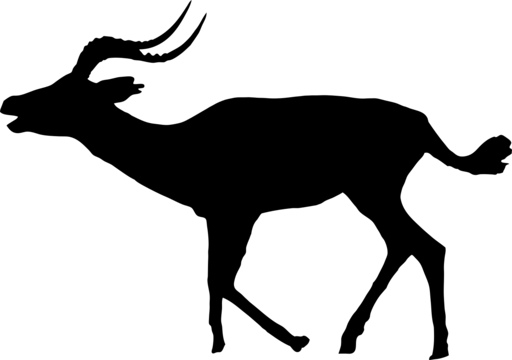
Silhouette: [unknown] · PhyloPic

LCNTNear ThreatenedVUENCR
Daily sighting probability ~30% · Possible
at Langtang National Park

In 3 days ~70% in a week ~90%

39 Verified sightings at Langtang National Park From 2019 to 2026
39 In 1 park
June Best month
☀️ Diurnal When it's spotted

About the Grey Himalayan Goral

The Himalayan goral (Naemorhedus goral) or gray goral is a bovid species native to the Himalayas. It is listed as Near Threatened on the IUCN Red List because the population is thought to be declining significantly due to habitat loss and hunting for meat.

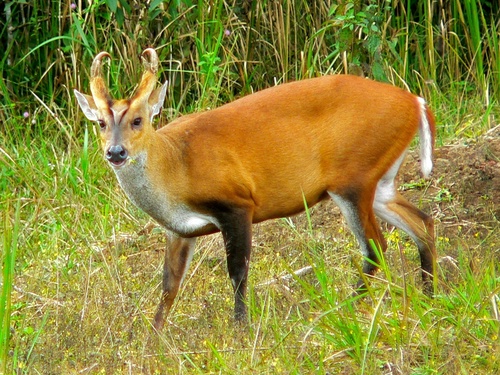
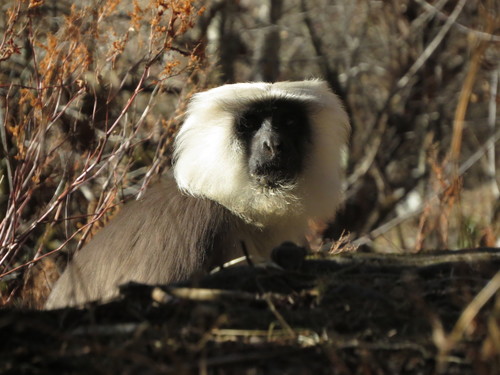
The Himalayan goral is 95 to 130 cm (37 to 51 in) in length and weighs 35–42 kg (77–93 lb). It has a gray or gray-brown coat with tan legs, lighter patches on its throat, and a single dark stripe along its spine. Males have short manes on their necks. Both males and females have backward-curving horns which can grow up to 18 cm (7.1 in) in length.

In addition to certain peculiarities in the form of the skull, gorals are chiefly distinguished from the closely related serows in that they do not possess preorbital glands below their eyes, nor corresponding depressions in their skulls.

The Himalayan goral occurs in the Himalayas from Chitral District and the Gilgit-Baltistan region in Pakistan to Nepal, Bhutan and southern Tibet, to Sikkim and Arunachal Pradesh in India, to possibly western Myanmar. It most commonly occurs from 900 to 2,750 m (2,950 to 9,020 ft). In Pakistan, it has... Wikipedia →

Global Distribution

Parks Where Found

# Park Country Daily sighting probability
1 Langtang National Park 🇳🇵 Nepal
~30%

More parks will be added in future updates.

Zoos & Centres Where Found

# Zoo / Centre Country
1 National Zoological Park Delhi 🇮🇳 India In captivity
2 Himalayan Zoological Park 🇮🇳 India In captivity
3 Motithang Takin Preserve 🇧🇹 Bhutan In captivity
4 Padmaja Naidu Himalayan Zoological Park 🇮🇳 India In captivity
5 Lee Richardson Zoo 🇺🇸 United States In captivity
6 Rohtak Zoo 🇮🇳 India In captivity

Before you go

What are the chances of seeing a Grey Himalayan Goral in Langtang National Park?

Possible

About 30% of wildlife watchers report a Grey Himalayan Goral sighting in Langtang National Park on a given day, based on 39 verified sightings from GBIF citizen-science data from 2019 to 2026. It is the 5th most-seen of the 8 mammals we can rate there. Over three days the chance rises to about 70%, and over a week to about 90%, if each day is a fresh chance.

When is the best time to see a Grey Himalayan Goral in Langtang National Park?

June

In that month about 60% of wildlife watchers report a Grey Himalayan Goral in Langtang National Park on a given day, against about 10% in April, July and October, the lowest months. That is one of Langtang National Park's wettest months, with about 220 mm of rain against 10 mm in November.

What time of day is best to see a Grey Himalayan Goral?

Between 7 and 10 am

Across all the parks we cover, that three-hour window holds the most Grey Himalayan Goral sightings with a recorded time, and about 8 in 10 of them come between 6 am and 6 pm: it is a daytime animal.

Where else can you see a Grey Himalayan Goral?

Only Langtang National Park, in our data

Langtang National Park is the only park on Wallace's Line with enough records to rate Grey Himalayan Goral sightings: about 30% of wildlife watchers there report one on a given day.

Which relatives of the Grey Himalayan Goral live in Langtang National Park?

Same family: Bovidae

The closest relatives of the Grey Himalayan Goral that you can see in Langtang National Park (family Bovidae, Bovids) are Himalayan Tahr (about 40%) and Domestic Yak (about 30%), with each one's daily chance of a sighting.

Where does the Grey Himalayan Goral sighting chance come from?

GBIF citizen-science records

It is estimated from how often the Grey Himalayan Goral is recorded against all the mammals logged in Langtang National Park (39 verified sightings from 2019 to 2026), calibrated against known sighting rates. Figures are rounded to the nearest 10% because citizen-science data supports honest approximations, not decimals, and months with records from fewer than five people show "—". How it works.

← Back to Langtang National Park