Himalayan Pika

Himalayan Pika

Ochotona roylii

Silhouette: Margot Michaud · PhyloPic

LCLeast ConcernNTVUENCR
Daily sighting probability ~20% · Possible
at Langtang National Park

In 3 days ~60% in a week ~90%

11 Verified sightings at Langtang National Park From 2019 to 2026
11 In 1 park
May Best month
🌅 Crepuscular When it's spotted

About the Himalayan Pika

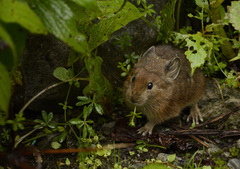
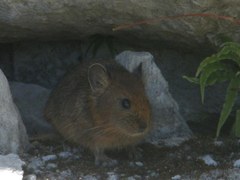
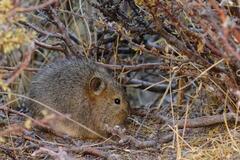
Royle's pika (Ochotona roylii), also called the Himalayan hare or hui shutu, is a species of pika. It is found in Bhutan, China, India, Nepal, and Pakistan. Royle's pika was first described in 1839 as Lagomys roylii by William Ogilby, with the type locality being Choor Mountain in Himachal Pradesh.

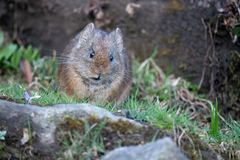
The most common pika species in the Himalayas, it has a length of 17-22 centimeters. Royle's pika has a slightly arched head, with a rufous-grey body and chestnut-colored head, as well as sparse hair in front of its ears.

Royle's pika is the most common pika species in the Himalayas, and can be confused with the sympatric large-eared pika. These species are mostly seen in the open rocky mountain edges or slopes, or on ground covered with conifer trees, such as pine, deodar and rhododendron forests. Royle's pika are a crepuscular foraging species, as they tend to be inactive during midday hours. Reduction of activity during the midday is also contributed to increasing... Wikipedia →

Global Distribution

Parks Where Found

# Park Country Daily sighting probability
1 Langtang National Park 🇳🇵 Nepal
~20%

More parks will be added in future updates.

Before you go

What are the chances of seeing a Himalayan Pika in Langtang National Park?

Possible

About 20% of wildlife watchers report a Himalayan Pika sighting in Langtang National Park on a given day, based on 11 verified sightings from GBIF citizen-science data from 2019 to 2026. It is the 7th most-seen of the 8 mammals we can rate there. Over three days the chance rises to about 60%, and over a week to about 90%, if each day is a fresh chance.

When is the best time to see a Himalayan Pika in Langtang National Park?

May–June and October

In those months about 30% of wildlife watchers report a Himalayan Pika in Langtang National Park on a given day, against under 5% in March and November, the lowest months. July to September have too few records to rate.

What time of day is best to see a Himalayan Pika?

Between 3 and 6 am

Across all the parks we cover, that three-hour window holds the most Himalayan Pika sightings with a recorded time, and about half of them come between 6 am and 6 pm: it is most active around dawn and dusk.

Where else can you see a Himalayan Pika?

Only Langtang National Park, in our data

Langtang National Park is the only park on Wallace's Line with enough records to rate Himalayan Pika sightings: about 20% of wildlife watchers there report one on a given day.

Where does the Himalayan Pika sighting chance come from?

GBIF citizen-science records

It is estimated from how often the Himalayan Pika is recorded against all the mammals logged in Langtang National Park (11 verified sightings from 2019 to 2026), calibrated against known sighting rates. Figures are rounded to the nearest 10% because citizen-science data supports honest approximations, not decimals, and months with records from fewer than five people show "—". How it works.

← Back to Langtang National Park