Redtail
Daily sighting probability ~20% · Possible
at Litchfield National Park

In 3 days ~40% in a week ~70%

12 Verified sightings at Litchfield National Park From 2019 to 2026
27 In all 2 parks
February Best month
☀️ Diurnal When it's spotted

About the Redtail

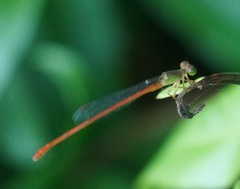
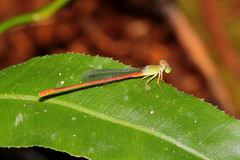
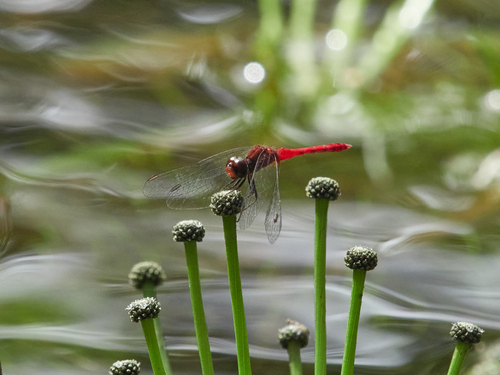
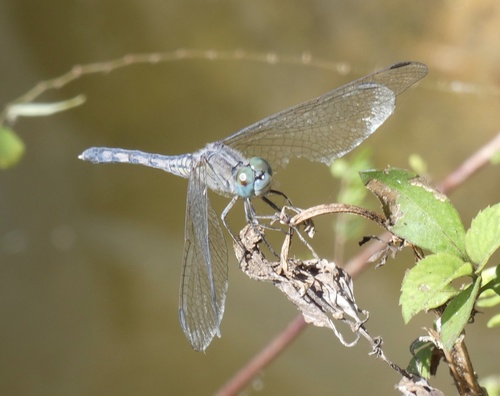
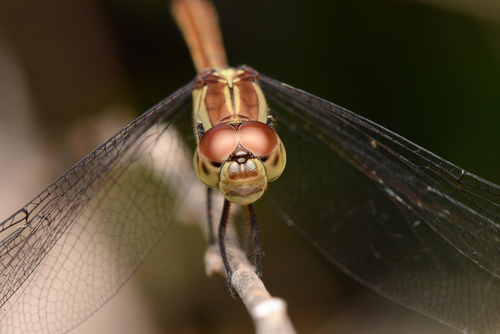
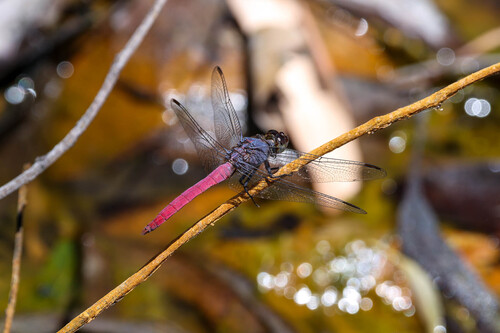
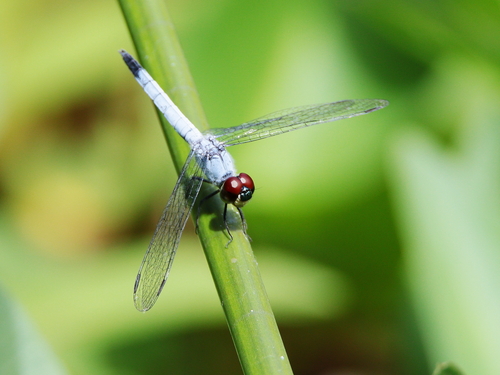
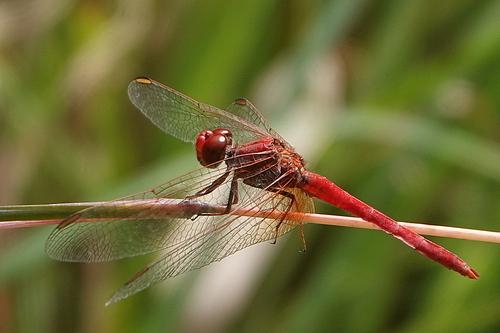
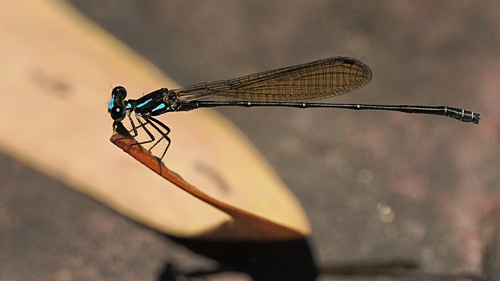
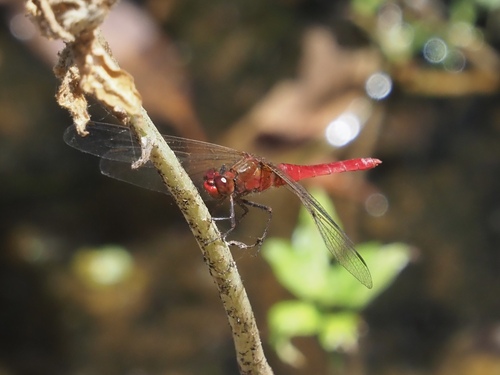
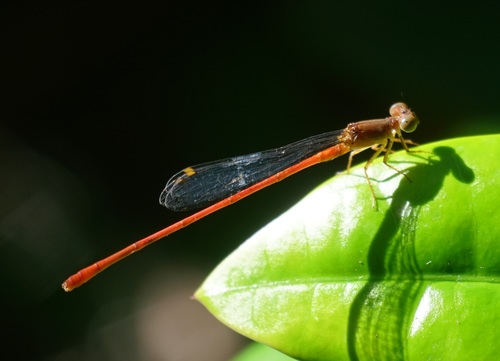
Ceriagrion aeruginosum is a species of damselfly in the family Coenagrionidae. Its common name is redtail. It is found in Indonesia, the Moluccas, New Guinea, Australia and possibly the Solomon Islands. Natural habitats of Ceriagrion aeruginosum are freshwater swamps, ponds and slow moving streams. Adult males are medium-sized damselflies (wingspan 50mm, length 45mm), mostly red with their synthorax becoming pale green as they mature. In Australia, their distribution is in suitable habitat in the north-west and north-eastern part of the continent from about Broome to the south-eastern Queensland border.

Ceriagrion aeruginosum has been assessed as least concern 3.1 in the IUCN Red List. The genus name Ceriagrion is derived from the Latin cerinus ("wax-coloured"), combined with Agrion, a genus name derived from the Greek ἄγριος (agrios, "wild"). Agrion was the name given in 1775 by Johan Christian Fabricius for all damselflies.

The species name aeruginosum is derived from the Latin aeruginosus ("verdigris-coloured" or "rusty"), referring to the brownish colouring of the thorax, legs and top of the head. List of Odonata species of Australia... Wikipedia →
Global Distribution

Parks Where Found

# Park Country Daily sighting probability
1 Litchfield National Park 🇦🇺 Australia
~20%
2 Kakadu National Park 🇦🇺 Australia
~10%

Cities Where Found

# City Country Daily sighting probability
1 Brisbane 🇦🇺 Australia
~10%

Before you go

What are the chances of seeing a Redtail in Litchfield National Park?

Possible

About 20% of wildlife watchers report a Redtail sighting in Litchfield National Park on a given day, based on 12 verified sightings from GBIF citizen-science data from 2019 to 2026. It is the 29th most-seen of the 43 insects we can rate there. Over three days the chance rises to about 40%, and over a week to about 70%, if each day is a fresh chance.

When is the best time to see a Redtail in Litchfield National Park?

February

In that month about 40% of wildlife watchers report a Redtail in Litchfield National Park on a given day, against under 5% in May, July–August and November–January, the lowest months. That is one of Litchfield National Park's wettest months, with about 340 mm of rain against almost none in July.

What time of day is best to see a Redtail?

Between 7 and 10 am

Across all the parks we cover, that three-hour window holds the most Redtail sightings with a recorded time, and nearly all of them come between 6 am and 6 pm: it is a daytime animal.

Is Litchfield National Park the best place to see a Redtail?

Yes

Of the 2 parks where we can rate Redtail sightings, Litchfield National Park has the highest daily chance: about 20%. Next come Kakadu National Park (Australia, about 10%).

Where does the Redtail sighting chance come from?

GBIF citizen-science records

It is estimated from how often the Redtail is recorded against all the insects logged in Litchfield National Park (12 verified sightings from 2019 to 2026), calibrated against known sighting rates. Figures are rounded to the nearest 10% because citizen-science data supports honest approximations, not decimals, and months with records from fewer than five people show "—". How it works.

← Back to Litchfield National Park