Weigel's Black Snake

Weigel's Black Snake

Pseudechis weigeli

Silhouette: SeismicShrimp · PhyloPic

LCLeast ConcernNTVUENCR Endemic
Daily sighting probability ~30% · Possible
at Litchfield National Park

In 3 days ~60% in a week ~90%

11 Verified sightings at Litchfield National Park From 2019 to 2026
16 In all 2 parks
February Best month
☀️🌙 Day & Night When it's spotted

About the Weigel's Black Snake

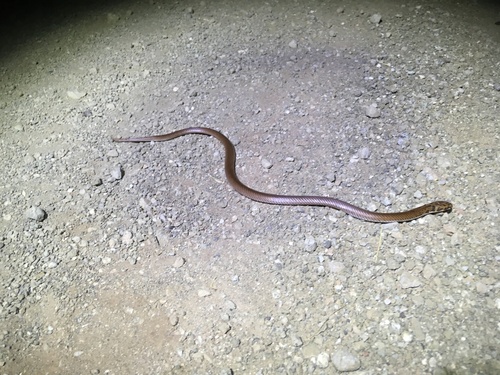
The pygmy mulga snake (Pseudechis weigeli), also commonly known as the pygmy king brown snake, is a species of venomous snake in the black snake genus Pseudechis in the family Elapidae. The species is native to Australia.

In Australia, P. weigeli is endemic to the Kimberley ranges. The preferred natural habitats of P. weigeli are forest and savanna. P. weigeli is ovoviviparous. P. weigeli was genetically confirmed as a distinct species in 2017. Within the genus Pseudechis it is most closely related to the eastern dwarf mulga snake (P. pailsei) and an as yet undescribed species from the Northern Territory.

The specific name, weigeli, is in honor of Australian herpetologist John Randall Weigel (born 1955). Cogger HG (2014). Reptiles and Amphibians of Australia, Seventh Edition. Clayton, Victoria, Australia: CSIRO Publishing. xxx + 1,033 pp. ISBN 978-0643100350.

Wells RW, Wellington CR (1987). "A new species of proteroglyphous snake (Serpentes: Oxyuranidae) from Australia". Australian Herpetologist (503): 1–8. (Cannia weigeli, new species). Wilson S, Swan G (2013... Wikipedia →

Global Distribution

Parks Where Found

# Park Country Daily sighting probability
1 Litchfield National Park 🇦🇺 Australia
~30%
2 Kakadu National Park 🇦🇺 Australia
~10%

Before you go

What are the chances of seeing a Weigel's Black Snake in Litchfield National Park?

Possible

About 30% of wildlife watchers report a Weigel's Black Snake sighting in Litchfield National Park on a given day, based on 11 verified sightings from GBIF citizen-science data from 2019 to 2026. It is the 16th most-seen of the 24 reptiles we can rate there. Over three days the chance rises to about 60%, and over a week to about 90%, if each day is a fresh chance.

When is the best time to see a Weigel's Black Snake in Litchfield National Park?

February

In that month about 60% of wildlife watchers report a Weigel's Black Snake in Litchfield National Park on a given day, against under 5% in January, March, August and October, the lowest months. That is one of Litchfield National Park's wettest months, with about 340 mm of rain against almost none in July.

What time of day is best to see a Weigel's Black Snake?

Between 7 and 10 pm

Across all the parks we cover, that three-hour window holds the most Weigel's Black Snake sightings with a recorded time, and about 6 in 10 of them come between 6 pm and 6 am: it is seen both by day and at night.

Is Litchfield National Park the best place to see a Weigel's Black Snake?

Yes

Of the 2 parks where we can rate Weigel's Black Snake sightings, Litchfield National Park has the highest daily chance: about 30%. Next come Kakadu National Park (Australia, about 10%).

Which relatives of the Weigel's Black Snake live in Litchfield National Park?

Same family: Elapidae

The closest relatives of the Weigel's Black Snake that you can see in Litchfield National Park (family Elapidae, Elapid Snakes) are Rough-scaled Death Adder (about 40%), Orange-naped Snake (about 20%) and Northern Small-eyed Snake (about 20%), with each one's daily chance of a sighting.

Where does the Weigel's Black Snake sighting chance come from?

GBIF citizen-science records

It is estimated from how often the Weigel's Black Snake is recorded against all the reptiles logged in Litchfield National Park (11 verified sightings from 2019 to 2026), calibrated against known sighting rates. Figures are rounded to the nearest 10% because citizen-science data supports honest approximations, not decimals, and months with records from fewer than five people show "—". How it works.

← Back to Litchfield National Park