Amazonian Parrotlet

Amazonian Parrotlet

Nannopsittaca dachilleae

Silhouette: Sheatherius · PhyloPic

LCLeast ConcernNTVUENCR
Daily sighting probability <5% · Rare
at Manu National Park

In 3 days ~10%

80 Verified sightings at Manu National Park From 2019 to 2026
160 In all 2 parks
December Best month
☀️ Diurnal When it's spotted

About the Amazonian Parrotlet

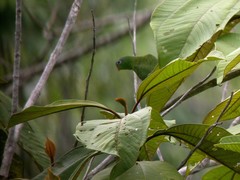
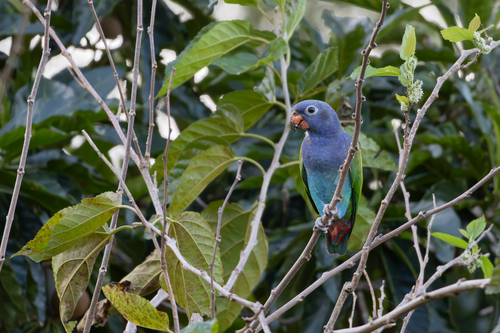
The Manu parrotlet (Nannopsittaca dachilleae) or Amazonian parrotlet is a species of parrotlet native to the western Amazon basin, from southern Peru to northwest Bolivia. It is found in lowland forests near bamboo and rivers.

It is classified as Least Concern by the IUCN. The Manu parrotlet was discovered in 1985 by John P. O'Neill, Charles A. Munn, and Irma Franke while exploring the Manú River in the Manú National Park in eastern Peru. The new species was named after the scientists' colleague, conservationist and journalist Barbara D'Achille.

The generic name is from Latin nānus dwarf, from Greek nanos dwarf + Latin psittaca feminine of psittacus parrot, from Greek psittakos parrot; dachilleae a Latinized form of the surname d'Achille, hence the "dwarf parrot of d'Achille".

The upper parts, nape, auriculars, dorsum, tertials, wing covers, rump, upper-tail, and rectrices are bright green. The forehead, anterior crown, and ores are a pale blue. The malar area, breast, belly, and under-tail are a paler more yellowish green. No sexual dimorphism has been described as yet.

The bird was consistently measured to be in flocks... Wikipedia →

Global Distribution

Parks Where Found

# Park Country Daily sighting probability
1 Tambopata National Reserve 🇵🇪 Peru
<5%
2 Manu National Park 🇵🇪 Peru
<5%

Before you go

What are the chances of seeing an Amazonian Parrotlet in Manu National Park?

Rare

Under 5% of wildlife watchers report an Amazonian Parrotlet sighting in Manu National Park on a given day, based on 80 verified sightings from GBIF citizen-science data from 2019 to 2026. It is the 395th most-seen of the 641 birds we can rate there. Over three days the chance rises to about 10%, if each day is a fresh chance.

When is the best time to see an Amazonian Parrotlet in Manu National Park?

December

In that month about 10% of wildlife watchers report an Amazonian Parrotlet in Manu National Park on a given day, against under 5% in January to November, the lowest months. That is one of Manu National Park's wettest months, with about 250 mm of rain against 60 mm in August.

What time of day is best to see an Amazonian Parrotlet?

Between 7 and 10 am

Across all the parks we cover, that three-hour window holds the most Amazonian Parrotlet sightings with a recorded time, and about 8 in 10 of them come between 6 am and 6 pm: it is a daytime animal.

Is Manu National Park the best place to see an Amazonian Parrotlet?

Among the best

Of the 2 parks where we can rate Amazonian Parrotlet sightings, Manu National Park ranks 2nd at under 5%, level with the leaders once rounded. The best odds are in Tambopata National Reserve (Peru, under 5%).

Which relatives of the Amazonian Parrotlet live in Manu National Park?

Same family: Psittacidae

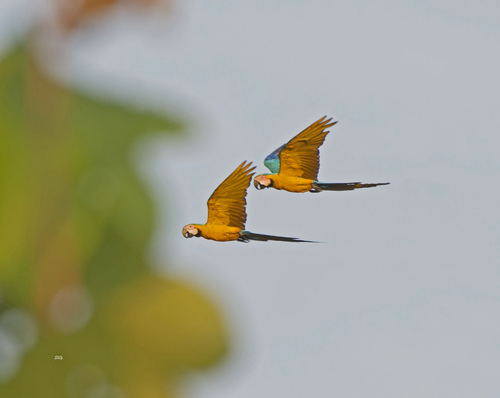
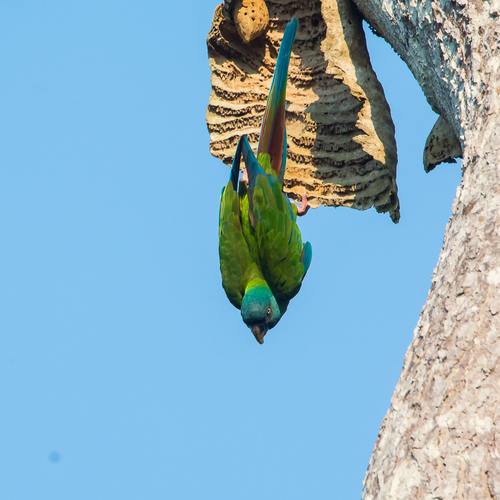
The closest relatives of the Amazonian Parrotlet that you can see in Manu National Park (family Psittacidae, New World and African Parrots) are Chestnut-fronted Macaw (about 50%), Blue-headed Parrot (about 40%) and Blue-and-yellow Macaw (about 30%), with each one's daily chance of a sighting.

Where does the Amazonian Parrotlet sighting chance come from?

GBIF citizen-science records

It is estimated from how often the Amazonian Parrotlet is recorded against all the birds logged in Manu National Park (80 verified sightings from 2019 to 2026), calibrated against known sighting rates. Figures are rounded to the nearest 10% because citizen-science data supports honest approximations, not decimals, and months with records from fewer than five people show "—". How it works.

← Back to Manu National Park