Berger's Clouded Yellow

Berger's Clouded Yellow

Colias alfacariensis

Daily sighting probability ~10% · With luck
at Mercantour National Park

In 3 days ~30% in a week ~60%

10 Verified sightings at Mercantour National Park From 2019 to 2026
49 In all 6 parks
November Best month
☀️ Diurnal When it's spotted

About the Berger's Clouded Yellow

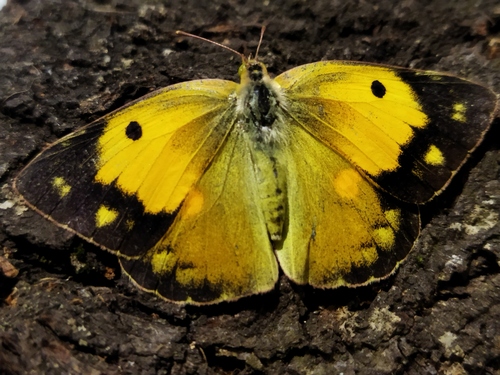
Colias alfacariensis, Berger's clouded yellow, is a butterfly of the family Pieridae. It was separated from the pale clouded yellow, C. hyale, in 1905. Berger's clouded yellow is a Palearctic species (South and Central Europe, South Russia, Russian Far East, Siberia, Central Asia and temperate China also Asia Minor, Caucasus and Transcaucasia.

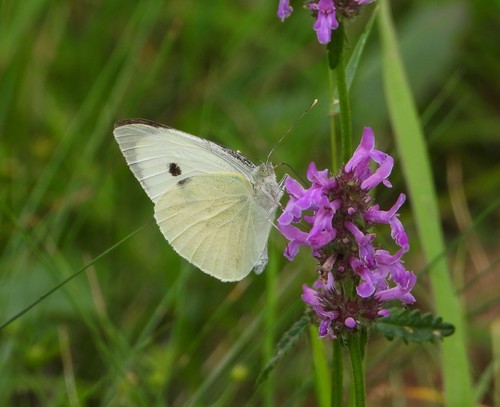
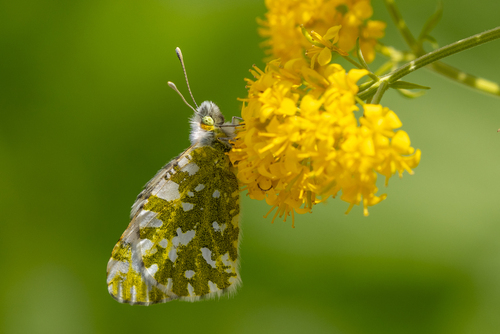
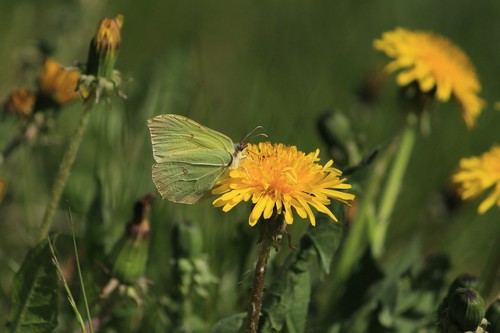
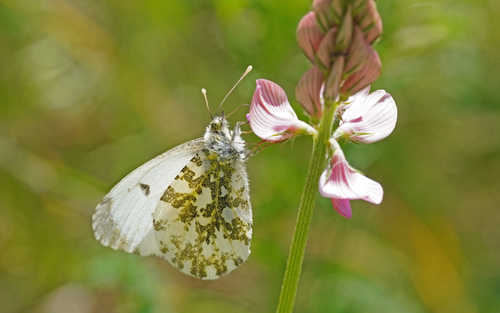
The wings of the male have a yellow ground colour, the females have a greenish-white ground colour, only the underside of the hind wings is yellowish. The upper wing side of both sexes has a dusted dark brown to black marginal band, which is only narrow on the hind wings. In the cell of the forewings there is a black spot on the upper and lower sides. The males have on the upperside of the hind wings in the cell an orange spot with a red border, on the underside this spot is bright and clearly outlined in red. This spot may be divided into two by the red border, so that it resembles an eight similar to Colias hyale and other yellow members of the genus Colias. In the females, the orange spot on the top of the hind wings is not bordered.

The caterpillars, on the other hand, clearly differ from the caterpillars of Colias hyale... Wikipedia →
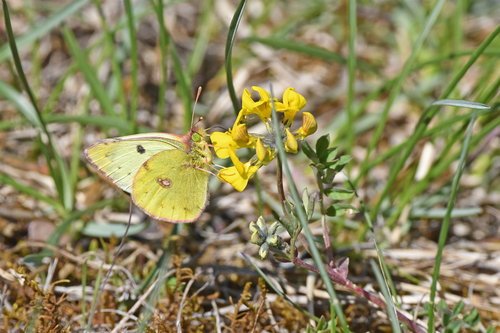
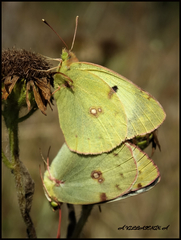
Global Distribution

Parks Where Found

# Park Country Daily sighting probability
1 Mercantour National Park 🇫🇷 France
~10%
2 Picos de Europa National Park 🇪🇸 Spain
~10%
3 Aigüestortes National Park 🇪🇸 Spain
~10%
4 Sierra Nevada National Park 🇪🇸 Spain
~10%
5 Cévennes National Park 🇫🇷 France
~10%
6 Pyrénées National Park 🇫🇷 France
<5%

Cities Where Found

# City Country Daily sighting probability
1 Prague 🇨🇿 Czechia
<5%
2 Vienna 🇦🇹 Austria
<5%

Before you go

What are the chances of seeing a Berger's Clouded Yellow in Mercantour National Park?

With luck

About 10% of wildlife watchers report a Berger's Clouded Yellow sighting in Mercantour National Park on a given day, based on 10 verified sightings from GBIF citizen-science data from 2019 to 2026. It is the 221st most-seen of the 412 insects we can rate there. Over three days the chance rises to about 30%, and over a week to about 60%, if each day is a fresh chance.

When is the best time to see a Berger's Clouded Yellow in Mercantour National Park?

November

In that month about 30% of wildlife watchers report a Berger's Clouded Yellow in Mercantour National Park on a given day, against under 5% in October and December–April, the lowest months.

What time of day is best to see a Berger's Clouded Yellow?

Between 10 am and 1 pm

Across all the parks we cover, that three-hour window holds the most Berger's Clouded Yellow sightings with a recorded time, and about 9 in 10 of them come between 6 am and 6 pm: it is a daytime animal.

Is Mercantour National Park the best place to see a Berger's Clouded Yellow?

Yes

Of the 6 parks where we can rate Berger's Clouded Yellow sightings, Mercantour National Park has the highest daily chance: about 10%. Next come Picos de Europa National Park (Spain, about 10%) and Aigüestortes National Park (Spain, about 10%).

Which relatives of the Berger's Clouded Yellow live in Mercantour National Park?

Same genus: Colias

The closest relatives of the Berger's Clouded Yellow that you can see in Mercantour National Park (genus Colias, Clouded Yellows) are Mountain Clouded Yellow (about 30%) and Clouded Yellow (about 20%), with each one's daily chance of a sighting.

Where does the Berger's Clouded Yellow sighting chance come from?

GBIF citizen-science records

It is estimated from how often the Berger's Clouded Yellow is recorded against all the insects logged in Mercantour National Park (10 verified sightings from 2019 to 2026), calibrated against known sighting rates. Figures are rounded to the nearest 10% because citizen-science data supports honest approximations, not decimals, and months with records from fewer than five people show "—". How it works.

← Back to Mercantour National Park