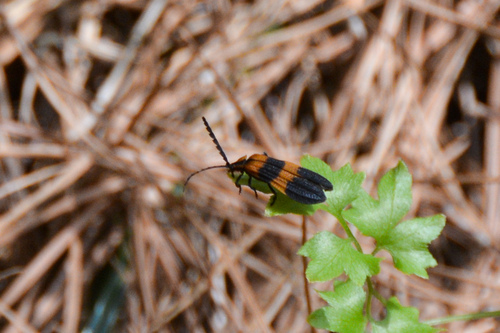
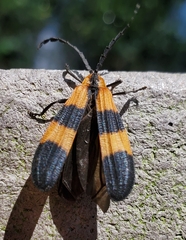
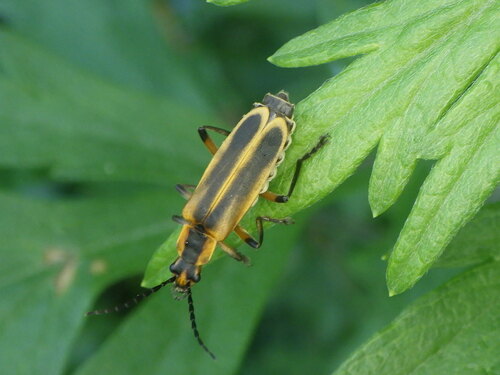

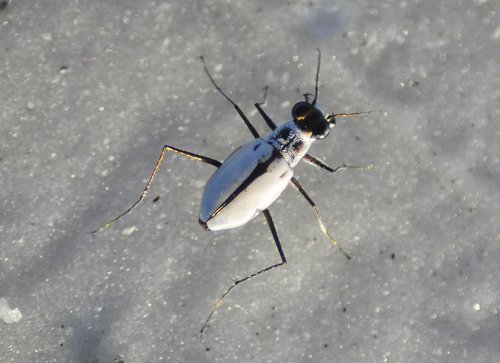
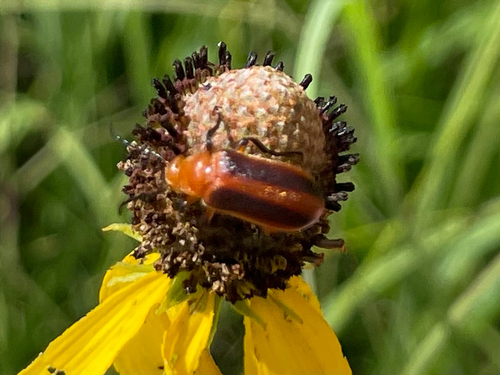
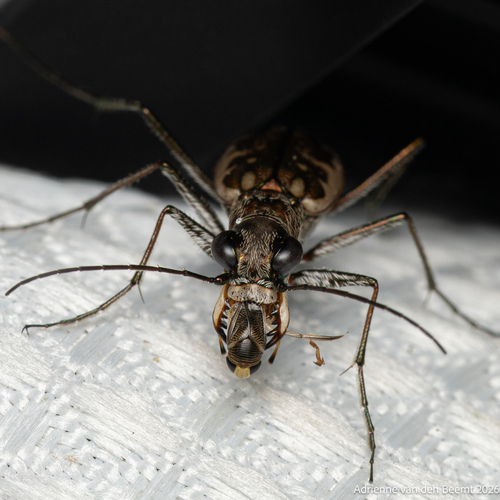
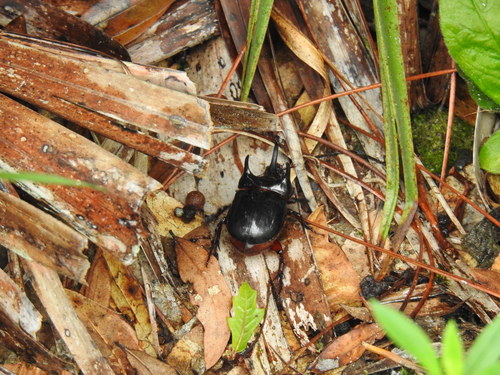
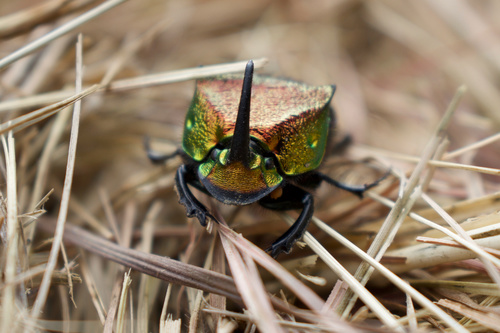
Banded Net-Winged Beetle

Banded Net-Winged Beetle

Calopteron discrepans

Daily sighting probability ~10% · With luck
at Merritt Island National Wildlife Refuge

In 3 days ~20% in a week ~30%

8 Verified sightings at Merritt Island National Wildlife Refuge From 2019 to 2026
8 In 1 park
February Best month
☀️ Diurnal When it's spotted

About the Banded Net-Winged Beetle

Calopteron discrepans, the banded net-winged beetle, is a species of net-winged beetle in the family Lycidae. It is found in North America. The banded net-winged beetle, Calopteron discrepans (Newman), is distributed across the eastern United States, ranging from New England south to Florida and west to Oklahoma and Kansas. Recently, some banded net-winged beetles have been found as far north as Manitoba and Quebec, extending the area of their geographical range.

Calopteron beetles exhibit subtle variations in appearance, with three distinct species identified in North America and Northern Mexico. Among these species, Calopteron discrepans and Calopteron reticulatum are notably similar in their external morphology. Their appearance is nearly identical and characterized by a degree of variability, making differentiation between the two species challenging. However, subtle distinctions can be observed primarily based on the coloration of the metasternum and the second antennal segment, providing key features necessary for species identification.

These beetles typically range in length from approximately 10 to... Wikipedia →

Global Distribution

Parks Where Found

# Park Country Daily sighting probability
1 Merritt Island National Wildlife Refuge 🇺🇸 United States
~10%

More parks will be added in future updates.

Cities Where Found

# City Country Daily sighting probability
1 Minneapolis [Saint Paul] 🇺🇸 United States
<5%
2 Washington 🇺🇸 United States
<5%
3 New York City 🇺🇸 United States
<5%

Before you go

What are the chances of seeing a Banded Net-Winged Beetle in Merritt Island National Wildlife Refuge?

With luck

About 10% of wildlife watchers report a Banded Net-Winged Beetle sighting in Merritt Island National Wildlife Refuge on a given day, based on 8 verified sightings from GBIF citizen-science data from 2019 to 2026. It is the 138th most-seen of the 189 insects we can rate there. Over three days the chance rises to about 20%, and over a week to about 30%, if each day is a fresh chance.

When is the best time to see a Banded Net-Winged Beetle in Merritt Island National Wildlife Refuge?

January–February, April–May and November

In those months about 10% of wildlife watchers report a Banded Net-Winged Beetle in Merritt Island National Wildlife Refuge on a given day, against under 5% in March, June–October and December, the lowest months.

What time of day is best to see a Banded Net-Winged Beetle?

Between 11 am and 2 pm

Across all the parks we cover, that three-hour window holds the most Banded Net-Winged Beetle sightings with a recorded time, and nearly all of them come between 6 am and 6 pm: it is a daytime animal.

Where else can you see a Banded Net-Winged Beetle?

Only Merritt Island National Wildlife Refuge, in our data

Merritt Island National Wildlife Refuge is the only park on Wallace's Line with enough records to rate Banded Net-Winged Beetle sightings: about 10% of wildlife watchers there report one on a given day.

Which relatives of the Banded Net-Winged Beetle live in Merritt Island National Wildlife Refuge?

Same order: Coleoptera

The closest relatives of the Banded Net-Winged Beetle that you can see in Merritt Island National Wildlife Refuge (order Coleoptera, Beetles) are Margined Leatherwing Beetle (about 10%), Asian Lady Beetle (about 10%) and Horned Passalus Beetle (about 10%), with each one's daily chance of a sighting.

Where does the Banded Net-Winged Beetle sighting chance come from?

GBIF citizen-science records

It is estimated from how often the Banded Net-Winged Beetle is recorded against all the insects logged in Merritt Island National Wildlife Refuge (8 verified sightings from 2019 to 2026), calibrated against known sighting rates. Figures are rounded to the nearest 10% because citizen-science data supports honest approximations, not decimals, and months with records from fewer than five people show "—". How it works.

← Back to Merritt Island National Wildlife Refuge