Horseshoe Whip Snake

Horseshoe Whip Snake

Hemorrhois hippocrepis

Silhouette: Alex Slavenko · PhyloPic

LCLeast ConcernNTVUENCR
Daily sighting probability ~20% · Possible
at Monfragüe National Park

In 3 days ~50% in a week ~80%

11 Verified sightings at Monfragüe National Park From 2019 to 2026
22 In all 2 parks
July Best month
🌅 Crepuscular When it's spotted

About the Horseshoe Whip Snake

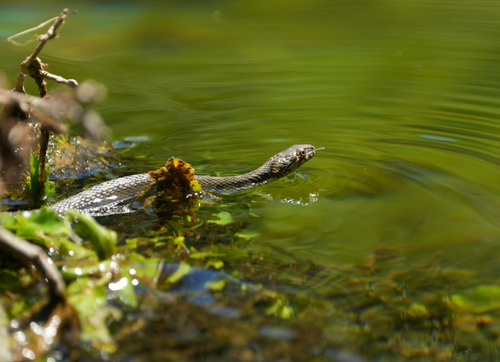
The horseshoe whip snake (Hemorrhois hippocrepis) is a species of snake in the family Colubridae. The species is native to southwestern Europe and northwestern Africa. Adults of H. hippocrepis may attain a total length, including tail, of 1.5 to 1.8 m (5 to 6 feet), with no

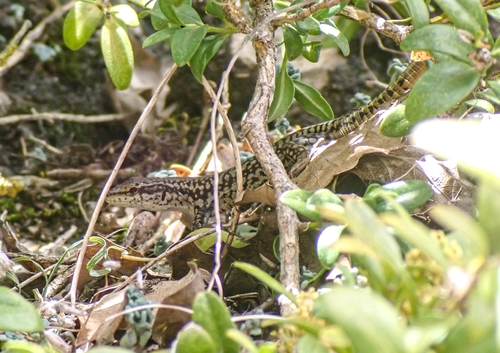
sexual dimorphism in body size. Its body is slender the head being wider than the neck. The eye is large, with a round pupil and a row of small scales below it. The smooth dorsal scales are arranged in 25-29 rows, and the ventrals number 220–258. Dorsally, it has a series of large spots which are either blackish or dark brown edged with black. There is a series of alternating smaller dark spots on each side. The lighter ground color between the spots may be yellowish, olive, or reddish. The dark spots are closely spaced, giving the appearance of a dark snake with a light pattern resembling a chain or a series of letters X. There is a light horseshoe-shaped mark on the neck and back of head.

H. hippocrepis is found in Algeria, Morocco and Tunisia in North Africa, in southern and central Portugal, southern, eastern and central Spain, Gibraltar, southern Sardinia and Pantelleria... Wikipedia →

Global Distribution

Parks Where Found

# Park Country Daily sighting probability
1 Sierra Nevada National Park 🇪🇸 Spain
~20%
2 Monfragüe National Park 🇪🇸 Spain
~20%

Cities Where Found

# City Country Daily sighting probability
1 Lisbon 🇵🇹 Portugal
~10%
2 Valencia 🇪🇸 Spain
~10%
3 Porto 🇵🇹 Portugal
~10%

Before you go

What are the chances of seeing a Horseshoe Whip Snake in Monfragüe National Park?

Possible

About 20% of wildlife watchers report a Horseshoe Whip Snake sighting in Monfragüe National Park on a given day, based on 11 verified sightings from GBIF citizen-science data from 2019 to 2026. It is the 7th most-seen of the 11 reptiles we can rate there. Over three days the chance rises to about 50%, and over a week to about 80%, if each day is a fresh chance.

When is the best time to see a Horseshoe Whip Snake in Monfragüe National Park?

July

In that month about 50% of wildlife watchers report a Horseshoe Whip Snake in Monfragüe National Park on a given day, against under 5% in May, August and October–March, the lowest months. That is one of Monfragüe National Park's driest months, with almost no rain against 100 mm in October.

What time of day is best to see a Horseshoe Whip Snake?

Between 5 and 8 pm

Across all the parks we cover, that three-hour window holds the most Horseshoe Whip Snake sightings with a recorded time, and about 6 in 10 of them come between 6 am and 6 pm: it is most active around dawn and dusk.

Is Monfragüe National Park the best place to see a Horseshoe Whip Snake?

Among the best

Of the 2 parks where we can rate Horseshoe Whip Snake sightings, Monfragüe National Park ranks 2nd at about 20%, level with the leaders once rounded. The best odds are in Sierra Nevada National Park (Spain, about 20%).

Which relatives of the Horseshoe Whip Snake live in Monfragüe National Park?

Same family: Colubridae

The closest relatives of the Horseshoe Whip Snake that you can see in Monfragüe National Park (family Colubridae, Colubrid Snakes) are Viperine Snake (about 30%), Iberian False Smooth Snake (about 10%) and Ladder Snake (about 10%), with each one's daily chance of a sighting.

Where does the Horseshoe Whip Snake sighting chance come from?

GBIF citizen-science records

It is estimated from how often the Horseshoe Whip Snake is recorded against all the reptiles logged in Monfragüe National Park (11 verified sightings from 2019 to 2026), calibrated against known sighting rates. Figures are rounded to the nearest 10% because citizen-science data supports honest approximations, not decimals, and months with records from fewer than five people show "—". How it works.

← Back to Monfragüe National Park