


Completed
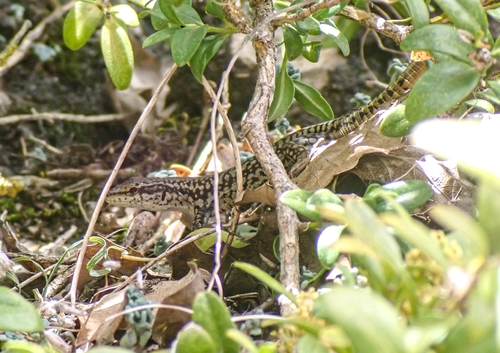

Green Iberian Wall Lizard
Podarcis virescens
Silhouette: Alex Slavenko · PhyloPic
- KingdomAnimalia (Animals)
- PhylumChordata (Chordates)
- ClassSquamata
- FamilyLacertidae (Wall Lizards)
- GenusPodarcis
- SpeciesPodarcis virescens (Green Iberian Wall Lizard)
In 3 days ~50% in a week ~80%
14 Verified sightings at Monfragüe National Park From 2019 to 2026
35 In all 2 parks
January Best month
🌅 Crepuscular When it's spotted
About the Green Iberian Wall Lizard
Podarcis virescens, or Geniez's wall lizard, is a lizard of the Lacertidae family. Podarcis virescens is commonly found in the Iberian Peninsula, including Spain and Portugal. Podarcis virescens is a lizard species of a moderate size, although it can be significantly larger than other lizards in the Podarcis genus, such as Podarcis carbonelli. Podarcis virescens vary significantly in colour, with individuals ranging from white to brown or black. Individuals, particularly males, may change colour to green during the spring, which then disappears in the summer. The underside of the lizard is more yellow than other parts of its body. Podarcis virescens is robust and not flattened compared to other lizard species. Males and females are of around the same size, between 40 mm and 63 mm.
Podarcis virescens is considered a robust lizard due to its build. Podarcis lizards vary greatly in colour and build, so Podarcis virescens does not completely share appearance traits with other species of the same genus. This was likely caused by increased diversification in the history of Podarcis lizards, especially during the time period preceding and around the Zanclean flood.
��2�... Wikipedia →
Recent sightings of Green Iberian Wall Lizard in Monfragüe National Park
LIVEiNaturalistGlobal Distribution
Parks Where Found
| # | Park | Country | Daily sighting probability |
|---|---|---|---|
| 1 | Monfragüe National Park | 🇪🇸 Spain | |
| 2 | Sierra de Guadarrama National Park | 🇪🇸 Spain |
Closest Relatives at Monfragüe National Park




Before you go
What are the chances of seeing a Green Iberian Wall Lizard in Monfragüe National Park?
Possible
About 20% of wildlife watchers report a Green Iberian Wall Lizard sighting in Monfragüe National Park on a given day, based on 14 verified sightings from GBIF citizen-science data from 2019 to 2026. It is the 5th most-seen of the 11 reptiles we can rate there. Over three days the chance rises to about 50%, and over a week to about 80%, if each day is a fresh chance.
When is the best time to see a Green Iberian Wall Lizard in Monfragüe National Park?
January
In that month about 40% of wildlife watchers report a Green Iberian Wall Lizard in Monfragüe National Park on a given day, against under 5% in May, July–August and November–December, the lowest months.
What time of day is best to see a Green Iberian Wall Lizard?
Between noon and 3 pm
Across all the parks we cover, that three-hour window holds the most Green Iberian Wall Lizard sightings with a recorded time, and about 7 in 10 of them come between 6 am and 6 pm: it is most active around dawn and dusk.
Is Monfragüe National Park the best place to see a Green Iberian Wall Lizard?
Yes
Of the 2 parks where we can rate Green Iberian Wall Lizard sightings, Monfragüe National Park has the highest daily chance: about 20%. Next come Sierra de Guadarrama National Park (Spain, about 10%).
Which relatives of the Green Iberian Wall Lizard live in Monfragüe National Park?
Same family: Lacertidae
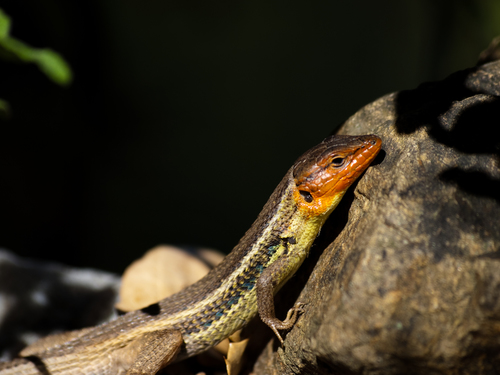
The closest relatives of the Green Iberian Wall Lizard that you can see in Monfragüe National Park (family Lacertidae, Wall Lizards) are Large Psammodromus (about 50%) and Ocellated Lizard (about 20%), with each one's daily chance of a sighting.
Where does the Green Iberian Wall Lizard sighting chance come from?
GBIF citizen-science records
It is estimated from how often the Green Iberian Wall Lizard is recorded against all the reptiles logged in Monfragüe National Park (14 verified sightings from 2019 to 2026), calibrated against known sighting rates. Figures are rounded to the nearest 10% because citizen-science data supports honest approximations, not decimals, and months with records from fewer than five people show "—". How it works.
