
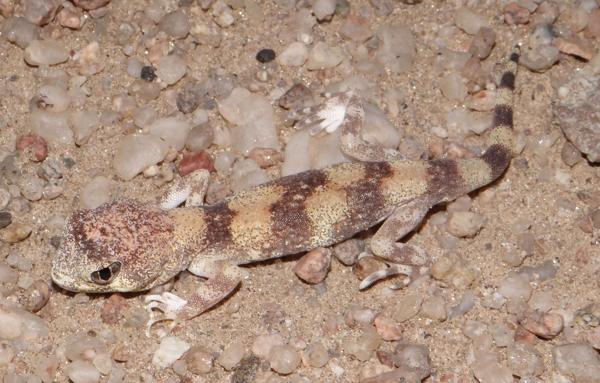
Bradfield's Namib Day Gecko

Bradfield's Namib Day Gecko

Rhoptropus bradfieldi

Silhouette: SeismicShrimp · PhyloPic

LCLeast ConcernNTVUENCR Endemic
Daily sighting probability ~30% · Possible
at Namib-Naukluft National Park

In 3 days ~60% in a week ~90%

71 Verified sightings at Namib-Naukluft National Park From 2019 to 2026
71 In 1 park
December Best month
☀️ Diurnal When it's spotted

About the Bradfield's Namib Day Gecko

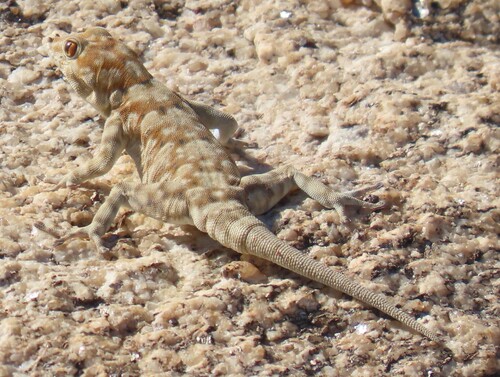
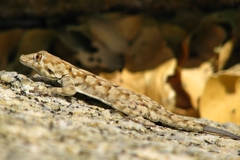
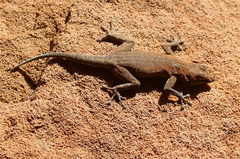
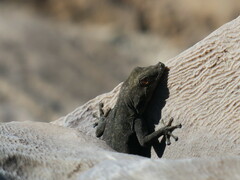
Bradfield's Namib day gecko (Rhoptropus bradfieldi) is a species of lizard in the family Gekkonidae. The species is endemic to Namibia. This species was first described in 1935 by the British-born, South African zoologist John Hewitt, who gave it the name Rhoptropus bradfieldi in honour of the South African naturalist and collector R.D. Bradfield (1882–1949).

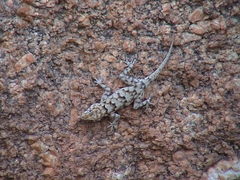
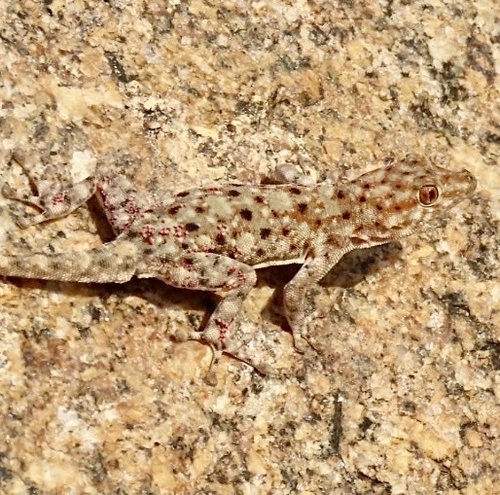
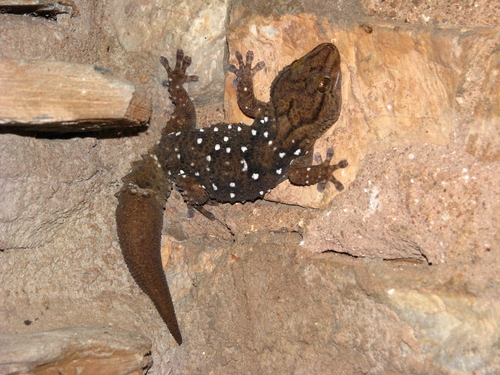
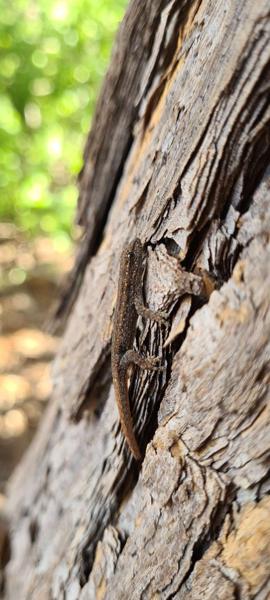
Rhoptropus bradfieldi has a maximum snout-to-vent length (SVL) of 74 mm (2.9 in), and a total length (including tail) of about 100 to 130 mm (4 to 5 in). The dorsal surface is greyish-brown, indistinctly barred and dappled, and the ventral surface is bluish-grey. There are eleven scansors (specialist structures for adhesion) under the middle toe. This gecko is similar in appearance to the Namib day gecko (Rhoptropus afer), but that species is slightly smaller, has bright yellow underparts and only six scansors under the middle digit. The difference in scansor number between the two species, and the much shorter setae from which the scansors are formed in R. afer, are reflected in different lifestyles; R. bradfieldi, with more-adhesive feet, is a crevice-dweller with a slow, climbing lifestyle, while R. afer is... Wikipedia →

Global Distribution

Parks Where Found

# Park Country Daily sighting probability
1 Namib-Naukluft National Park 🇳🇦 Namibia
~30%

More parks will be added in future updates.

Before you go

What are the chances of seeing a Bradfield's Namib Day Gecko in Namib-Naukluft National Park?

Possible

About 30% of wildlife watchers report a Bradfield's Namib Day Gecko sighting in Namib-Naukluft National Park on a given day, based on 71 verified sightings from GBIF citizen-science data from 2019 to 2026. It is the 9th most-seen of the 39 reptiles we can rate there. Over three days the chance rises to about 60%, and over a week to about 90%, if each day is a fresh chance.

When is the best time to see a Bradfield's Namib Day Gecko in Namib-Naukluft National Park?

June and December

In those months about 40% of wildlife watchers report a Bradfield's Namib Day Gecko in Namib-Naukluft National Park on a given day, against about 10% in September and November, the lowest months.

What time of day is best to see a Bradfield's Namib Day Gecko?

Between 10 am and 1 pm

Across all the parks we cover, that three-hour window holds the most Bradfield's Namib Day Gecko sightings with a recorded time, and about 9 in 10 of them come between 6 am and 6 pm: it is a daytime animal.

Where else can you see a Bradfield's Namib Day Gecko?

Only Namib-Naukluft National Park, in our data

Namib-Naukluft National Park is the only park on Wallace's Line with enough records to rate Bradfield's Namib Day Gecko sightings: about 30% of wildlife watchers there report one on a given day.

Which relatives of the Bradfield's Namib Day Gecko live in Namib-Naukluft National Park?

Same genus: Rhoptropus

The closest relatives of the Bradfield's Namib Day Gecko that you can see in Namib-Naukluft National Park (genus Rhoptropus, Namib Day Geckos) are Namib Day Gecko (about 40%) and Barnard's Namib Day Gecko (about 10%), with each one's daily chance of a sighting.

Where does the Bradfield's Namib Day Gecko sighting chance come from?

GBIF citizen-science records

It is estimated from how often the Bradfield's Namib Day Gecko is recorded against all the reptiles logged in Namib-Naukluft National Park (71 verified sightings from 2019 to 2026), calibrated against known sighting rates. Figures are rounded to the nearest 10% because citizen-science data supports honest approximations, not decimals, and months with records from fewer than five people show "—". How it works.

← Back to Namib-Naukluft National Park