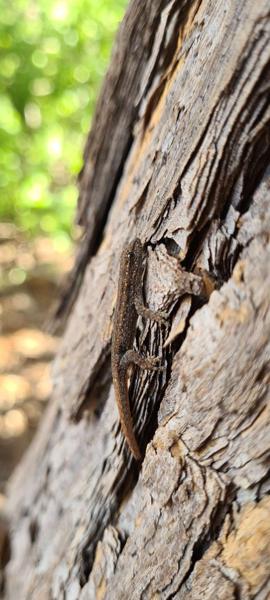
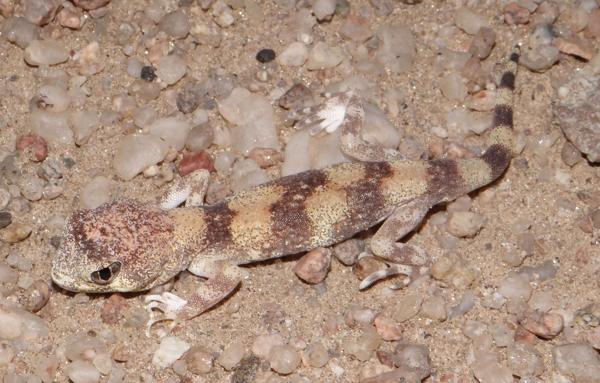
Namib Giant Ground Gecko

Namib Giant Ground Gecko

Chondrodactylus angulifer

Silhouette: Jose Carlos Arenas-Monroy · PhyloPic

LCLeast ConcernNTVUENCR
Daily sighting probability ~20% · Possible
at Namib-Naukluft National Park

In 3 days ~40% in a week ~70%

20 Verified sightings at Namib-Naukluft National Park From 2019 to 2026
20 In 1 park
January Best month
🌙 Nocturnal When it's spotted

About the Namib Giant Ground Gecko

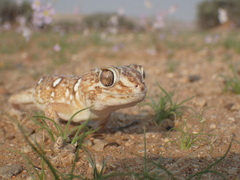
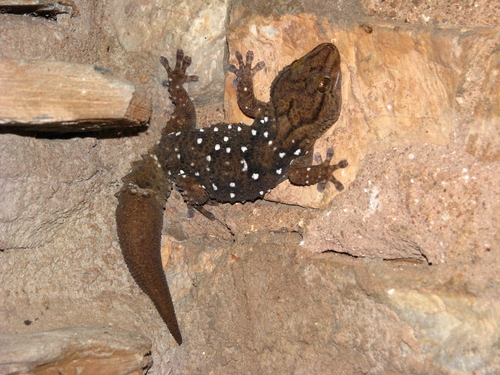
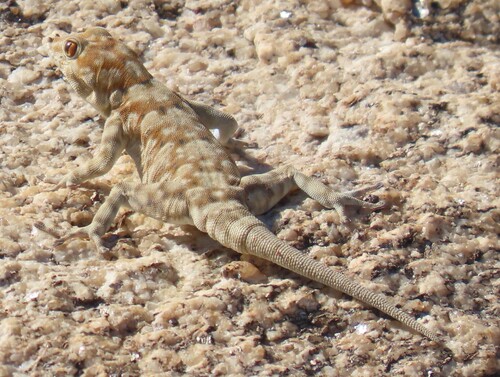
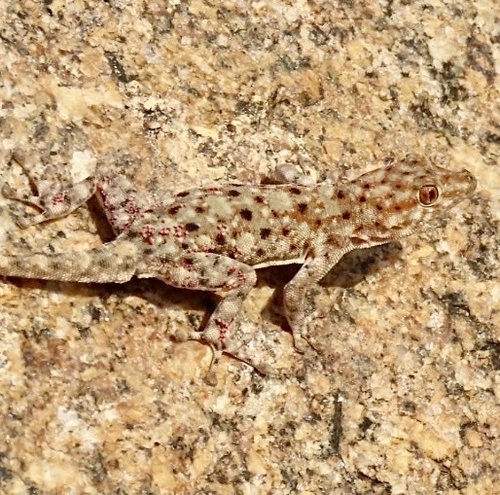
Chondrodactylus angulifer, also known as the common giant ground gecko, the South African ground gecko, or the Namib sand gecko, is a species of gecko, a lizard in the family Gekkonidae. The species is endemic to southern Africa.

Chondrodactylus angulifer is found in Namibia, southernmost Botswana, and western South Africa. Chondrodactylus angulifer is a medium sized gecko. Adults average 7 to 9 cm (2.8 to 3.5 in) snout-to-vent length (SVL). The record size is a male 11.3 cm (4.4 in) SVL.

An adult female C. angulifer may lay a clutch of one or two eggs. The eggs are almost spherical, 18 by 16 mm (0.71 by 0.63 in). Each hatchling is approximately 7 cm (2.8 in) total length (including tail). There are two subspecies which are recognized as being valid, including the nominotypical subspecies.

Chondrodactylus angulifer subsp. angulifer W. Peters, 1870 Chondrodactylus angulifer subsp. namibensis Haacke, 1976 Haacke WD (1976). "The burrowing geckos of southern Africa, 4 (Reptilia: Gekkonidae). Annotated taxonomic account (cont.) E. Genus Chondrodactylus Peters". Annals of the... Wikipedia →

Global Distribution

Parks Where Found

# Park Country Daily sighting probability
1 Namib-Naukluft National Park 🇳🇦 Namibia
~20%

More parks will be added in future updates.

Zoos & Centres Where Found

# Zoo / Centre Country
1 Omaha’s Henry Doorly Zoo and Aquarium 🇺🇸 United States In captivity
2 Oklahoma City Zoo and Botanical Garden 🇺🇸 United States In captivity

Closest Relatives at Namib-Naukluft National Park

Before you go

What are the chances of seeing a Namib Giant Ground Gecko in Namib-Naukluft National Park?

Possible

About 20% of wildlife watchers report a Namib Giant Ground Gecko sighting in Namib-Naukluft National Park on a given day, based on 20 verified sightings from GBIF citizen-science data from 2019 to 2026. It is the 18th most-seen of the 39 reptiles we can rate there. Over three days the chance rises to about 40%, and over a week to about 70%, if each day is a fresh chance.

When is the best time to see a Namib Giant Ground Gecko in Namib-Naukluft National Park?

January–February and July

In those months about 30% of wildlife watchers report a Namib Giant Ground Gecko in Namib-Naukluft National Park on a given day, against under 5% in April–May and December, the lowest months.

What time of day is best to see a Namib Giant Ground Gecko?

Between 8 and 11 pm

Across all the parks we cover, that three-hour window holds the most Namib Giant Ground Gecko sightings with a recorded time, and about 9 in 10 of them come between 6 pm and 6 am: it is mostly seen at night.

Where else can you see a Namib Giant Ground Gecko?

Only Namib-Naukluft National Park, in our data

Namib-Naukluft National Park is the only park on Wallace's Line with enough records to rate Namib Giant Ground Gecko sightings: about 20% of wildlife watchers there report one on a given day.

Which relatives of the Namib Giant Ground Gecko live in Namib-Naukluft National Park?

Same genus: Chondrodactylus

The closest relatives of the Namib Giant Ground Gecko that you can see in Namib-Naukluft National Park (genus Chondrodactylus, Comb-toed Geckos) are Fischer's Thick-toed Gecko (about 30%) and Bibron's Thick-toed Gecko (about 10%), with each one's daily chance of a sighting.

Where does the Namib Giant Ground Gecko sighting chance come from?

GBIF citizen-science records

It is estimated from how often the Namib Giant Ground Gecko is recorded against all the reptiles logged in Namib-Naukluft National Park (20 verified sightings from 2019 to 2026), calibrated against known sighting rates. Figures are rounded to the nearest 10% because citizen-science data supports honest approximations, not decimals, and months with records from fewer than five people show "—". How it works.

← Back to Namib-Naukluft National Park