Koch's Chirping Gecko

Koch's Chirping Gecko

Ptenopus kochi

Silhouette: SeismicShrimp · PhyloPic

LCLeast ConcernNTVUENCR Endemic
Daily sighting probability ~10% · With luck
at Namib-Naukluft National Park

In 3 days ~30% in a week ~60%

11 Verified sightings at Namib-Naukluft National Park From 2019 to 2026
11 In 1 park
April Best month
🌅 Crepuscular When it's spotted

About the Koch's Chirping Gecko

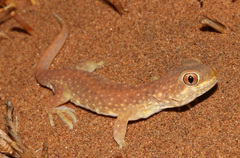
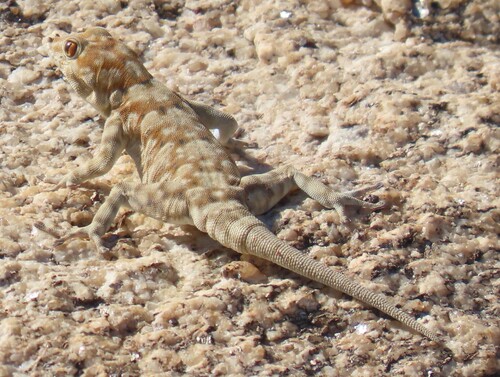
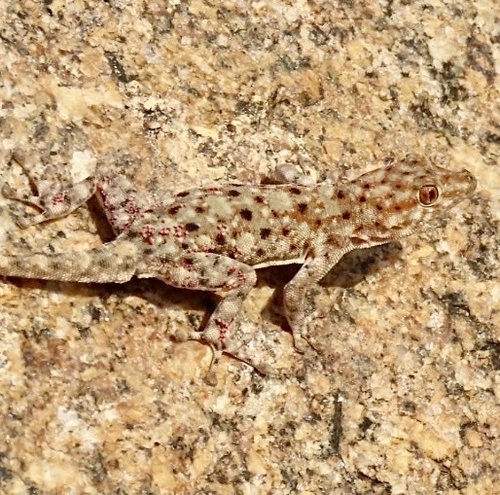
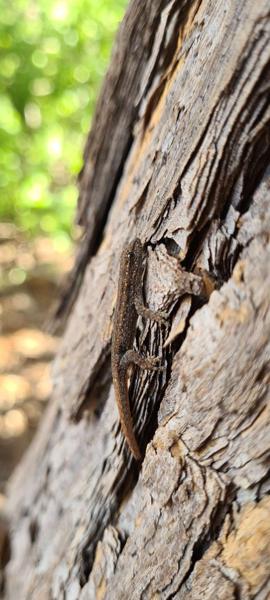
Ptenopus kochi, also known commonly as the interdune barking gecko, Koch's barking gecko, and Koch's chirping gecko, is a species of lizard in the family Gekkonidae. The species is endemic to Namibia. The specific name, kochi, is in honor of Austrian-born South African entomologist Charles Koch.

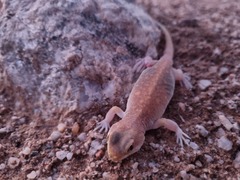
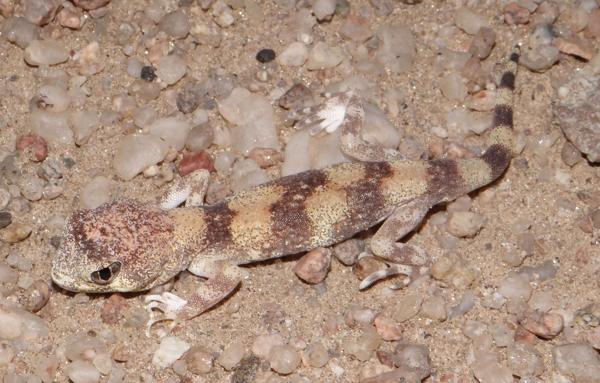
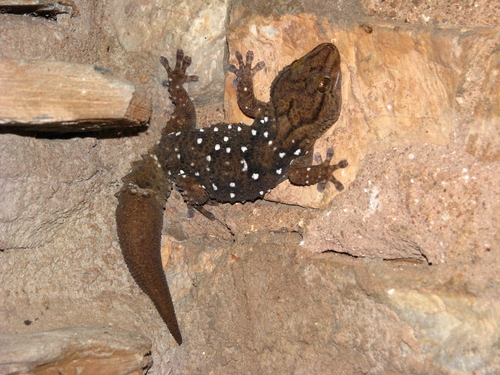
Adults of P. kochi usually have a snout-to-vent length (SVL) of 5–6 cm (2.0–2.4 in). Its large bulging eyes and swollen nostrils give it a frog-like appearance. The body scales are very small and numerous, arranged in 187–222 rows around the body at midbody. The tail length is slightly shorter than SVL. The toes of all four feet have lateral fringes of elongate pointed scales. Dorsally, P. kochi is reddish brown, with light spots and dark speckles. Ventrally, it is whitish. The throat and labials of males are yellow.

The preferred natural habitat of P. kochi is sandy desert, at altitudes of 50–500 m (160–1,640 ft). P. kochi is terrestrial and crepuscular. It digs burrows as long as 90 cm (35 in) and as deep as 40 cm (16 in). During the summer breeding season, males vocalize from burrow entrances around sunset to attract females... Wikipedia →

Sounds

Recording0:31

Namibia · 2022

© myrashulman · iNaturalist · CC BY-NC 4.0

Recording0:13

Namibia · 2022

© Eric Knight · iNaturalist · CC BY 4.0

Global Distribution

Parks Where Found

# Park Country Daily sighting probability
1 Namib-Naukluft National Park 🇳🇦 Namibia
~10%

More parks will be added in future updates.

Closest Relatives at Namib-Naukluft National Park

Before you go

What are the chances of seeing a Koch's Chirping Gecko in Namib-Naukluft National Park?

With luck

About 10% of wildlife watchers report a Koch's Chirping Gecko sighting in Namib-Naukluft National Park on a given day, based on 11 verified sightings from GBIF citizen-science data from 2019 to 2026. It is the 27th most-seen of the 39 reptiles we can rate there. Over three days the chance rises to about 30%, and over a week to about 60%, if each day is a fresh chance.

When is the best time to see a Koch's Chirping Gecko in Namib-Naukluft National Park?

April and October

In those months about 20% of wildlife watchers report a Koch's Chirping Gecko in Namib-Naukluft National Park on a given day, against under 5% in July–August and November, the lowest months.

What time of day is best to see a Koch's Chirping Gecko?

Between 7 and 10 pm

Across all the parks we cover, that three-hour window holds the most Koch's Chirping Gecko sightings with a recorded time, and about 7 in 10 of them come between 6 pm and 6 am: it is most active around dawn and dusk.

Where else can you see a Koch's Chirping Gecko?

Only Namib-Naukluft National Park, in our data

Namib-Naukluft National Park is the only park on Wallace's Line with enough records to rate Koch's Chirping Gecko sightings: about 10% of wildlife watchers there report one on a given day.

Which relatives of the Koch's Chirping Gecko live in Namib-Naukluft National Park?

Same genus: Ptenopus

The closest relatives of the Koch's Chirping Gecko that you can see in Namib-Naukluft National Park (genus Ptenopus, Barking Geckos) are Common Barking Gecko (about 20%) and Namib Chirping Gecko (about 10%), with each one's daily chance of a sighting.

Where does the Koch's Chirping Gecko sighting chance come from?

GBIF citizen-science records

It is estimated from how often the Koch's Chirping Gecko is recorded against all the reptiles logged in Namib-Naukluft National Park (11 verified sightings from 2019 to 2026), calibrated against known sighting rates. Figures are rounded to the nearest 10% because citizen-science data supports honest approximations, not decimals, and months with records from fewer than five people show "—". How it works.

← Back to Namib-Naukluft National Park