Orange River White-eye

Orange River White-eye

Zosterops pallidus

Silhouette: Ferran Sayol · PhyloPic

LCLeast ConcernNTVUENCR
Daily sighting probability ~20% · Possible
at Namib-Naukluft National Park

In 3 days ~40% in a week ~70%

81 Verified sightings at Namib-Naukluft National Park From 2019 to 2026
81 In 1 park
April Best month
☀️ Diurnal When it's spotted

About the Orange River White-eye

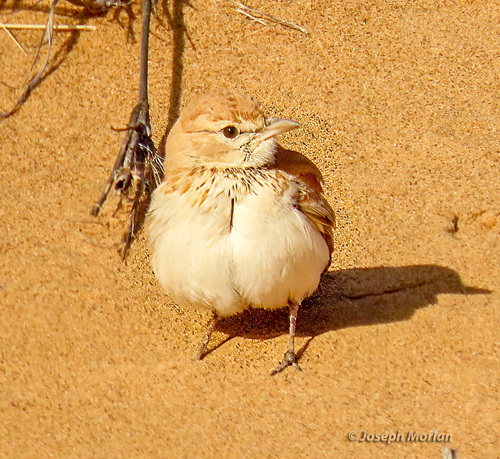
The Orange River white-eye (Zosterops pallidus) is a species of bird in the family Zosteropidae, which is native to Namibia and South Africa. It was formerly deemed conspecific with the Cape white-eye (Zosterops virens), but the two species occur sympatrically in central South Africa, and they are genetically distinct.

Four subspecies have been proposed based on plumage colour and size differences: Zosterops pallidus pallidus — Northern Cape, North West, Gauteng, Free State Zosterops pallidus sundevalli Hartlaub — tributaries of upper Orange and lower to mid Vaal River

Zosterops pallidus deserticola Reichenow — lower Orange River and its tributaries Zosterops pallidus haigamchabensis — northern Namibia to Northern Cape, South Africa It occurs at highest densities in the catchment areas of the Orange and Vaal Rivers, where it is locally very common. It is also present at more isolated locations in the Nama Karoo, Namaqualand, Namib, Namibian escarpment, uplands of Damaraland, and mopane-veld in the far north. In dry regions it associates with vegetation fringing periodically dry streambeds. No extensive movements have been recorded.

Forages... Wikipedia →

Sounds

Song0:25

South Africa · 2022

© Tony Archer · XC695158 · CC BY-NC-SA 4.0

Uncertain0:08

Namibia · 2019

© Meena Haribal · XC613459 · CC BY-NC-SA 4.0

Call1:26

South Africa · 2019

© Frank Lambert · XC516036 · CC BY-NC-ND 4.0

Global Distribution

Parks Where Found

# Park Country Daily sighting probability
1 Namib-Naukluft National Park 🇳🇦 Namibia
~20%

More parks will be added in future updates.

Zoos & Centres Where Found

# Zoo / Centre Country
1 Adachi Park of Living Things 🇯🇵 Japan In captivity

Before you go

What are the chances of seeing an Orange River White-eye in Namib-Naukluft National Park?

Possible

About 20% of wildlife watchers report an Orange River White-eye sighting in Namib-Naukluft National Park on a given day, based on 81 verified sightings from GBIF citizen-science data from 2019 to 2026. It is the 31st most-seen of the 108 birds we can rate there. Over three days the chance rises to about 40%, and over a week to about 70%, if each day is a fresh chance.

When is the best time to see an Orange River White-eye in Namib-Naukluft National Park?

April and June

In those months about 40% of wildlife watchers report an Orange River White-eye in Namib-Naukluft National Park on a given day, against under 5% in November, the lowest month.

What time of day is best to see an Orange River White-eye?

Between 3 and 6 pm

Across all the parks we cover, that three-hour window holds the most Orange River White-eye sightings with a recorded time, and about 9 in 10 of them come between 6 am and 6 pm: it is a daytime animal.

Where else can you see an Orange River White-eye?

Only Namib-Naukluft National Park, in our data

Namib-Naukluft National Park is the only park on Wallace's Line with enough records to rate Orange River White-eye sightings: about 20% of wildlife watchers there report one on a given day.

Which relatives of the Orange River White-eye live in Namib-Naukluft National Park?

Same order: Passeriformes

The closest relatives of the Orange River White-eye that you can see in Namib-Naukluft National Park (order Passeriformes, Perching Birds) are Cape Sparrow (about 80%), Familiar Chat (about 60%) and Pied Crow (about 60%), with each one's daily chance of a sighting.

Where does the Orange River White-eye sighting chance come from?

GBIF citizen-science records

It is estimated from how often the Orange River White-eye is recorded against all the birds logged in Namib-Naukluft National Park (81 verified sightings from 2019 to 2026), calibrated against known sighting rates. Figures are rounded to the nearest 10% because citizen-science data supports honest approximations, not decimals, and months with records from fewer than five people show "—". How it works.

← Back to Namib-Naukluft National Park